Five Rules Every Swimmer Needs to Chase a Personal Best (And Why the Messy Day Might Be Your Best One Yet)
The same laws that govern Olympic records govern your next personal best. The scale is different, but the rules are identical.
After hundreds of conversations with champions — Olympic gold medalists, NCAA title holders, masters record breakers — a clear pattern has emerged. The athletes who consistently achieve what they set out to do are not necessarily the most talented ones in the water. They’re the ones who follow a set of repeatable rules, show up even when conditions are far from ideal, and refuse to let a bad morning talk them out of a great swim.
Kelly Palace is sharing the five rules she’s distilled from those hundreds of conversations (and from her own experience) including a world record she almost didn’t attempt in a freezing, fog-covered pool with single-digit wind chills and no warm-up.
Here’s what those five rules look like in practice.
Rule One: Choose a Goal That Gets You Out of Bed
Not every goal is created equal. There’s a difference between a goal you think you should have and a goal that genuinely excites you, one that creates a little pull in your chest when you think about it, that makes early mornings feel worth it before your alarm even finishes going off.
Research backs this up: the bigger and more personally meaningful a goal, the more motivational energy it generates. That doesn’t mean the goal has to be a world record. It could be swimming every event your LMSC offers, completing a one-hour swim, finishing an open water race, or chasing a personal best in a single event you’ve never fully committed to.
The key question isn’t "is this goal impressive enough?", instead, it’s "does this goal excite me enough to actually do the work?" Start there. Everything else builds on the answer.
Rule Two: Break It Down Until It Becomes a Tuesday
A goal without a plan is just a wish. Once you’ve identified something genuinely exciting, the next step is reverse engineering it into pieces small enough to execute on an ordinary training day.
What pace per 50 do you need to hit your target time? How many meets would you need to attend to swim every event? If you are chasing a one-hour swim, what does your split need to look like every 20 minutes to hit your distance goal?
Breaking a goal down does more than make it manageable, it tells you exactly what a good Tuesday morning practice looks like. When you know what you are building toward and what each session contributes to that, the ordinary workouts stop feeling ordinary. They become the actual mechanism of the goal.
Write the splits. Map the meets. Name the milestones. Eat the elephant one bite at a time.
Rule Three: Know the Rules of the Arena You Are Swimming In
This one sounds administrative but it’s actually the rule that most swimmers skip, and occasionally, it’s the one that costs them everything they worked for.
Not all meets count equally. You cannot set a masters world record at a USA Swimming meet, only at a sanctioned masters meet. And a newer rule worth knowing: if a masters meet accepts one-day USMS registrations, World Aquatics will not recognize times from that meet for world rankings. That means a swim you trained months for could be ineligible for the record or ranking you were chasing through no fault of your own performance.
Beyond the paperwork, there’s the question of where to execute. What coaches call "fast water" is real — pool depth, water temperature, air quality, lane configuration, and timing systems all influence outcomes. Doing the homework on the meet environment before you commit to a goal attempt isn’t overthinking, it’s part of the plan.
Rule three is simply this: know the arena before you compete in it.
Rule Four: Consistency Is the Foundation That Everything Else Is Built On
Of all five rules, this is the one that came up most consistently across hundreds of champion interviews. Not talent. Not perfect conditions. Not the ideal training block. Consistency.
Showing up, even when you are tired, even when the workout is not your best, even when life is loud and crowded and your body is not cooperating, is the thing that compounds over time in a way nothing else does.
Kelly shares her own example here: for decades, her pattern was two years of swimming followed by three years away. When she finally stayed consistent through an entire five-year age group — from 60 to 65 — the results spoke for themselves. Her best records came not because she trained harder than ever, but because she had finally stayed in the water long enough to let consistency do its work.
You don’t have to be perfect every day, you just have to keep showing up.
Rule Five: Your Best Swim Might Happen on Your Worst Morning
This is the rule that’s the hardest to hold onto in the moment, and the one that matters most when conditions go sideways.
On the last morning of the Rowdy Gaines meet in Orlando, Kelly arrived at the pool in single-digit wind chills. The pool deck was in the low 40s. Condensation dripped from the ceiling. Fog hung over the water. There were almost no spectators. Her husband had dropped her off and gone back to the hotel. She had no counter, no warm-up, and genuinely considered scratching the event.
She swam it anyway, telling herself she was just doing it for team points, taking it 125 yards at a time. She asked her timers to grab backup watches just in case. When she touched the wall at the 800, they told her: 10:24. The world record had been 10:39.
She’d broken the world record in conditions that would have convinced most people not to try.
The Marines have a saying: expect the best, prepare for the worst. In swimming, and in life, the messy day isn’t a reason to skip the attempt. It might be the very day the attempt succeeds.
The Five Rules, All Together
-
Set a goal that excites you. Not one you think you should have, but one that actually pulls you forward.
-
Break it into pieces. Pace targets, meet schedules, training milestones. Make it executable on a Tuesday.
-
Know the rules of your arena. Which meets count, what regulations apply, and where the fast water is.
-
Build consistency before everything else. Keep showing up. That’s the foundation.
-
Stay ready on the bad days. Expect adversity. Race anyway. Your best swim may come when you least expect it.
These rules don’t guarantee a world record, but they do guarantee that you gave yourself every real chance to get there and that’s the whole point.
If you enjoy conversations about longevity in sport, smart training, and rediscovering joy in the water, subscribe to the show and share it with a teammate. If you have a moment, leaving a quick review helps more swimmers discover the podcast. You can also stay connected by joining our Mojo Messages, short encouraging messages sent straight to your inbox to help you live well and swim well. We're cheering you on!
Email us at HELLO@ChampionsMojo.com. Opinions discussed are not medical advice. Please seek a medical professional for your own health concerns.
You can learn more about the Host and Founder of Champions Mojo at www.KellyPalace.com
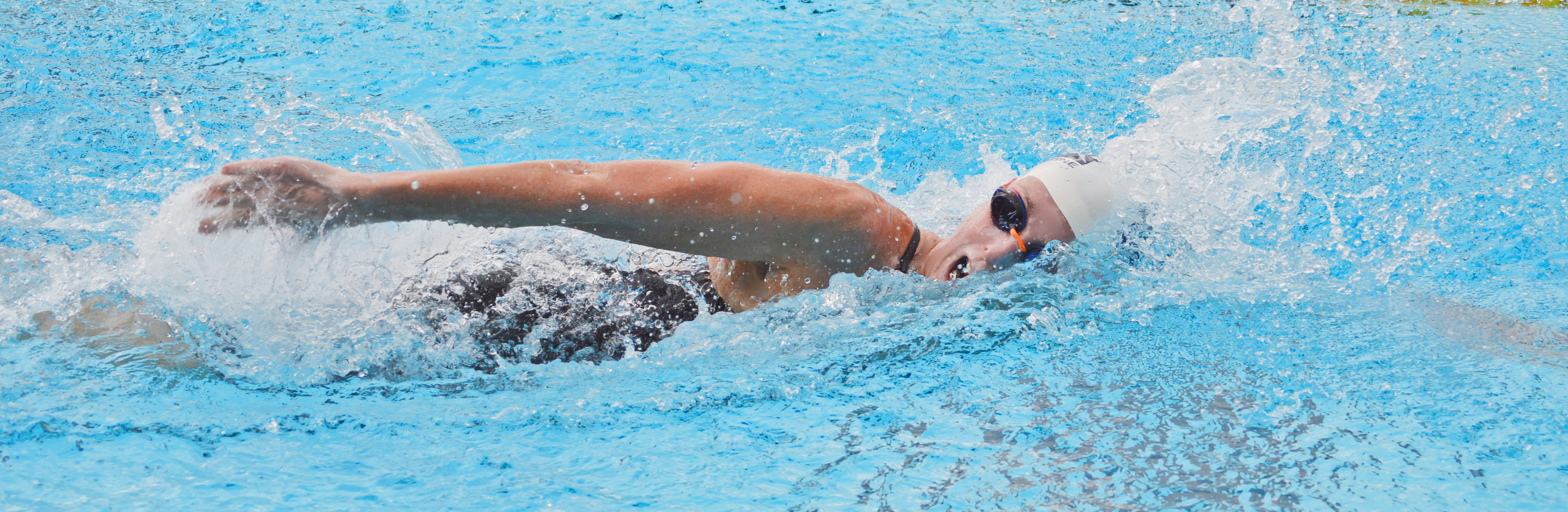
Host, Founder, Journalist, Author
Kelly Palace is proof that you can be a world-record-setting Masters swimmer, bestselling author, and breast cancer survivor—and still laugh at yourself along the way. A former NCAA Division I head coach and journalist for Pfizer's magazine, she now dives deep with Olympians, experts, and everyday champions on Champion’s Mojo to uncover what makes people great (and what keeps them sane): the secrets to living well and swimming well. She’s survived 9/11, topical steroid withdrawal, and divorce, but has found love for the last 22 years with her husband, Mark, who is 12 years her junior. Kelly believes in comebacks, kindness, and coffee before (and after) chlorine. Her hobby of stand-up comedy makes her feel alive—and heckled.
Hidden Heart Risks for Masters Swimmers: Understanding Stroke Warning Signs and PFO