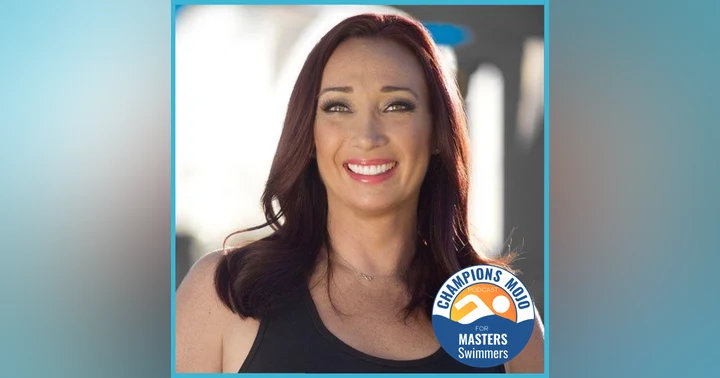
Lead by Example, Swim the 200 Fly, and Build Something That Lasts: Andy Kroupa's Masters Mojo

What if the invitation that changed your life came in the form of someone just asking you to show up and cheer?
That's how Andy Kroupa found his way back to competitive swimming after nearly 20 years away. His friends needed support at a Key West relay. He wasn't in shape to swim, so he came to coach from the sidelines instead. He watched them finish, and something clicked. He went home and got back in the pool in Orlando. Fifteen years later, he's still there, still swimming, still competing, and now one of the founding architects of one of the most exciting Masters clubs in the country.
Andy's story isn't about chasing Olympic glory. It's about what happens when someone who loves a sport decides to pour that love back into it, and what that kind of leadership can build for everyone around them.
A Club Born Out of COVID
The Legends Masters Swim Club didn't exist before the pandemic. It grew out of the space between things shutting down and opening back up, when a group of Greater Orlando swimmers started asking themselves what they wanted to build next.
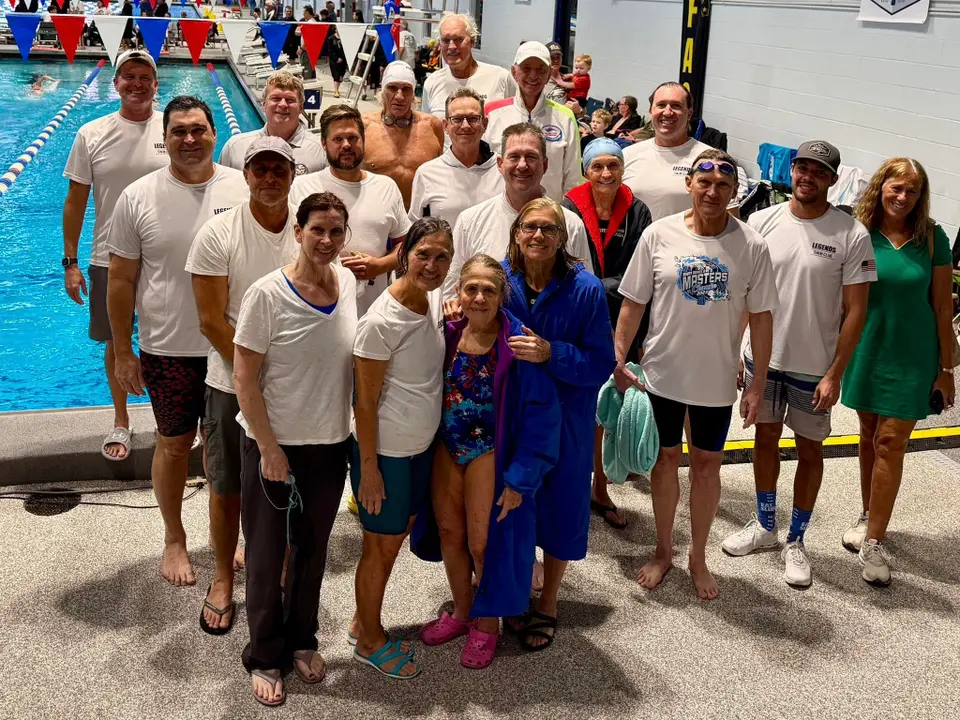
The name came from Legends Swim Camp, run by Rowdy Gaines. It felt right, not because every member was a legend in the competitive sense, but because of what the word represents: longevity, impact, and a commitment to the sport that goes beyond any single season. They chose Auburn colors with a nod to the American flag, pulled together a founding group, and in their first year had over 50 members signed up and competing in local, national, and international meets.
Three coaches anchor the club across different areas: Brody Hines in the Dr. Phillips area, Andy's home base in Winter Park, and Scott Bay in Ormond Beach. Together they've built something that didn't exist five years ago and now gives dozens of swimmers a community to belong to and a team to represent.
The 200 Butterfly at 57
Let's be clear about what Andy's doing in the water. At 57, sitting in the middle of his age group, he's swimming the 200-meter butterfly — one of the most demanding events in all of swimming — and chasing top-10 national rankings. He logged a 100-meter long course fly in 1:06. That's not a time most people could touch in freestyle.
His training is built around real life. He swims four days a week — Monday, Wednesday, Friday, and Saturday — logging about 3,000 yards per session, either at lunch or early in the morning before his corporate workday starts. He manages a team of underwriters at a large insurance company. He doesn't have unlimited time, so he makes every session count.
His approach to butterfly within those workouts is smart and specific. He swims sets of five 125s, going a hard 100 freestyle and finishing each one with 25 fly on a tight interval of about 30 seconds rest. It simulates the demand of the 200 fly without requiring a whole separate training block. He fits fly into IM sets and freestyle sets wherever he can, and nothing gets wasted.
For any masters swimmer trying to maintain a specialty event around a full life, Andy's approach is worth studying. You don't need to build your entire program around the event. You just need to find the right moments within the program you already have.
The Missy Franklin Moment
One of the most memorable parts of this conversation has nothing to do with times or training. It has everything to do with why swimming culture is unlike anything else.
Andy was volunteering as a timer at a national meet in Orlando. Missy Franklin was in his lane. When she finished her 100 backstroke and climbed out of the pool, she turned to him and said: thank you for timing me.
That was it. Two seconds. Four words. But Andy hasn't forgotten it, and it's easy to understand why. Swimmers at that level, at that moment, in that environment, don't usually pause to thank the volunteer timer. Missy did. Andy says he'd love to have lunch with her, not because of the Olympic medals, but because of that single gesture.
It's a small story that carries a big reminder. The culture of this sport is shaped by exactly these moments, by the people who notice the people around them and take two seconds to say so. That's the kind of champion worth paying attention to.
Leading by Example
Andy's philosophy in the pool and in the office are the same: get out at lunch or get in early, feel good during the day, and be the leader by example. He doesn't compartmentalize the swimmer from the manager from the club founder. They're all expressions of the same thing, someone who believes that showing up, doing the work, and bringing people along with you is how you build something worth having.
Masters swimming, at its best, looks exactly like what Andy and the Legends club have created. Not a place where only the fastest swimmers belong. A place where the passion to show up, give back, and lead by example is the only real entry requirement.
You don't need a shoe sponsorship or an Olympic medal to be a legend in this sport. So here's a question worth sitting with this week: what would it look like for you to lead by example in your own lane?
If you enjoy conversations about longevity in sport, smart training, and rediscovering joy in the water, subscribe to the show and share it with a teammate. If you have a moment, leaving a quick review helps more swimmers discover the podcast. You can also stay connected by joining our Mojo Messages, short encouraging messages sent straight to your inbox to help you live well and swim well. We're cheering you on!
Email us at HELLO@ChampionsMojo.com. Opinions discussed are not medical advice. Please seek a medical professional for your own health concerns.
You can learn more about the Host and Founder of Champions Mojo at www.KellyPalace.com
Host, Founder, Journalist, Author
Kelly Palace is proof that you can be a world-record-setting Masters swimmer, bestselling author, and breast cancer survivor—and still laugh at yourself along the way. A former NCAA Division I head coach and journalist for Pfizer's magazine, she now dives deep with Olympians, experts, and everyday champions on Champion’s Mojo to uncover what makes people great (and what keeps them sane): the secrets to living well and swimming well. She’s survived 9/11, topical steroid withdrawal, and divorce, but has found love for the last 22 years with her husband, Mark, who is 12 years her junior. Kelly believes in comebacks, kindness, and coffee before (and after) chlorine. Her hobby of stand-up comedy makes her feel alive—and heckled.
How to Break the Masters Swimming Gray Zone and Find Your Lost Gears