Apple Podcasts
 Spotify
 RSS Feed
 How to Fix Your Freestyle Catch and Stop Shoulder Pain with Elite Coach Kim Brackin, EP 320
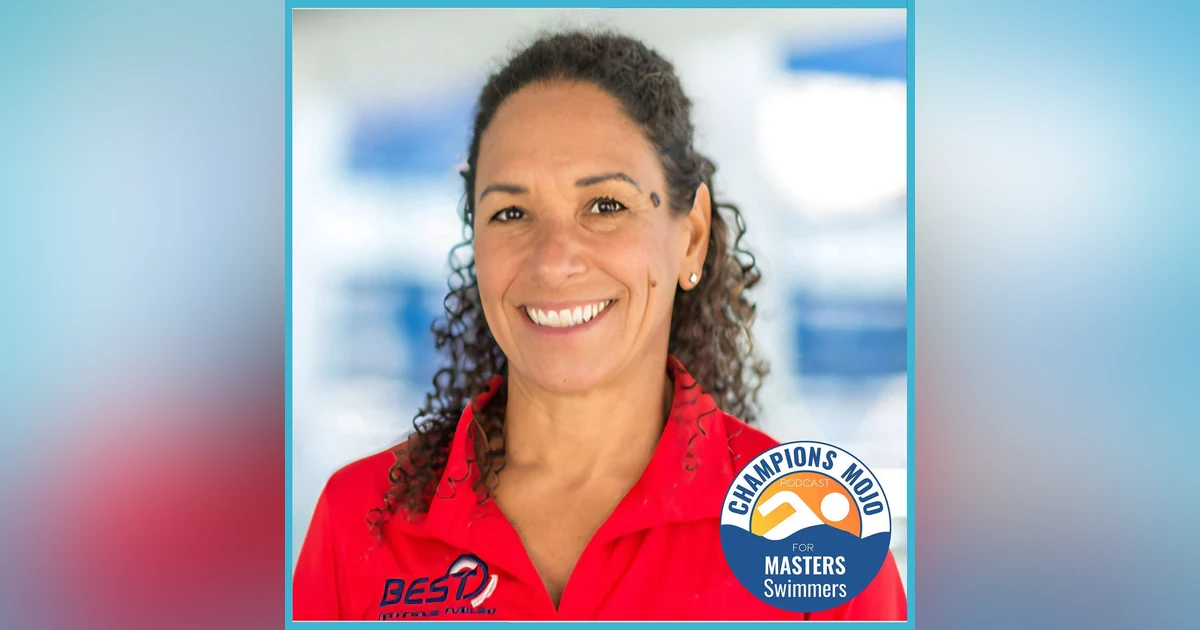
It's all about the catch! If you get this right you'll feel powerful and protect your shoulders. You'll hear it in detail from NCAA Championship and Olympic-level swim coach Kim Brackin, Founder of Brackin Elite Swim Training (BEST) who breaks down how everyday Masters swimmers can build a powerful, "connected" stroke that protects their joints and drives maximum propulsion. Kim also shares the cues and drills she leans on as a masters swimmer herself, including stroke balance work, skulling ...
It's all about the catch! If you get this right you'll feel powerful and protect your shoulders. You'll hear it in detail from NCAA Championship and Olympic-level swim coach Kim Brackin, Founder of Brackin Elite Swim Training (BEST) who breaks down how everyday Masters swimmers can build a powerful, "connected" stroke that protects their joints and drives maximum propulsion.
Kim also shares the cues and drills she leans on as a masters swimmer herself, including stroke balance work, skulling for feel, and simple kick progressions that help you find rhythm and propulsion.
You’ll discover:
- Body Position over Brute Force
- The simple fix to engage your lats
- Why dropping your hand first destroys your power
- The Shoulder-Saving Catch Adjustment
- 3 Essential Masters Drills
- The Gym Setup
In the Tampa Bay, FL Area?
MASTERS & FITNESS SWIM CLINIC WITH KIM BRACKIN and OLYMPIC COACH DAVID MARSH
REGISTER HERE
One morning of elite coaching — tailored for adult swimmers of all levels
Sunday, September 6, 2026 • Starting at 9:00 AM
North Shore Aquatics Center • Home of Brackin Elite Swim Training • St. Petersburg, FL
If this helps, subscribe, share the episode with a lane mate, and leave a review so more masters swimmers can find their mojo.
Email us at HELLO@ChampionsMojo.com. Opinions discussed are not medical advice, please seek a medical professional for your own health concerns.
You can learn more about the Host and Founder of Champions Mojo at www.KellyPalace.com
00:00 - The Magic Of Feeling Connected
00:41 - Welcome And Meet Coach Kim Bracken
03:46 - From Elite Coach To Masters Swimmer
06:19 - How To Learn By Watching Great Swimmers
08:57 - Three Freestyle Priorities That Matter
14:11 - Where The Kick Really Comes From
18:41 - Protect Your Shoulders With Lats
23:20 - Freestyle Clinic With David Marsh
27:31 - Drop In Invite And Five Star Review
The Magic Of Feeling Connected
SPEAKER_01It's like it's just such a great feeling when you feel that I get in the pool sometimes and I don't feel it at all. I'm like, I am so unconnected right now. And that's when I'll do a little drilling and even some of those kicking drills so I can start to feel my kick, how it's connected to the pole. But man, when I get that feeling, it's awesome. We were doing a set the other day and and I it was a descending set. And I said, okay, I'm just gonna drop just you know by like two or three seconds on each one of these. And my teammate was like on the last one, she's like, You went way faster on that one. I was like, I know, I just felt it. Like I was so connected, it felt so good. I didn't even necessarily try harder. It was just, it was there. So when you've had that feeling, it's really awesome.
Welcome And Meet Coach Kim Bracken
SPEAKER_00Hello, friends. Welcome to the Champions Mojo podcast, where we bring you interviews and topics to help you live well and swim well, conversations especially meaningful for master swimmers and anyone striving to perform better in the water or in life. We're here to champion you. And now your host, Kelly Pallas.
SPEAKER_02Hello, friends. We are so thrilled to welcome one of the most decorated minds in swimming to the show today, Coach Kim Bracken. With over two decades of collegiate coaching experience, including seven NCAA championship titles at Auburn University and leading the University of Texas women's program, Kim has guided athletes to world championship titles and Olympic gold. Today, through her personalized instruction program, Bracken Elite Swim Training, I love the acronym BEST, in St. Petersburg, Florida, she brings cutting-edge tech and high-level biomechanics to swimmers of all backgrounds. But what makes Kim so special to us isn't just her elite resume, it's that she shares our deep love of the water, jumping into the pool as a master swimmer herself who swims purely for health, fitness, and the simple joy of the sport. Whether you're chasing efficiency or looking for a smoother, injury-free stroke, you are gonna love this conversation with the brilliant Kim Bracken. Kim, welcome to Champions Mojo. Thank you.
SPEAKER_01I think I'm gonna listen to that every morning when I wake up. Thank you for having me.
SPEAKER_02Well, I've always been a huge fan, and we both share that collegiate women coach's background. And there aren't a lot of us, so we gotta stick together. But I've just I've always been a fan, and we really never got to officially meet until we landed. Mark and I landed in Tampa, and uh you had been in St. Pete, and then we met through the St. Pete Master Swimming Program. And I just couldn't believe it. Like when you walked on deck, it was Kim Bracken. And I was thinking, you really? And and I was like, oh, wait, she's got her her bag of equipment and she's getting in to swim. And so um I just I I love that. I love that you can coach at that super high level and then just swim for fitness. Something I think US master swimming has a stat. It's like 80% of master swimmers just swim for fitness. So you're in that groups when I have watched you at practice. You have really good strokes, you have really good mechanics, you have really good turns. So I I want to talk about that. But so you've coached at this high, high level of NCAA titles, world championships, you've coached gold medalists. And how did you personally make kind of that mental shift from performance-driven training to, hey, I'm just swimming for lifelong fitness?
From Elite Coach To Masters Swimmer
SPEAKER_01Yeah, so I was a very average competitive swimmer as well. Like I didn't start swimming until really competitively, until I was about 12 or 13. And I didn't swim year-round until I went to college. So I was very average and I swim division three. I just did it because I loved the sport. I thought swimming was fun and I loved the community. High school swimming in New York was really fun. So my experience has always been from a community fitness. This feels good. I like the way I feel in the water. That kind of perspective to begin with. I fell into high-level coaching. I went to graduate school and after graduate school, I thought I don't want to go continue with more schooling. I want to get some experience. So I got a job coaching in my hometown of Ithaca and then quickly moved up some college coaching ranks and figured out I was pretty good at it. I had great mentors, and I just got really, really lucky and ended up in places where there were incredible athletes. So I feel like I fell into the world of elite level swimming and I from the world of an average swimmer. So it's not really hard for me to go back to being an average master swimmer. I want to feel healthy. I want to feel good about myself. I am a little vain. I want to look good. I love the camaraderie of master swimmers. I've if I go to swim on my own at the Y, I do probably about half of the workout I'm supposed to do because there aren't people there to just see that they're doing it too, right? Even if we don't talk to each other the whole time. And I just I still think a lot about the technique that I'm doing. So thank you for complimenting my technique because I think I've gotten better in my 30s. I think that's when my technique has gotten more towards its best. And it's because I coach it every day and I think about it and I watch it and I have had some of the best athletes in the world help me learn about why they do certain things. So when I'm in the water, I I do think really hard about elite swimmers and what they do, but I don't aspire to like not aspire to be like them. Obviously, I can't anymore, but I don't aspire to race and try to execute those types of skills. And I don't feel bad about myself that I can't do that. I just I just get in there and do it.
How To Learn By Watching Great Swimmers
SPEAKER_02When I grew up swimming in Northern Virginia, I was lucky enough to land on Stan Tinkham, who was an Olympic coach. If there was a senior meet and we were the kids, he's like, you need to come and watch finals, you need to watch these good kids. And so do you think that watching all these great swimmers that you've coached, and then obviously you're on deck at nationals and world championships and the Olympics, do you think that that uh transfers to us as swimmers?
SPEAKER_01Yes, but a caveat of I think you need to know what to look for. Because there's a lot of people that will watch Olympic trials or the Olympic Games and can't transfer what they're seeing into their stroke. So I think you have to have an understanding of movement in the water. What is someone doing technically under the water or above the water having a an appreciation for the strategy that they're using? So I don't know that just watching will transfer. I do know that teaching it all the time, I really feel like that's transferred. And my daughter, who is a swimmer, she swims at West Point, she she taught for me. And I know that she has become a better swimmer because of just having to explain how things are done. I don't, she probably doesn't think about it as much as I do when she's in the water. But yeah, I think watching and listening, being bold enough to ask questions. A lot of people are too afraid to ask a question of somebody. Why do you do that? How do you do that? What are you thinking about? Because it makes you sound like you don't know, right? But I think that curiosity is the best way to learn. And so I would encourage people to ask questions of swimmers they're watching. What's the most important thing that you do in your stroke, Katie Ledecki? Like in your freestyle. What do you think about the most? What's what what is Coach Nesty or Coach Meehan? What have they talked to you about as a, you know, in your adult life about how you continue to improve your stroke? Get those kind of questions now. If you ever get so lucky to be standing with Katie Ledecki and ask her those questions, let me know what she said. Yes, yes.
SPEAKER_02So what are you thinking about? And what are some of the main, maybe the three main things? And let's kind of stick to freestyle because we love freestyle. And I think you're we're gonna excitedly share you've got a freestyle clinic coming up, but let's stick to those three things in freestyle that we can think about when we're in there.
Three Freestyle Priorities That Matter
SPEAKER_01Okay. So I think about my technique probably 85% of the time while I'm swimming. So I don't zone out too much. And I listen to music. I have my zygo on. I'm listening to music, but I'm still thinking about what I'm doing. And I swim a lot with a snorkel for a couple different reasons. But when I swim with my snorkel, I feel like I can watch myself setting up my catch better. And I know I'm much more balanced in my stroke than when I'm taking a breath, right? So I'm not saying everyone should simul the snorkel all the time, especially if you're gonna be competing. You're not gonna compete with your snorkel. But for what I'm doing, I really like to like that balanced feeling so and I can think about and see what I'm doing. So things that I would say are wait, you're asking me what I think about.
SPEAKER_02You what I mean, what you or what you would recommend. I mean, I would imagine you're doing what you would recommend, like your three most important things that we can focus on as master swimmers in our tech freestyle technique.
SPEAKER_01So I think setting up some kind of catch. It doesn't have to be the most, the highest, earliest vertical forearm ever in the world, but getting your fingertips pointing towards the bottom of the pool and the blade of your paddle, which is your palm and your forearm facing backwards, is critical to forward progression. I always tell my clients, wherever your blade, your palm and your forearm are facing, you're going to go opposite of that. So if you're just pressing down, you're making your body move up. So if we press backwards, we're going to move forward. So I would do, I used to do a ton of skulling, uh, short dog, long dog, windshield wiper skull, just to work on feeling the water, holding the water. And I know that that really helped me develop a better catch. So I would say number one, setting up a catch. Number two is recognizing that your catch is connected to something. I do not think about grabbing water and pushing as much water behind me as I can. I don't think about throwing water backwards. I think about setting my catch, holding water and moving my body past that arm. So as if there were a ladder laid horizontally underneath me. And I grabbed a ladder rung and I swam over the top of my hand on that ladder rung. And then I grabbed the next ladder rung and I swam, I moved, I kicked, I rotated, and I recovered my arm past that ladder rung. So I really think about my swimming that way and not just like how much I can push water backwards. So that to me, that's talking about connectivity. So connecting my catch to my hips and to my kick. And so then that so that's the second one. And I would say the third thing, I'm debating between a breath and my kick. I'm gonna go with kick because there are so many master swimmers, and I was one of them for a long time. All I wanted to do is pull. Like it's not because it's easier, although I do think it's a little bit easier. We put our paddles on, your hips are up. Like there's just good things that happen when you start pulling, but you don't connect to your kick. And I had a little bit of shoulder twinge for a while, and I was like, I can't, I'm not gonna pull. So I really started swimming more and kicking and connecting my catch through my core, through my hips to my feet and running a solid, not super aggressive, but solid six beat kick and connecting the kick to the swim. And I just can feel the connectivity and the propulsiveness so much more now that I've forced myself to just not always get that buoy on and my paddles. And again, I like to do a lot of that stuff with my snorkel. I'll just add a fourth because I think it's important to talk about breathing. I just think so many people slip, collapse on their lengthening side when they take the breath. So if I'm breathing to my right, they do nothing good with their left arm. And it's so important to keep holding water and to maintain balance and length in your stroke when you're taking that breath. So those are some things, those are big mistakes I see a lot of master swimmers making. And I know those are some things that we'll talk about in our clinic because they're not super hard to fix, but as we rush through practice, those are some things that people often don't think about.
SPEAKER_02Wow. Yes, this is just such great stuff. Like I would call it ambrosia, which is food for the gods, but it's food for food for great swimming technique because you know it's just so easy to let one little thing slip. And then when you let that front catch slip, then you know, you're the whole process is off and connecting it to the hips and then the kick. I would love to talk just real quickly about the kick.
Where The Kick Really Comes From
SPEAKER_02So I'm a 2B kicker. I have tried to learn more of a four-beat, a little bit more of a six beat when I'm going down to 100 or a 200. And one thing that I literally have learned, you know, very late in my master swimming career, and certainly not even in my youth, that can you, I'm just gonna tell you that I know I've been doing it wrong, so I don't need to share with listeners what's wrong, but can you tell us where the kick come, where the kick needs to come from? I know now, but I certainly didn't know when I used to kick. It was just it slowed me down.
SPEAKER_01Yes. Okay, so I believe that the kick initiates at your hip flexor. Like you want to engage your entire leg, your glute muscles, your hamstrings, your quads, the whole thing. So there is a swing of the hip flexor, but it's not a big swing. It's a small swing. And then I like to describe the kick as a soccer kick. So if you can imagine a horizontal body, the quad will slide a little bit down and forward, which creates a small flexion at the knee, right? So you don't want to bend the knee by just drive bringing your heel up to your butt. That's gonna be totally ineffective. That is a knee-down kick, right? So that slight forward movement of the quadricep down and forward creates the flexion at the knee. And then I just think of it as like a tap with the with the top of your foot, like where your shoelaces would be. You extend downward. It's not a, well, it can be if you're swimming like a 50 or something like that, but it doesn't have to be a really aggressive kick. It's a tap down, and the the top of the foot should finish below the kneecap. So there is full extension, and then the recovery is like a straight leg lift back up. So that's again from the hip flexor, that swing up, and then you repeat that process again. The quad comes a little bit down and forward, you extend the top of the foot down past the knee, and then it's a lift with what feels sort of like a straight leg lift. I like to do a small dolphin kick into an alternating single-leg dolphin kick, which is a flutter kick. Like the dolphin kick and the flutter kick are very similar. The dolphin kick will have more flexion at the knee. So you get a bigger, more powerful kick and because your body's undulating, right? But they're very similar. So for someone that can't feel the technique I just described, I say do a little bit of a flatter dolphin kick than you might normally do. And then think about going alternating single leg dolphin kicks like that. And people generally have a little more success of finding that flow when they've started with a little bit of a dolphin kick. Does that make sense? Can you visualize that?
SPEAKER_02Yes, yes, I love that. What my new favorite drill right now, which is a little different than this, is butterfly legs with freestyle arms. You know, I just like for tempo, and I've just been really enjoying that. And it's it seems like you're interesting.
SPEAKER_01I feel like you would really love that for your two-beat kick because to me, that's a two-beat kick because you're just you're doing a dolphin kick per stroke, right? Yeah, that's an I love that drill as well. And then another drill I like for kicking is single leg kick, which you can help it after a little bit. How do you do a single leg kick? You can get it. You just you just keep that one leg and keep your left leg still, and and that's what's gonna make you feel the kick because you really have to think about the movement of your right leg, right? And you're and then you can also connect it to the different parts of your pull, the the entry, the extension, where you're setting your catch, and then the exit. Like that's the three beats of a cycle on one leg. So go ahead and try it. Just keep one leg relatively still, and then you sort of exaggerate your kicking leg a little bit. I love that drill.
SPEAKER_02But is that is that done with kind of a two-beat arm, but you're just kind of flipping the foot, flipping the ankle? No.
SPEAKER_01No, no, it is a regular kick with a regular arm stroke, like very normal everything.
SPEAKER_02Try it and let me know. I'm gonna, I'm gonna definitely try that.
Protect Your Shoulders With Lats
SPEAKER_02Okay. What is one technical adjustment most adult swimmers can make to instantly reduce strain on their shoulders while still moving fast with less effort?
SPEAKER_01Well, it goes back to my favorite word, the catch. I think, you know, when I watch people who don't set a very good catch, they're generally okay, again, visualization here. Imagine the body in a horizontal straight line, and they they break that line into creating an angle at their shoulder, right? So the first thing that moves is their hand goes down from the shoulder. And that's just a lot of pressure on your shoulder. So again, setting a catch where in that 180-degree line, you're breaking the angle at the elbow. You're you're setting that catch a little bit earlier. Besides just setting that even minimal catch, you have to think about engaging your lats. I don't know that many people think about holding water and engaging the lat, keeping the armpit open, exposed to the bottom of the pool. A lot of people will roll onto their side, like roll onto their lat and their rib cage, and they're not engaging it to hold water. And the lats are really strong muscles. I mean, they're certainly stronger than your bicep and your tricep. So I think making sure that you are using your larger muscle groups to create that hold on the water and to then create propulsion is really, really critical. And then so an easy thing you could do, let's say in the gym, you go to a lap pull-down machine and don't sit down on the on the chair and grab the bar. Stand up, put your hands on the straight part of the bar, not the angled pieces at the end, and have extremely light weight on there, certainly at first, and arms are straight out in front of you. And then keeping the elbows up at the same level as the hands, start to press the bar down. And that's you setting a catch, right? We don't want to pull and let the elbows lead and have the hands be above the elbows. I want your elbow to be above your hands. So when you do a lat, I don't know, I guess I'll call it a press down like that, you're certainly going to feel how your laps are engaged in that pulling motion of a freestyle or a butterfly motion there, right? So again, it's not the traditional lat pull down where your elbows are leading and they're coming into your rib cage. You're standing up, the elbows are really high, you're just pressing that bar down with the elbows and the hands at the same height the whole time. And start to think about your swimming that way, as if you have that nice blade, and then your lat gets engaged, and then you drive from your opposite side, and your kick is driving you, and you'll just feel your body move past your hands more than you ever have before. It's like it's just such a great feeling when you feel that I get in the pool sometimes and I don't feel it at all. I'm like, I am so unconnected right now. And that's when I'll do a little drilling and even some of those kicking drills, so I can start to feel my kick, how it's connected to the pole. But man, when I get that feeling, it's awesome. We were doing a set the other day, and and I it was a descending set, and I said, okay, I'm just gonna drop, just you know. By like two or three seconds on each one of these. And my teammate was like on the last one, she's like, You went way faster on that one. I was like, I know, I just felt it. Like, I was so connected. It felt so good. I didn't even necessarily try harder. It was just, it was there. So when you've had that feeling, it's really awesome.
SPEAKER_02Kim, I love that. So cool. I love that, you know, you can experience these things every day working with your swimmers, you know, that come to you to get help and at all levels, elite young'ins and and then master swimmers. And then you can jump in in there and try it yourself. That's that's really cool. And I I totally agree with the lat thing. And I love that idea of the bar pull down. When I swim a really fast 1500 or 1650, the place for me that is aching like crazy when I'm done are my lats. Yeah. They have done the work. And I, you know, and you you see a lot of swimmers, they have they look like cobras, you know, they're just like big, you know, giant lats under their arms. I need to get some, my lats are not as big as they used to be, but they're so they're they are so strong. You know, they're really our strongest muscles. So I love that for all of and then and then you're gonna help your shoulders, you're gonna stay healthier. It's it's all gonna go from there. So, in the interest of time, let's talk about.
Freestyle Clinic With David Marsh
SPEAKER_02You've got a freestyle clinic coming up.
SPEAKER_01Yeah, I am so excited. First of all, to reunite with my most valued mentor ever in my career, and also one of my now best friends, Coach David Marsh. We coached together at Auburn for eight years. And then I was so fortunate he asked me to be on his ISL, the International Swim League, when we had our little professional league of swimming. We were on the LA Current together, which was just a blast. That was probably my most favorite coaching experience because we were surrounded by truly professional swimmers. Like no college kids, no young kids, like everybody was there to make money, to have an opportunity to train and race during COVID. And it was this environment of learning and sharing. We were all living together. It was like my brain was exploding every day. All these amazing coaches and swimmers from around the world, and the racing was incredible. Like, oh, I if they bring ISL back again, I would encourage everyone to watch it.
SPEAKER_02But anyway, so give us give our listeners a little background on David Marsh. I can't imagine that anyone who's listening, if they're a swimmer or no swimming at all, isn't aware of who David Marsh is. But he is he's one of the most prolific, greatest Olympic coaches, NCAA coaches, period. We led into this with you being this one of the most decorated minds in swimming. And that's because you've had him as your mentor. So tell us about David.
SPEAKER_01So David was not an average swimmer, he was a very good swimmer. So I'm at Auburn and then went on to coach at Auburn. I don't know how many years, 18 or so. And I was fortunate enough to work with him for eight of those. He has been on, I believe, five Olympic staffs and was the head coach for the women's team in 2016. And they were extremely very successful team there. He has coached also a club at a variety of different clubs, and then finished up his college coaching career at Cal, Berkeley, with one of our other assistants, Dave Durden, who's the head coach at Cal now. And he's just considered this like guru of swimming, right? David, he walks to his own music. He's not the most organized person in the world, but man, does he have a curious and innovative mind. And he just sees things like nobody else. And he has a great way of explaining what he would like you to do and how you can think about feeling things and how you should watch swimming. He's his mind is extraordinary, and and he's just a great person. I just, anytime I can spend time with David, I jump on it. So we're both going to be speaking at the Asuka Clinic. And I was like, can you come early and let's do a clinic? So we're doing a master's clinic on Sunday, September 6th from 9 to 10. It's just an hour, but it's gonna be packed with a ton of information. And after that hour, you can choose to stay and swim the rest of the spa, the St. Pete Masters practice with them, or you can get out. We're gonna cover just freestyle. We're gonna do a little bit of turn work as well. And and then after that, we have a clinic, a two-day clinic for age group swimmers. So we'll be so if any of you have kids that want to work with us as well, we have that clinic as well.
SPEAKER_02What an opportunity. I wish I could be down there. I would definitely be there right now. We're in Virginia, but so I will put that all in that in the show notes. Yeah. When when can Masters Kim Bracken and David Marsh? That is really, really exciting. What's the name of the clinic? Is it just the is it best? Is it hosting it?
SPEAKER_01But we have Marsh Bracken, is what we've been putting on all our flyers and stuff. There's no special name. But yeah, BAST, Bracken Leachim Training is hosting it. Yeah.
SPEAKER_02All right. That is awesome. Kim, I've wanted to have you on the show forever, and I'm so glad that we got to meet. And I want
Drop In Invite And Five Star Review
SPEAKER_02to hear how it goes, but thanks so much for being with us today.
SPEAKER_01Thank you for having me. And if you guys, any of you listeners are in town, please stop in at St. Pete Masters. People drop in all the time and just come say hi to me. Yes. Thanks, Kim. Thank you.
SPEAKER_00Thank you for listening to the Champions Mojo podcast. Would you consider leaving us a five star review on Apple? That's like getting a best time for us. Kelly and our team would be so grateful. See you next week for another boost of mojo.