Mastering the Freestyle Catch: How to Protect Your Shoulders and Find More Power
Welcome back to the Champions Mojo blog, where we dive deeper into the strategies, mindset shifts, and biomechanical secrets that help you swim faster, feel stronger, and protect your body for the long haul. If you have ever felt a nagging ache in the front of your shoulder after a long freestyle set, or if you feel like you are working twice as hard as the person in the next lane for half the speed, this post is for you. We are breaking down the mechanics of a powerful, connected freestyle catch. To truly understand how to transform your stroke, you need expert guidance, which is why we sat down with legendary Olympic and NCAA Championship-level swim coach Kim Brackin, Founder of Brackin Elite Swim Training, in our latest podcast episode. If you want to listen to the full masterclass on stroke mechanics, make sure to check out the related episode How to Fix Your Freestyle Catch and Stop Shoulder Pain with Elite Coach Kim Brackin, EP 320. Today, we are going to expand on those exact principles so you can take them straight to your next pool workout.
Introduction: The Secret to a Powerful and Safe Freestyle
Every swimmer wants to glide across the water with minimal effort and maximum speed. Yet, so many of us rely on sheer muscle to pull ourselves forward. We thrash, we churn, and we exhaust our shoulders, often ending up with chronic joint pain rather than personal records. The secret to unlocking a truly fast freestyle does not lie in brute force or shoulder strength alone. It lies in the catch—that crucial moment where your hand transitions from recovery to propulsion. When you master the catch, you do not just swim faster; you safeguard your rotator cuffs and shoulder joints from premature wear and tear. Let us dive into the mechanics of building a connected, bulletproof stroke.
Body Position over Brute Force
Before your hand even enters the water, your body position dictates everything that follows. Many swimmers make the mistake of thinking propulsion starts the second their hand pierces the surface. In reality, a great catch is entirely dependent on a balanced, streamlined body position. Think of your body as a boat hull. If the front of the boat is riding too high or plunging too deep, drag increases, and no amount of pulling power will save you.
When you swim freestyle, your core engagement and rotation drive your power, not your arms. Your arms are merely the tools that anchor into the water while your body rotates around them. If your hips are sagging, your shoulders are forced to compensate, taking on an unnatural load that leads straight to injury. By focusing on a long, extended line, keeping your head in a neutral position, and utilizing a steady, rhythmic kick, you create a stable platform. This stability allows your hand to find solid water rather than slipping through bubbles and turbulence. Remember: speed in swimming is about reducing drag first, and creating propulsion second.
Why Dropping Your Hand Destroys Your Power
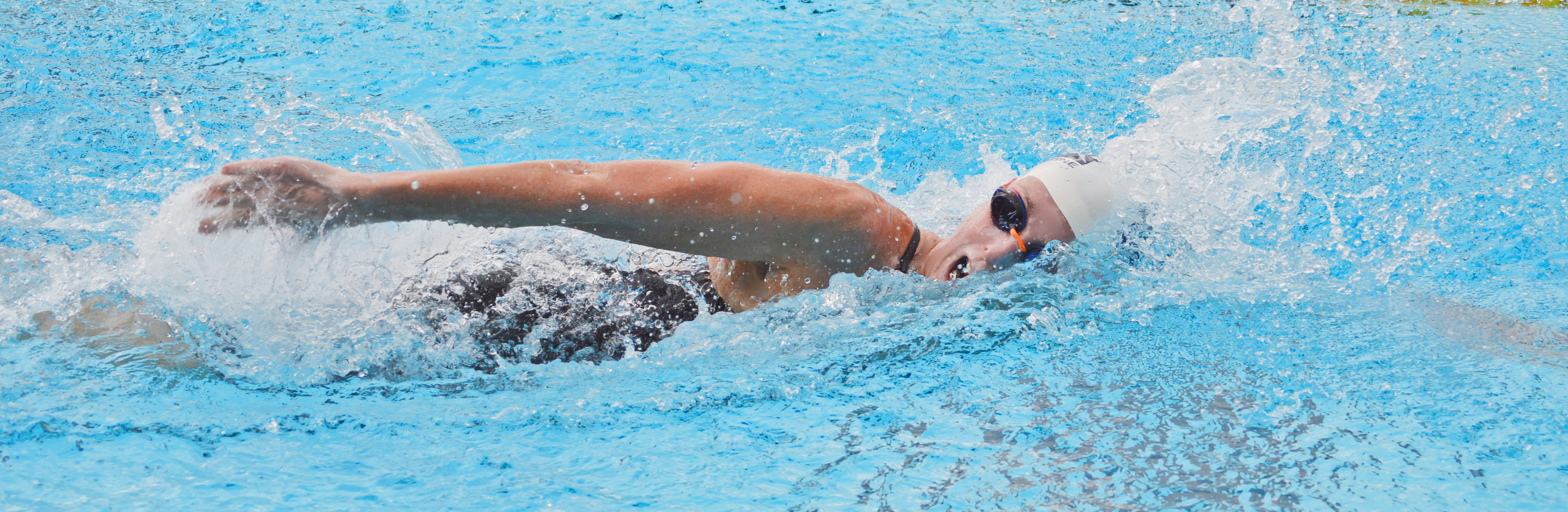
One of the most common technical flaws coaches see in masters swimmers and beginners alike is the dreaded dropped-hand entry and early elbow drop. You know the look: your hand enters the water, and immediately, your wrist or fingers point downward toward the bottom of the pool. Swimmers often do this because they are eager to start pulling, thinking that moving their arm backward right away equals moving forward.
Unfortunately, physics disagrees. When you drop your wrist or elbow right at the catch, you push water downward instead of backward. Pushing water down forces your torso upward and your hips down, creating more drag and killing your forward momentum. Even worse, this movement puts your shoulder joint into an internally rotated, vulnerable position. When you apply force with a dropped elbow, you are essentially grinding the tendons of your rotator cuff against your shoulder bone. Over thousands of yards, this habit guarantees shoulder impingement, tendonitis, and pain. To swim fast and pain-free, that habit has to go.
The Shoulder-Saving Catch Adjustment
So, how do we fix the dropped hand and protect our joints? The answer lies in shifting your focus from "pulling" to "setting your anchor." Imagine your forearm and hand as a single, solid paddle. When your hand enters the water, extend it forward just a few inches below the surface—not too deep, but not slapping the top either.
The magic adjustment is the high-elbow catch. As you initiate the stroke, your fingertips should point downward while your elbow stays high, pointing toward the side of the pool. By keeping your elbow elevated, you align your forearm to press backward against the water rather than downward. This simple geometry change does two amazing things. First, it instantly increases your propulsion because your surface area (hand plus forearm) is now catching more water. Second, it keeps your shoulder in a structurally sound, externally rotated position, taking the stress off your rotator cuff. You are no longer straining your shoulder joint; you are transferring the workload to the large, powerful muscle groups of your back.
Engaging Your Lats for Maximum Propulsion
If you want to swim without shoulder pain, your lats (latissimus dorsi) need to become your best friends. The lats are the largest muscles in your upper body, designed for heavy lifting and powerful pulling. Yet, many swimmers try to pull themselves through the water using only their shoulders, chest, and arms. Those smaller muscles fatigue quickly and are easily injured.
Engaging your lats requires a mental shift during the catch phase. As you establish that high elbow and begin to press back, think about driving your arm down by pushing your armpit toward the bottom of the pool. Imagine you are doing a pull-up or a lat pulldown in the gym. By engaging your core and your back muscles, you create a kinetic chain that links your hand all the way down to your hips. When your lats are doing the heavy lifting, your shoulders can simply act as the hinge they were meant to be, rather than bearing the brunt of your stroke force.
3 Essential Masters Drills to Improve Your Catch
Knowledge is power, but application is what brings results. If you want to rewire your muscle memory and build a bulletproof catch, you need to incorporate specific drills into your warm-ups. Here are three essential drills recommended by elite coaches that you can add to your next masters swimming session:
1. Sculling for Feel
Sculling is the ultimate drill for developing water feel. Lie on your stomach with your face in the water (you can use a snorkel to keep your neck comfortable). Extend your arms out in front of you with a slight bend in the elbows. Without pulling backward, move your hands in small, continuous figure-eight motions, pressing against the water to keep yourself afloat and moving slowly forward. Pay attention to the pressure on your palms and forearms. This drill teaches you to find the "hard water" and understand the exact angle your hand needs to create lift and propulsion.
2. The Fingertip Drag Drill
To combat the low-elbow recovery and the sloppy hand entry that ruins your catch, practice the fingertip drag. As your arm recovers over the water, keep your elbow high and allow your fingertips to lightly graze the surface of the water all the way from your hip to your entry point. This forces a high recovery, which naturally sets you up for a cleaner, higher-elbow catch when your hand enters the water.
3. Catch-Up Freestyle
Catch-up freestyle is brilliant for reinforcing body position and ensuring you are not rushing your catch. In this drill, one arm remains extended out front while the other arm completes a full stroke. The recovering arm does not move until the stroking hand touches it and completes the cycle. This forces you to pause, stabilize your core, achieve a great body line, and deliberately set your catch before applying any pulling force.
The Gym Setup for Strength and Injury Prevention
While spending time in the pool is non-negotiable, what you do on dry land plays a massive role in protecting your shoulders and powering up your catch. To support a healthy freestyle stroke, you need a smart gym routine that focuses on posterior chain strength, core stability, and shoulder joint health.
Incorporate exercises like resistance-band internal and external rotations to strengthen the smaller stabilizing muscles of the rotator cuff. Add lat pulldowns, single-arm dumbbell rows, and pull-ups to condition those large back muscles for maximum propulsion in the water. Do not neglect your core either; planks, deadbugs, and Pallof presses help maintain that vital horizontal body line, ensuring your hips do not drop when you fatigue. Spending just 20 to 30 minutes in the gym two or three times a week will pay massive dividends in your swim times and keep your shoulders healthy for years to come.
Conclusion: Putting It All Together in the Water
Mastering your freestyle catch is a journey, not an overnight fix. It requires patience, mindfulness, and a willingness to slow down your stroke in order to speed up your overall pace. By prioritizing a balanced body position, eliminating the power-robbing dropped hand, keeping your elbows high, and engaging your lats, you will not only feel significantly more powerful in the water, but you will also protect your shoulders from pain and injury. Combine these pool mechanics with targeted dryland work and intentional drills, and you will unlock an entirely new level of swimming efficiency.
For an even deeper dive into these techniques, complete with expert advice and actionable cues from one of the best coaches in the sport, make sure to listen to our complete discussion in How to Fix Your Freestyle Catch and Stop Shoulder Pain with Elite Coach Kim Brackin, EP 320. If this post helped you rethink your stroke, share it with a lane mate, subscribe to the podcast, and leave us a review so more masters swimmers can find their mojo!
Host, Founder, Journalist, Author
Kelly Palace is proof that you can be a world-record-setting Masters swimmer, bestselling author, and breast cancer survivor—and still laugh at yourself along the way. A former NCAA Division I head coach and journalist for Pfizer's magazine, she now dives deep with Olympians, experts, and everyday champions on Champion’s Mojo to uncover what makes people great (and what keeps them sane): the secrets to living well and swimming well. She’s survived 9/11, topical steroid withdrawal, and divorce, but has found love for the last 22 years with her husband, Mark, who is 12 years her junior. Kelly believes in comebacks, kindness, and coffee before (and after) chlorine. Her hobby of stand-up comedy makes her feel alive—and heckled.
Overcoming Swim Meet Panic Attacks and Air Hunger in Competitive Racing