Cullen Jones: Breaking Barriers, Episode EP 85
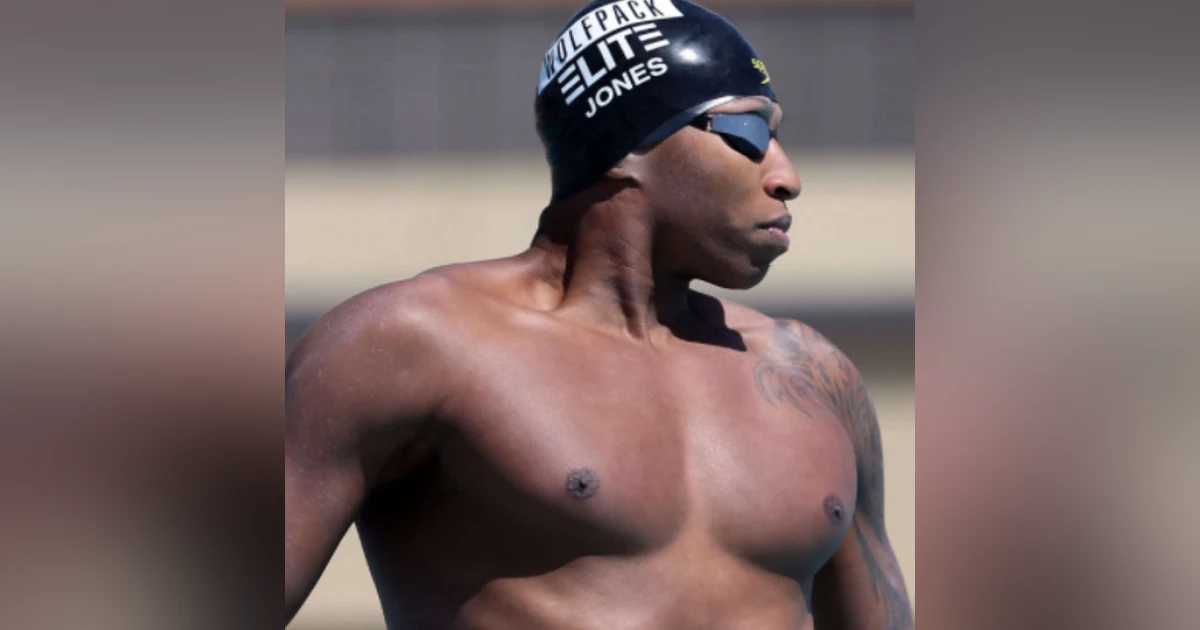


The responsibility of success is to ensure others have opportunities, too. Olympic gold medal swimmer Cullen Jones talks to Maria and Kelly about his competitive drive as an athlete and the organizations he is part of that strive to improve representation in sports. Tune in to this exclusive interview.
Have something to share with the hosts? Email it to hello@championsmojo.com.
MORE ABOUT CULLEN JONES
Cullen Jones is a two-time Olympian, competing in 2008 and 2012. He’s earned Olympic gold medals, is a current world record holder, has held American records and has been an NCAA Champion for NC State University where he was recently inducted into its Hall of Fame.
One of Cullen’s Olympic gold medals and his current world record came as team member on one of the most exciting events in Olympic history, the USA vs. France in the 4 x 100 free relay at the 2008 Olympic games.
At the age of 5, Cullen nearly drowned at a water park with his family. Yet today he is the most decorated Black swimmer ever. Cullen is an ambassador for Black swimmers as the face of Make A Splash!, a USA Swimming Foundation initiative to educate children and their parents on the importance of water safety and drowning prevention. He is the founder of the Cullen Jones Diversity Invitational.
Episode Topics and Mentions
Michael Phelps
Jason Lezak
Garrett Weber-Gale
NC State
Make A Splash!, a USA Swimming Foundation initiative
Cullen Jones Diversity Invitational
Swimmers for Change
George Floyd
Speedo
CG Sports Network
Newark, New Jersey
Tom Shields
Simone Manuel
Lia Neal
Reese Whitely
TYR
Braden Holloway
David Marsh
Ryan Lochte
Nathan Adrian
Caeleb Dressel
Takeaways
Maria
- Look at life’s challenges as an opportunity to reframe your current trajectory.
- You learn from people around you. Watch those you admire and improve yourself.
Kelly
- Just stay in the moment and take things one day at a time. What are you doing today?
- Be focused on helping others. Being altruistic infuses passion into your life and helps you see the bigger picture.
Quote of the Week
"Many things I learned in sports, like time management and discipline, carry over to the business world for success." -- Cullen Jones
Subscribe to the Champion's Mojo podcast on Apple Podcasts, Spotify and Google Play.
Have something you want to share with us? Email it to hello@championsmojo.com.
Email us at HELLO@ChampionsMojo.com. Opinions discussed are not medical advice, please seek a medical professional for your own health concerns.
You can learn more about the Host and Founder of Champions Mojo at www.KellyPalace.com
Champions Mojo is part of the CG Sports Network.
SPEAKER_04Win today. Take this race. What are you doing today to make yourself better? Okay, what are you doing tomorrow? Just be better than you were the day before. If that's reading one book or one page of a book, whatever it is, just focus on that. That's how I think I got to where I am today. I didn't look at the big pie. If I was staring at Michael Phelps all day, I'd be like, okay, no, never gonna happen. But I did it piece by piece by piece to the point where when I was next to Michael finally, and I looked at him and I said, Okay, you're next.
SPEAKER_01Welcome to Champions Mojo, a podcast to bring out your inner champion. Your hosts are sisters-in-law Kelly Palace and Maria Parker. Kelly is a former Division I head swim coach, Olympic trials qualifier, and holds national and world records in master swimming. Maria holds world records in endurance cycling and won the world's toughest bike race, race across America. Both are certified health and life coaches. Our goal is to inspire you through conversations with champions. And now your host, Kelly Palace.
SPEAKER_05Hello, friends. Welcome to the Champions Mojo Podcast, where I am co-hosting with Maria Parker. Hello, Maria. Hey, Kelly. Well, Maria, I am so excited for today's show. Our special guest is Colin Jones, a two-time Olympian in 2008 and 2012, who has just about done it all in the sport of swimming. He has earned Olympic gold medals, is a current world record holder, he's held American records, and he's been an NCAA champion for NC State University, where he was recently inducted into their prestigious Hall of Fame. And that's just a few of Cullen's accolades. One of the biggest accolades for Cullen is being a part of the Olympic gold medal relay in the 2008 Olympic Games, USA versus France in the 400-free relay. This was the legendary, most voted, the most exciting Olympic event in history. And Cullen was part of that legendary relay with Michael Phelps, Jason Lizak, who we've had on the show, and Garrett Weber-Gale. So that was set a world record. And when that record came into fruition for Cullen, he became the first ever black swimmer to set a world swimming record. That's just one of the many barriers that Cullen has broken. And we can't wait to talk to Cullen. But Maria, before we bring Cullen in, can you share a little bit more about his story?
SPEAKER_06Sure. At the age of five, Cullen nearly drowned at a water park with his family, yet today he's the most decorated black swimmer ever. Ever since his near-drowning experience and learning to swim, Cullen's been determined to beat stereotypes and inspire a more diverse population to become swimmers. Cullen's an ambassador for black swimmers is the face of Make a Splash, a USA swimming foundation initiative to educate children and their parents on the importance of water safety and drowning prevention. He meets with community leaders, parents, and youth to help educate them so that he can change the national drowning rate one child at a time. Collins is also a sought-after motional motivational speaker, and he's the proud founder of the Cullen Jones Diversity Invitational. So without further delay, let's welcome Cullen to the show. Welcome, Cullen.
SPEAKER_04Thank you for having me, Kelly and Maria. I'm so happy to be here.
SPEAKER_06We're delighted.
SPEAKER_05Yes, and and we we have to divulge right up front that Colin and I both wore this when Cap in the pool. So yeah.
SPEAKER_06So we're gonna we we may have a little little we're gonna talk about NC State, but it's not gonna be all NC State.
SPEAKER_05It's not gonna all be NC State. I was I would have worn an NC State shirt, but I don't have one here with me. So anyway. So Colin, just give us an update. What what are you up to?
SPEAKER_04So um I just my my son, I can say that I have a son now. He's 13 months old. He just had a birthday, and it's I've got to tell, tell you ladies, he I think he likes the water more than I do. Um when he cried, the first thing that you know my wife and I we were trying to figure out like, oh my god, he's he's broken, he keeps crying, we don't know what to do. Um, and then for some reason, like I was started washing my hands, and then he stopped crying. And so she looks at me and she goes, keep the water running. And then as soon as the water was running, he stopped crying. He loves water. He anything about water, he loves it.
SPEAKER_06He loves the sound of it. He likes his bath.
SPEAKER_04He loves bath time. Bathtime is his favorite time. He's and it's funny because you brought up my story. I was the same way. My mom used to put me in. I'm dating myself with Thundercats and He-Man, and I would sit in the tub and play until I was pruning, and it looks like that trait has passed on.
SPEAKER_05Well, we we so enjoyed your your tweet with him in the laundry basket when you were taking him through the laughed and laughed.
SPEAKER_06That was hilarious.
SPEAKER_04Oh, it was great. It's funny now because now when he sees it, he like looks at it and then he looks at me, and I'm like, no, my arms are still burning. You are heavy.
SPEAKER_06Where did you find that video of the so basically what Colin did is he held his son in a laundry basket and watched a roller coaster video and just sort of made the the basket do what the what it would have done? I thought that was interesting. Where did you find that roller coaster video? Did you think that up?
SPEAKER_04No, I wish I was clever enough to do to pick that up. I saw it on, I think it was on a YouTube video where uh a parent was a father actually was doing it with their child, and I was like, okay, child accepted. Um, my 13 month old is 25 pounds already. So it's 25 pounds, and you're shaking and moving, turning, turning, and he's just laughing. And every time I hear him laugh, I'm like, do it a little longer. That that that did it, just do it a little longer. He's having fun. But uh it it was it's it's cool to have those types of moments. Um, that video I will keep forever, although I shared it with everyone. Um, I'll remember that when he's 18, um, that I was able to do that with him. So it's fatherhood is just another realm of tiredness and exhaustion for real. But at the same time, moments like that which make it all the better.
SPEAKER_05Oh, yeah, that's so cool. So we we love to dive right in and see what mindset champions have that that we can share and understand. And and right now, it's a tough time to be in the world in the pandemic, everything that's going on. Just just how are you coping with just what's going on? Like how has your pandemic been?
SPEAKER_06How has your pandemic been?
SPEAKER_04How has my personal pandemic been?
SPEAKER_05Your personal pandemic. I I mean, also, you know, it's no secret. We're we're now part of the CG Sports Network, and I know you've done some stuff with Swarmers for Change, the George Floyd incident, everything that's going on in the world. Um, just share with us kind of what you've been doing and and how you're getting through this.
SPEAKER_04Well, uh, it's a little bit of a secret, but it won't be when everyone finds out soon. Um, I took a job with Speedo. Um, so I was working um at a hospital um for their foundation. And so working with the Make a Splash Initiative, um, honestly, I'll be honest, as a as a professional swimmer who's been in the water for 12 years representing their country, um, I didn't know what I was gonna do after. Like there has to be an after, but like what was that? And so I'm so thankful for the work and so how I worked so closely with USA Swimming Foundation that when I went to this hospital and I was like, well, I'd love to work with your foundation, I understand what it means to try to raise money for a better cause, better than yourself. And they gave me an opportunity. I worked there for a year, well, I worked there for eight months, and then COVID hits. And when I tell you I was baptized by fire, at that point, it was all we could do but to try to raise money for our front lines. Yeah, and there was no greater calling. Um, I loved every minute of it, but then I got a phone call from the president of Speedo, and he's like, I love what you're doing, but your voice is louder and swimming. And he's right. And so although I was called to do that work uh for the hospital here, I feel like I was also called to work back with um with uh Speedo, and the job is still the same. I'm a philanthropic sales manager. So what we do is we're actually for everything that people buy in Speedo, we're giving it back to the teams right now because we know during COVID the teams need it the most. Pool space is not uh not cheap. Um, renting anything is not cheap right now for our teams, so really focus on giving back. So my life has just been giving back, giving back, giving back, which is great. I love that that aspect of um way the way my life was trending, but I never thought that that would have been possible. Um COVID hit me like a ton of bricks, um, but at the same time, it also opened up this door for Speedo. Um, on the other hand, when it comes to civil unrest, um, that also hit me like a ton of bricks. Um the day after George Floyd uh died, was lynched in front of us. I walked outside of my house, which, like I said, 12 years of busting my butt and being an Olympian and representing this country. Um, I walked to my nice French bulldog, which are not cheap, walked him outside as my guy, my little guy, and I'm in front of this really nice house because it's my brother-in-law's house, is my wife and I build our house. And a cop rolls by because he lives in the neighborhood, whips around, comes back, sees me, comes up to me, he's like, Hey, uh, how you doing? Uh good. He's like, Well, what kind of dog is that? I was like, It's a French bulldog. Well, how big does he get? Big as he gets. Oh, oh yeah, well, oh, okay. Well, I I have a doodle. I was like, Oh, what kind of doodle? Oh, because I had to have this extension, extensive knowledge of dogs, and the guy was like, I was just wanting to know if everything was okay. And he said it twice. And so when he drove off, it hit me like a ton of brakes. I am a new father, my son is inside. If I was an irritated or angry or short with him, or gave him any reason to question me, that could have gone very different. If I didn't know an extensive amount about dogs that I didn't even know till that moment, anything could have happened at that time. And why did he turn around? Because I'm in a really nice neighborhood and I'm the only person that stands out because I'm black in this neighborhood, because all of my neighbors are white, it hit me like a ton of bricks. And I said, This is ridiculous, this is enough. I I gotta do something about this. So I talked to the first person, talked to my sister, Leah Neal. Um, we talked about swimmers for change. Um, and and I was like, I just we gotta do something. And I told her the story. She was basically in tears, and I was like, let's get all the swimmers together. So, all of the black swimmers, we got all of us together. We're starting to talk. Now we're talking with USA swimming, and we're trying to make systematic change within uh swimming. And for me, the beauty of that is it's not for me. I am retired, I am done, I don't care whether someone asked me for an interview ever again. It's about my kid who now loves the water so much that is going to be coming into this sport, and I want him to feel like I want him to feel welcomed. When I grew up, there weren't many swimmers or any swimmers that really looked like me going for the Olympic team. So I know that as a as a role model, I've built my pillar on that, but it's not for me anymore, it's for him.
SPEAKER_06How did you deal with these kinds of experiences before? So after George Floyd was killed, and you had that experience and it came right out, it bubbled immediately out. You had to do something, but you know, you've you've obviously probably had experiences like this your whole life. So I'm I'm wondering how did you just, you know, shove it down or just think this is, you know, this isn't my fight?
SPEAKER_04Well, you know, Maria, that's a great question. And I didn't always have a platform and these to be able to say to do something and say something. So when I was growing up, you're right. I I grew up on a grew up in Irvington, New Jersey. Uh, I was on the Newark Swim team, and it was a very diverse team. It was in New Jersey, very diverse area, right next to New York from New York, but we had every culture on our team. But when we raced against other teams, it was very different. You noticed that there was a big segregation there where we were the minority team and everyone else was white. Um, and that was fine. We didn't care. I loved swimming, I loved racing. That that was why I loved I loved racing, and I loved that it didn't come as easy to me as basketball. My dad was a basketball player, he wanted me to be a basketball player. I crushed his dreams and decided swimming is it, this is what I want to do. Um and he supported me 100%. But I love the fact that what I put into it is what I got out of it. I love that. The thing about I love sports, I love team sports, but when I played basketball, and if three of our guys didn't feel like playing and we lost the game, that bothered me. It it just it crushed me because I'm like, I'm giving it a hundred and sorry to be cliche, 110%, and we're still not winning. This is crushing me. But with swimming, if I gave 110%, maybe that sixth place became fifth place, or that fifth place became fourth place. And Maria, to your question, it all changed when that third place became first place. I was fifth, 15, and there was this one kid that just kept beating me. He just every meet we slammed the 53, bam, you touched me out, touch me out, touch me out. I was 15 years old. I remember hitting the wall, looking back, what's that funny straight line next to my name? What? I won first, yes, and I was so overjoyed. I didn't warm down, kids don't do that. I ran over to my parents, and my dad's jumping up and down, the guy who wanted me to play basketball, and he's just overjoyed because he saw the love that I had for the sport, all the work that I had done, all of that was coming to him, and he was just overjoyed. My mom is jumping up and down, she doesn't even pay attention to my times today, but I don't think she even knew my time. She just saw the first place and was like and went nuts. And then that kid that I always beat or I always lost to, his mom walked by and said, Shouldn't he be playing basketball? And I know I I tell this story because I think it's so important to tell people this story. My mom whipped around. My mom is not the one to play with ladies. So she whips around and is like, XK, and my dad grabs her, like, whoa, whoa, whoa, whoa, and he turns to me and he says, Do you know why she said that? I said, No, I don't understand, Dad. He said, Because it was okay when you were getting fifth, six, and seven, when you were getting pink and purple and all these wild colors. Now that you get in first and it's blue, now that you're beating their sons, her son in particular, she's mad. It was okay when you were in your place, but now that you're showing that you're better, they're gonna hate on you for that. And that was the day that I understood haters. That was the day that and and I knew at that point, I looked at my dad and I said, Oh, they're mad because I'm winning. Okay, I'm gonna give them something to be real mad about. And at 15 years old, it wasn't about the Olympics. I never thought I would go to the Olympics. It wasn't that. Kid where I came from, that's not what I thought. What I thought was, I'm gonna beat him again. I'm gonna beat him again. And I think that from all of what Kelly, you asked me, like, what has your COVID been about? I've been doing so many like talks and Zoom calls with people. Um, and that's the message that I keep telling these swimmers. Because they're thinking about, oh my god, there's no Olympics, oh my God, what there's no world championships, oh my god, there's no there's no junior Olympics. Win today. Take this race. What are you doing today to make yourself better? Okay, what are you doing tomorrow? Just be better than you were the day before. If that's reading one book or one page of a book, whatever it is, just focus on that. That's how I think I got to where I am today. I didn't look at the big pie. If I was staring at Michael Phelps all day, I'd be like, okay, no, never gonna happen. But I did it piece by piece by piece to the point where when I was next to Michael finally, and I looked at him and I said, Okay, you're next. And he still beat me, but that's not the point. The point was I got there.
SPEAKER_05Yeah, oh what that's so inspirational. That that just really inspires me. I mean, because all of us are a little like, when is this gonna end? And have you know, we're looking down the road, but taking care of today is is so huge. So, so Colin, in in the swimming community, now there was one hater there, or probably many haters. Um, what can we do, you know, as a culture, whether you're in a on a swim team or on a soccer team or in a ballet class or uh some of these golf, you know, some of the sports and some of the activities that are not diverse. I, you know, weirdly, I was a ballerina before I was a swimmer and I had to choose between ballet and swimming. And I never saw a blackface in in ballet. And, you know, it's it's and now they're you know, there are a few. What can we do? Because I feel like I grew up in Washington, D.C. I swam, you know, like a very diverse uh area. So practice, I I swam in Ains Point, the the Stafford Sea Devils, you know, um, one of my very favorite movies, if anybody hasn't seen it, is Pride. I think that movie is just like it's a it's such just such a great entertainment movie, but it's also such a great history. But I feel like maybe, and I want, you know, we're in these activities, whether you're you know, in ballet, you're in soccer, you're in in golf, you're in swimming, and you don't see a lot of diversity. But then you do see, you see the onesie twosies, the you know, the Colin Jones, the Leah Neals. I had Trent Light was somebody that I looked up to when I swim. He um so in in that little pod, I think, you know, you guys were just my fellow swimmers. I loved you. You just I never even saw skin color, but what can we do to bring more diversity into the sport so that it's not an anomaly?
SPEAKER_03Would you like me to cure world hunger too?
SPEAKER_06Okay, I'll we have some other problems too.
SPEAKER_05But you're pretty smart, Colin. You have an NC state education.
SPEAKER_04Let's do it with my NC State education. Here we go. Here's here's what I I think we should do. For me, it started that day that that police officer came up to me. It wasn't about me anymore at that moment. And for me, it was always about okay, well, you know, I gotta get to this next thing, I gotta get to this next thing. And at that very moment, when I sat back and said, this could have gone terribly wrong, it could have been my last day on this planet. What is the most important thing to me right now? And it wasn't that I wanted a Rolex, I want to Rolex. It was, well, what about my son? And so for me, it was about collecting all of the Black Swimmers together. Let's get together, let's figure out something that we can help this sport, if that's whether a lot of it, honestly, is just our time, which is really hard for Leah Neal. It's really hard for Simone, it's really hard for Reese Whitley because they're still on their journey to getting to that pinnacle. When it comes to Maritza Karaya, the first female to get a Olympic medal, um, and I would say world record, because she was on the morning swim for the world record. And then you've got me, who's just retired. I feel like it's our job to try to move this needle and try to push so that we can make this sport look more inclusive. And how do we do that? We have to talk to USA swimming. USA swimming has to also understand that this is important. Because if you and you want to know the model, look at basketball. Look at what basketball is doing right now. Basketball is understands what's going on right now. This is not something that's just gonna go away because unfortunately, God, from the time that you hear this from my voice, I really hope knock on what it doesn't happen, but there could be another incident that happens. And we need to make systematic change. And within the sport of swimming, we need to make systematic change. We need to make this sport look more inclusive. And when I say look more inclusive, I mean just tell our stories, tell my story, which I'm not saying that it hasn't been done already. I'm just saying that we need to do more of it. Tell Simone's story, tell Leah's story, and just see how we can. We have the ULET sisters, ULET sisters, I think I'm pronouncing that right. The two black female sisters that just made Olympic trials. Yes, tell these stories. That's what needs to happen. Because the listen, when Tiger Woods was playing at his very best, even I picked up some a golf club, wasn't very good at it, but seeing someone be successful is great. But it's also, and and I think that we do, I think USA Swimming does a great job of just showing that. I see pictures of Simone, I see pictures of Leah, I see pictures of myself, I get that. But like, where's the spread trail? How how does how does that swimmer get onto a good team with a coach that's going to teach them the proper technique and how to get better? Then how do they go from there to high school where they don't fall off? They get into the high school level and they swim high school level. And then, most importantly, ladies, how do we get them from where they are, where they grew up into a four year college? College where they have a shot, and if they're already too good, then they go just go pro. But how they get a shot from going from where they live. Because where I grew up, it wasn't a great area. But I ended up going to NC State, being able to go to NC State, having four years, learning so much, and then was able to vault into a career. There is so much drop-off in these sections. Learn to swim, great. Get on a team, there's a drop-off there. Get on a team, get into high school, there's a drop-off there. Getting into from high school, getting to college, huge drop-off there. Now, once you get to the college drum, if you crush the college drum, speedo, tier, we're all speedo, uh, speedo, we're looking at you.
SPEAKER_07Speedo.
SPEAKER_04We'll find you then. There's not a drop-off there. We're watching there. But it's these other little divots that we need to really work on. And we need to make sure that we can figure out from grassroots to Simone Manual how do we track getting there? And the best way to do that is to have your NGB have, they've got 550,000 followers, right? You're an influencer. You need to show the path of how to get to here because that's what's going to make the sport more inclusive. And that's how people are going to say, basketball, swimming, maybe I'll try this. Because I can be successful in it. And I can get out of where I live by doing this. Kids in these in these areas, lower income areas, are looking for ways to get out of where they are, whether it's rapping or basketball or swimming.
SPEAKER_06Cycling.
SPEAKER_04We have to show it. Cycling. You just have to show it. It's being, it's just having that exposure. And that's why I love to make a splash. That's why I love what I do when I get to go out there, flash medals, and they're like, are you rich? That's the first question people will ask.
SPEAKER_02These kids are quick. Are you rich? Is that real gold?
SPEAKER_04All right, listen. The point is that there is a career in this. I was able to travel. I was able to, I'm able now, once things open up, to take my child to travel because of swimming. Like there is a there is a way out through this sport. And I think that's from the from the the ground level, that's what they need to hear.
SPEAKER_05Yeah, and that's what we hope by showcasing you, you know, and yeah, and other swimmers. We'd love to have Simone on. And I think Leah's already said she would be on here, but we gotta we gotta get her booked.
SPEAKER_06So I'm I'm I'm hearing your passion and and you speak so eloquently and you are so focused on this. And I and that's very similar to what you described when you turned 15, right? I mean, yeah. So I I'd like you know, to generalize this a little bit, you know, what is it about swimming that has helped you to be so able to stand in front and you know, and see uh see something that's not fair, that's bad, and saying, I'm going to change this.
SPEAKER_04I think a lot of it is it's the the it's the things you learn in swimming, time management, leadership, all of these things. And and I'll say it and I'm gonna be because we're all athletes here. I'm just gonna be honest. That's why I want my child to be a sport. I don't care what it is. Play soccer, play anything. But you learn teamwork, you learn leadership, you learn time management, you learn how to, and when I say time management, I'm not just saying getting up at eight o'clock and or five o'clock in the morning for practice. I'm talking about understanding that, like, okay, I need to be here for 30 minutes and then I gotta be here and not being late. Like those types of things are taught through sport that I noticed when I came into the business world and I met people that weren't in sport. They don't value those things. They don't value necessarily being on time, they don't value all of these things that that leadership, CEOs, people that are at the top really value that is just innately in my culture to do. It's what I learned to do. And so that is what I think it I came out nervous coming out of swimming because I was like, I just don't know what I'm gonna do. Like, am I gonna be a fashion designer or an editor? Or I just didn't know. But then I got into the job for us and I started working with people, and I'm like, well, no, you of course you'd be on time. Well, no, of course you put a hundred percent effort into this because this is what your boss asks you to do. You don't slack, you just do these are just things that are built into us, and I think that that's what, and you hear it all the time. CEOs are like, yeah, I'll I'll hire an athlete in a heartbeat because all the other stuff, I can teach you Excel, I can teach you how to use all these other databases. What I can't teach you is ownership, I can't teach accountability, you know, time being on time, making having like a level of just caring, you know, and I'm seeing it from people that are even my age, people that are older than me. So I think that that's the biggest thing that like, you know, when it comes to sport, I I want my son to understand so much that there those are things that I like I can teach you, I can tell you that, but it's when you're on a field or you're behind the block and it doesn't go the way you want it to go. How do you handle failure? That's something that sport teaches you that most people do not understand, and I think is a big problem in our society today because we are so quick to get a phone and get instantly happy because everything's instant, instant, instant. When something doesn't happen instantly, when something doesn't happen the way that you want it, how do you deal with that? Do you crumble or do you figure it out and you stand up? Like that's what sport teaches.
SPEAKER_06That's beautiful. And that leads, sorry, Hick, go ahead, go ahead, Maria. I think that leads to what has been your biggest or one of your biggest disappointments or obstacles.
SPEAKER_04For me, my biggest obstacle was always um, my coach will say it, he's like, stay focused. Because I like when when you hit the pinnacle, you hit the pinnacle, you get there, I got a gold medal, and uh American record and a world record. It's like it's hard. It's hard to go in and go to practice and beat yourself up every day. You get tired of being tired. And so for my coach, he used to always have to find ways to just keep me motivated, and always it would be it would always be someone else, you know. And I love Jason and I love Nathan Adrian, but he would be like, Man, so they're just beating you again? I guess you're just not good enough. And I'm like, and that would do it. But he would always like he would poke and prod. So I think my for my my focus was always somewhere else, whether it be make a splash. Like we did make a splash every May because it was water, it's National Water Safety Month. So our biggest meets are in June. So I would travel two weeks before, three weeks before, sometimes cross-country to be in a city because I felt that make a splash was so important. I felt that because at the time I was the only face of it, that it was more I was saving a life if I flew to California from Charlotte, North Carolina, and taught one child how to swim. I'm saving a life.
SPEAKER_07Wow.
SPEAKER_04If I don't get first and Nathan touches me out, fine. I'd like to still make it. I know my contract that stinks, but at the end of the day, I'm saving a life. And my coach would be like, no, but I'll be on that plane. And uh that was that was always my devotion. I I looked at it that way. Yes, I love to win. Of course, I love to win. I loved getting gold medals, I love being able to represent my country, but I was saving lives.
SPEAKER_05So your your obstacle there was just identity diffusion, like you just had so much that you wanted to do that you weren't always as focused on that. So um in launching your career again as an NC stater, you did not win an NCAA title until your senior year. So that that means that you had to be patient and you had to kind of push through your freshman year, your sophomore year, your junior year until you you finally won your senior year. Sometimes seniors go and fall flat on their face, you know, it's it's um so how like in your swimming career, when I look at your your swimming resume, I don't see a whole lot of failure. Like I don't see so were there times in swimming when you just thought it's over, I've lost it, or boy, the I you know I stumped. Is is is there did you ever have a bad and a bad NCAA meet?
SPEAKER_04All right. So I will say that all right, true confessions. True confessions, true confessions. And it was something that I already have the job now at Speedo, so y'all can't take it away from me, but I'm gonna be honest, what happened? So when I went to NC State, I did not have a full scholarship. It was I was admitted to the school, and my SAT score wasn't where it needed to be initially, so I had to go and retake it again. And when I did get in, I started my freshman year in January. So I started a half a year or late because I am terrible at standardized tests, awful, right? But I wanted to be a psychologist, like that's what I wanted to do. I wanted to focus on psychology, and so I went into school there. My freshman year, all I did was swim. I went to class, but at the same time, I was so focused because, and I know this for a fact, and I will tell any story of this. When you go from age group to college, it is a job. Swimming becomes a job. You're representing your team, and that became so important to me that I wasn't letting my teammates down at this higher level that my focus was more on practice than it was in school. So my freshman year, I get sixth. Oh my God, the team threw a party.
SPEAKER_02They're like, oh my god, our freshman is actually he swam finals, he got sixth. This is amazing. Cohen's gonna be great.
SPEAKER_04My grades weren't where they needed to be my freshman year, and so I had to sit out the first half of my sophomore year. We lost to UNC, which literally is like to me, literally. We we beat Duke, which was okay, but at the time, UVA that was they were the powerhouse, and so UVA just wiped the floor with us. And at the time, I'm forgetting his first name right now, but his last name is Anderson, and he was the best 50 freestyler for them. And I remember sitting there watching, and I had my NC State gear on, and I could not swim because I wasn't academically eligible, and I watched him walk by, win the 50-free, look at me, and laugh.
SPEAKER_07And I was like, Huh? Watch out, here I come.
SPEAKER_04So, what I found out about myself is I am very bad at standardized tests. I just really am bad because what I would go back to my teacher with was like, but look, this is the right answer. And he would say, That's the right answer. And if, you know, I'll be honest, like as a psychologist myself, I would do the same thing, but it's not the best answer, and it's not what the book says. That drove me crazy. You're telling me that the answer is right, but it's just not what the book says. So I switched my major to English, which I was I hated thinking that I was. I was a great writer. I am a good writer. I can explain to you why I think this is the right way. So all of those C's and D's became A's and B's as soon as I shifted my direction towards what my strength was, which was English. I never had a problem in school again. I when I got to English, it made sense. Everything that I wanted to persuade you to think, the teacher was like, oh, it's well thought out, okay, A or B. And I never had to sit out again. So that was my struggle. My struggle was really, again, that balancing aspect of here I am trying to be the best swimmer I possibly can. And also, I need to, I really need to take education as as heavily as I did when I was in school. I was a B student in high school, but that standardized test crushed me. And then I get to school, I had not great grades. As soon as I shifted to uh something that was a strength of mine, boom, here comes the B's and Na's again. That sophomore year was the first time because of that look that Anderson gave me, January 1, when I was able and I had a 2.8 GPA that year, you can swim. Boom, I was in the water. I was ready. I did not lose the 50. I won the 50 free and the 100-free at ACCs and went to NCAAs for the first time. And I was uh I was a man on a mission after that. So when you say there wasn't failure, sure, there was. It might not have looked like it in the pool. Um, but there was definitely some some hurdles that I had to get over because I, again, that balancing aspect of you know, wanting to be a leader. At that point, not just because of my the shift, was saw my my coach, Brooks Teal at the time, saw that shift in me that day, that very day that we saw him against UVA, to the point where at the end of the year, he wanted me to be the captain. I would have been the youngest captain in in the whole um NC State history. Um, probably not now, but at the time. That next year, he made me captain. The guy who didn't have the grades the year before, he made me captain. And after that, it was he and I trying to figure out how to make the team better. And that was just my goal. My goal was like, yes, I'm gonna be in school because I know that I need to be a better student, but more importantly, I had a taste of NCAA's. We are not where we need to be. I am not where I need to be. There is a level above this that I have to be better, and then the next year that was my mission.
SPEAKER_06Were you able to motivate the other NC State swimmers? You sound like just a natural leader.
SPEAKER_04Uh no. I'll just be honest. No, not everybody. Um, it was it was hard. It was some. I got I got some, you know, and I think that's another thing that I like to tell when I do my public speaking is that like it might not be everybody, but if you can get a couple to just listen and and motivate them to be better, um, I think that you can make serious change. And the the the proof is in the pudding because the next year um I wasn't the only person at NCAA's, there were three other guys with me. And our relay was ranked top eight in the country.
SPEAKER_06So you were able to motivate other swimmers.
SPEAKER_04I did. So it's not everybody, not not everybody, you know, and and and I think that's what I love about because Braden Holloway, the coach now, he was there my recruiting trip. I remember because he was going to NCAA's. And I looked at him and was like, I'm going to NCAAs. He looked at me like, yeah, all right. And then he saw me swim and was like, oh shoot, okay. Um and so I remember at trials, this had to be 2008, he was still at Virginia Tech, and he's like, I don't know if he was thinking about taking the job at NC State, but he was like, the culture at NC State has to change. And if that doesn't, if that wasn't just motivate, I was like, yes, you're right. People are not focused on the fact that like ACCs is not it. There's NCAAs out here. We got to go to NCAAs, we've got to be ranked in the country. Like, come on, we got to do better. And I just saw him, I saw a fire in him, and I was like, okay. And then the next couple of years, I saw he he got the head coach job, and I was like, okay, here he goes. And then within three years, we're ranked fourth in the country. And I'm like, change of perspective. That's all it took. We can do it. That's all it took. And now, not that I wasn't before, but I am very proud. I go to this grocery store in this, I watch movies in this shirts.
SPEAKER_05Yeah. Well, when we when we interviewed Braden, I thought it was really cool. He said when he first took over the job, he went in and and told the athletic director, Hey, if I don't have anybody on the team my first year, will you give me that? Because if I have to clean house, I'm gonna do it. And then I think she said, You get one year, if you need to do that, you know, and take nobody to ATCs, then, but of course he didn't do that. But it he was he was serious, and obviously it's been big time for NC State. So all these all these athletes, not just the collegiate athletes, but um, you know, we we've particularly followed the women this past year. In fact, um one year ago this week, I did a uh retreat with the women's team, which is was over a three-day weekend. It was their preseason, and we were all super psyched for this coming year. And you know, Sophie Hansen was seated first to win a couple of re you know, a couple of events, and I think the relays would have won, you know, had a shot at the medley titles. Um they didn't, you know, no all all the championships, championship meets that were canceled. So what are your thoughts, Colin, on these athletes that besides the focus on today, this this crestfallen feeling of, you know, I was ready, like you know, they they didn't shave and rest for ACCs, right? But they never got the NCAA. What would you tell these guys?
SPEAKER_04I I try to tell people, and it's it's the hardest thing because A, I didn't have to deal with it, but what I tell them is it's no different from being behind the block and your goggle snapping. It's no different from being in a suit and your suit gripping, which has happened many times. Um it's a hurdle. You can make it as big or as small as you need to. It's hard to have to shift and readjust. I think that's the hardest thing in the world because when, especially for me, I'm slightly OCD. So, like when things go out of the plan, it's like but you have to understand that that's gonna happen. There is nobody on this planet that taught me that better than David Marsh, who is like a father figure to me. And David taught me how to be a professional swimmer. If you don't put in the work, David's like, okay. And I'm like, but but you look bad. No, I don't. You look bad, you didn't put in the work, you didn't do the effort. I've got all these championships back here. And to have a coach that literally says, I want you to be the best you can be, but I can't do it unless you do it. That changed my perspective. So the fact that things, so many swimmers are struggling because they're they're caught in this box that, like, you know, oh, this is how it's gonna be. This is gonna have this is how it has to be. David would come in and have us do practices without goggles. He's like, sometimes your goggles are not gonna work, and you still need to finish. So no goggles today. And you're like, huh? What? Okay, so today we're not gonna work on anything with any of our, you know, you're not gonna have a cap, you're not gonna have paddles, you're not gonna have this, you're not gonna have that. Something's gonna break. And he was teaching us how to adapt to situations. And I know this is a very small situation that I'm bringing up, but the hurdle is as big or as small as okay, it's another year, it's another year for me to get better. It's another year that, like, literally, if if I think about my career, I consistently got better year after year after year. So, okay, it's not 2020, it's 2021. All right, so that's a year that I'm gonna get better. And I think that a lot of swimmers don't think of it that way. Now, he is my brother, and I'm gonna make fun of him. When it's Ryan Lochty and is he's at his age, and what is he like 46 now?
SPEAKER_02Um, you gotta worry, you know, because the time's a chicken for him.
SPEAKER_04I'm kidding.
unknownRight.
SPEAKER_04If I can tell you one thing, inside scoop, that dude is getting on the team. He has been training his face off. But like when you have when you've been in the sport for as long as Ryan or me or Nathan, it stinks because maybe we were gonna retire. But when you were in college, you're still on the up. Okay, it moved. The hurdle, the hurdle moved. You can make it this big where it debilitates you, or you can make it small and just say, All right, well, it stinks. I'm gonna have to swim next year, but I did so much progress this year. Okay, okay. Do I just stop or do I build off of that? And if it's me, and if it's a like an athlete like me, I'm just gonna build off of it. I'll take a couple of weeks to recover, get myself right, and then focus in again and replan again, rather than sitting back and go, Oh my god, there's no Olympics, but I thought it was gonna be an Olympics this year, and I planned on Stop. Your goggles broke. That's it. Your goggles broke. All right, let's focus again, let's figure it out. And I think that that's that was a conversation. I had with Ryan. And Ryan, I was like, man, where's your head? And he goes, he's like, it is what it is. I can't do anything. He's also the guy that yawns before a 200 I am and then sits on the record. So he's also that guy. But at the same time, I'm like, man, I wish I had that kind of freedom mentally when I raced. When I raced, I was like, and I might not have looked like it, but I was freaking out. But he's he literally said that and I was like, Yep, your goggles popped. It is what it is. You gotta adjust.
SPEAKER_05That's a great, great perspective. And I I totally agree with you. I think Ryan is gonna make the team. I think he's gonna make it in 2021. I love the documentary.
SPEAKER_07Um on him.
SPEAKER_05I thought it was wonderful. Obviously, Colin, you have had some rituals or routines or things that you have done throughout your life that have helped you become the best you. You said you're a little OCD and you're preaching to the choir here. Um, what what have you done or little things that you've you've consistently done throughout your life to be successful? Anything tell us your tricks.
SPEAKER_04My tricks. Um I think so. I'm gonna look before we get to that, I'm gonna make fun of Ryan again.
SPEAKER_06Oh, let's do it. He's gonna see this. We gotta make sure we're gonna send this directly to Ryan.
SPEAKER_04He's the reason why I'm OCD. Ryan Watsy is the reason why I'm OCD. Because most people don't know this. He is a clean freak, neat freak. And so in 2005, or no, 2006, I go on my first team, and um I'm in China representing Team USA, world short course, and I'm walking down the hall, and I hear Little Wayne blasting out of one of the doors. And I look inside and here's Ryan rapping every single word. I was like, You like little Wayne? He's like, You like Lil Wayne? I was like, Yeah, room switch. So then we from that point on, we became roommates forever. Now, in these trips, you're literally in the room, we come back from practice, we watch TV, there's not much for us to do, we're focused on racing, whatever. Ryan will clean and then clean again.
SPEAKER_02That's what I and then clean again. I love cleaning, and so I got to the point where I look at his half and it's spotless. And then I looked at my half and I'm like, man, I can't be the messy one.
SPEAKER_04I started cleaning, and it just it over the years, I just got to the point where now I do it myself. I'll refold stuff. He would just refold, refold, refold. Wow take it out, refold it again, and I'm like, ah, and I it just started catching up to me. So that's a champion tip.
SPEAKER_06You have to be very neat and fold things very carefully in order to succeed.
SPEAKER_04I would say yes, I would say that that is I am meticulous because of that. And to bring that up, another person that did that, Phelps. So we're talking about the two titans of our sport who happened to be my best friends, the two of them, I watched them constantly clean, clean, clean, clean, cleaning, and I was like, huh. I started looking at what they did in the pool. Everyone's like, oh, Ryan's so goofy, Ryan's so this, that, until he puts goggles on. Once he gets behind the block, and once Michael gets behind the block, they're at work. It is business. That is it. And so I started watching some of the stuff that they did. Now I did this, I think, subconsciously before. I was very, very focused on my technique. And I think it's so easy now for swimmers, and they're so lucky because they can all you have to do is pick up a phone and they can look at YouTube and watch my stroke, watch Caleb's stroke, watch our dives, watch all these things. You just have to be a sport of you have to be a student of the sport. But for me, I just had to watch. So I would watch people's stroke and I would analyze how they were doing certain things, and then I would try it for myself to see if it would work. I another fellow Wolfacker, soon-to-be Wolfhacker, David Curtis, said the same thing. He goes, I like to watch people's strokes and then try to see if I can do it and see if it works for me. That is brilliant. That is a student of the sport, and that's what I think I learned when I watched Michael and Ryan. It was, yeah, everything's all fun and games until they had to race each other. Oh, you do not want to be around for that. Or if it came to practice, there were some of the craziest practices. I would get out because I'm a sprinter, and I would watch them, I would watch them swim, and it would be the end of like 20, 200 im. And like everyone would stop and just sit there and watch as these two guys would go like this the entire time. Backstroke, here goes Ryan, breaststroke, here goes Ryan, freestyle, here comes Phelps. And it's just like having that much devotion, having that much, that much desire to be better and at your craft was infectious. And I tell people to this day, I hate kicking. I do, I hate it. But it wasn't until I decided I needed to be a better kicker and started changing my mind. And when people said, We're gonna do a kick set, instead of me going, oh, I went, All right, is it time for me to get better? When I turned that, that's when I got an American record that year.
SPEAKER_05It's in the how did you do that? Was it just through pure willpower, or how when you're when you're changing a you know, a mindset that you have?
SPEAKER_02I wanted to be like my friends.
unknownOkay.
SPEAKER_04I wanted to be like my friends. I watched I watched that 2008. I watched that 2008 relay. I was the slowest one, and I still went 47-6. Don't get me wrong, it's still a great swim. It is, but I was slow, I was slow compared to Superman 46-0, Jason Leezak, Michael's going 47-1s, Garrett won a 40 uh 47-3. I'm like, man, you're slow. And then I went back to the drawing board with David, and I was like, I gotta be a better kicker. He goes, No sugar honey iced tea. Yeah, it's like you need to be better, you need to be better, and I was like, okay, and that year I worked on kick. The next year I set the American record in the 53. I had to change that mindset.
SPEAKER_06So, so the the parallel with folding clothes is sort of an attention to detail and an intention to do it exactly right.
SPEAKER_04Correct. I watched my stroke, I started watching other people's stroke. If they were better than me at something, what were they doing that I wasn't doing? I became a student of the sport and meticulous about the little things that I do. And the funny thing is, turned over into the workforce. I do the same thing, and I still clean. Every time I get away from my desk from work, I'll go down to the house and I'll start cleaning. Start cleaning. I can't shut it off. But I'm proud of it.
SPEAKER_05That's beautiful. Well, it we really want to keep your your own. I just talk another hour. I know, we can talk for another hour. But is there anything that we have not touched on, Colin, that you would like to um share with us?
SPEAKER_04Um I I everything I think is is pushed by marketing now. So follow me on Instagram because I'm still doing a lot of different things with um within the sport of swimming. Um, as you can hear from my voice, I'm very, very devoted towards trying to push the needle when it comes obviously drowning prevention, but definitely working towards um making this sport more inclusive. And I want people to understand that there are ways of doing this. And yes, it does take Simone, it does take the Louette sisters. I hope I'm pronouncing that right, it takes Leah, it takes Reese, it takes this next generation, Giles Smith, Natalie High, it takes all of these swimmers to show young swimmers that this is possible. And if I can help, that's what I'm doing right now. I'm just putting my hand in it and trying to help as best I can. So um keep watching on social because if there's a way that I can help your team, or if there's a way that maybe you have an idea that I haven't thought of, I'm open for that. So please just hit me up, let me know, and let's make some change.
SPEAKER_05Oh, thank you so much, Colin. Thank you so much, Colin. It's been awesome, and I know people are gonna get a lot out of this. Takeaways, takeaways, takeaways. We've heard from you that your favorite section of our podcast is the takeaways. Thank you so much for that feedback. But before we get to the takeaways today, we wanted to ask you if you would please give us a five-star review. That way, more people will be able to find our podcast. Also, if you could subscribe on iTunes or Stitcher or Spotify, you'll never miss a podcast episode if you subscribe. And please share our podcast with your friends. And now, the takeaways. Okay, Maria, so let's do these takeaways that uh Colin had so much wisdom. What a he he's just he's he's really kind of a selfless, thoughtful, you know, he's so articulate. I think switching to an English major was perfect for him because he he's he's great with the the English language, the words. Yeah. But um so what was your very first takeaway?
SPEAKER_06Well, like you said, there's there's there's so much. You know, he talked about uh failure, you know, we you know, and and you know, sort of the idea that swimming without your goggles or swimming with broken goggles, that you know, you have to reframe failure and reframe difficulties. And it sounded to me like that taught him some flexibility because, you know, if you think things are gonna go a certain way, you know, and then pandemic comes, you know, if that throws you into a complete tizzy, then you're not gonna get very far. But if you can look at that as an opportunity and reframe it um then then, you know, as an odd, you know, as as more time or you know, look at it as who knows, you know, what this is gonna bring. And I think he can do that maybe more easily than most because he has this sort of very high-level view of his life and how things have worked together, which we talked about a little bit after the interview. But, you know, it's if you can helicopter up in your life and say, okay, this looks like something bad, but who knows? You know, it it could turn into something good. So that was my first takeaway that you know, you got to reframe difficulties and failures and turn them into something that can inspire and motivate you to continue, continue going.
SPEAKER_05Right. I think that's a theme that we hear from a lot of champions. Um call it a speed bump or something, but just the reframing of it is is huge. So along that that same line, I asked him what what were what was some good advice for people that that had this, you know, what were we doing during during the pandemic? Because we're all, you know, it's it's kind of a rough time. Yeah. And he said, well, you know, let's not think about when the pandemic is ending. So if we think about when the pandemic is ending, we're really not taking care of today. So I loved his concept of just staying in the moment. You know, this was this was another in the moment, take it one day at a time. What are we doing today to make ourselves better? And I, you know, I've been thinking, oh, I wanna, I, you know, I want to start running again. I haven't been running lately. And I keep saying, I don't know why I'm saying this, but I keep saying, oh, I'm gonna start running when the pandemic ends. I don't know if that's just because then there'll be 5K road races and people will be able to mingle with people or because I don't want to go out into a park and run behind people who may be, you know, spreading the virus. But anyway, so why do I need to wait until the pandemic ends to start running? You know, I can start running today. So I I love that. Take it one day at a time, and uh, you know, and that's the way that you build that penny in the jar.
SPEAKER_06Right. Penny in the jar, and then you have a I truly love that. That's you know, try how I try to live not. And he said he wasn't even, I thought it was interesting, you know, like I never even dreamed of the Olympics. You know, I'm a black kid from New Jersey, I'm not going to the Olympics, but he he was gonna win the next race and beat the next guy. And right. Uh and then all of those, you know, all that hard work to do the next right thing gets him to the big, big, big finish line.
SPEAKER_05So yes, I love that. How about your second one?
SPEAKER_06Well, I I love this because uh he I I loved his discussion of folding clothes because I love to I love to clean too. And you know, he said Ryan Lefty made him OCD, which is funny, but um just that you learn from people around you. So, you know, he you know, he's a particularly social guy. And so he watched his friends and he said, you know, I I've got to learn. And so, you know, when when when we're you know trying to get good at something, you know, my tendency is to just uh you know put my head down and try to learn. But the best thing you can do is go find somebody who's good at it and watch them and try to, you know, use their techniques and practice them. And um, so yeah, pay attention to the people around you who are good at what you want to be good at. And I mean, that's you know, one of the things, one of the reasons why I'm doing this with you, Kelly, is because you have a whole set of skills that I don't have and I want to acquire. And so, I mean, I think, you know, it can be uncomfortable, but you know, don't just look at the person, but ask, you know, okay, you know, how are you doing that? You know, how can you help me become more like that? So I I loved that, that sort of takeaway. It was just like we can, you know, he got better at kicking. He realized watching his friends that if he was gonna ever get there, he was gonna have to be, you know, better at kicking. And watching the videos and studying and you know, all that's really, you know, learn. You know, we can always learn from those around us.
SPEAKER_05I yes, Maria, that was a great one. And even just role models were very important to him. And it's even part of part of the way that we can diversify sports and and activities that aren't very diverse is by you know, having role models, seeing people that are doing things. But but that is such a great when someone has already done what you want to do, it's just so logical to go watch them, you know, watch them do it.
SPEAKER_06So sometimes our pride keeps us from doing that. Well, at least mine does.
SPEAKER_05I just speak for myself. But I think humble down.
SPEAKER_06Hey, say, how do you do that? I want to do that.
SPEAKER_05Right, right. I love it, I love it. And and the final, and I think probably the biggest for me, the biggest takeaway of who Colin Jones is, has actually worked, I think, in his favor and maybe against his some of his success is that he is truly focused on helping others. Yeah, he's so altruistic and giving. And and this comes under the theme of I think that it's helped him in the fact that he said, you know, he's he's been working with the um Make a Splash Foundation and helping kids learn to swim for even throughout his swimming career. So one, it's it's balanced his swimming. So right, swimming isn't everything. He understands that by, you know, if he gets touched out by Nathan Adrian or Jason Lizak or someone that, you know, maybe didn't just come off a road trip from helping the foundation that he loves, then you know, that's the way it is. You know, he's so it's it's kind of a balance, like saving a kid's life, teaching a kid to swim is so important, more important even than maybe him winning or making an Olympic team. So I think that worked to his advantage because it it gave him dimension and depth and and broadness that this, you know, Colin Jones isn't just a swimmer. He's so much more than a swimmer. But then some people believe that his lack of making the Olympic team for his third Olympic team in 2016 was because maybe he was doing so much traveling and working so much with Make a S Flash that he didn't, you know, he he wasn't as ready as he could have been for his Olympic trials in 2016.
SPEAKER_06So I think the bottom line is Yeah, the the difference is that this is a man who knows who he is. And so, you know, like he said, you know, save a life, win a, you know, win a win a ring. Um, you know, I'm gonna save a life. And it's the same thing. When I think it's really interesting that, you know, uh when George Floyd was murdered, he, you know, he knew that immediately that that meant he had to do something. So he knows who he is. And I think, you know, that that's really an important thing too, maybe just a sign of uh the great man that he is, and also a sign of maturity. It's like if you know who you are, then the decisions about what to do with your life are a little bit easier.
SPEAKER_05Yes. So so those were some those, you know, those were just minimal two each takeaways, but obviously the whole interview is well.
SPEAKER_06We hope to have him back. Great guy.
SPEAKER_05Yes, yeah, that would be wonderful. All right, Maria, another another great interview, and just love spending the time with you. Love you so much.
SPEAKER_06Love you too. Bye-bye. Bye.
SPEAKER_01This week's quote of the week comes from Colin Jones. Many things I learned in sports like time management and discipline carry over to the business world for success.
SPEAKER_00You've been listening to the Champions Mojo podcast with hosts Kelly Palace and Maria Parker. Champions Mojo is produced by Cabra Media, and a new episode debuts every Tuesday. Subscribe wherever you listen to podcasts and leave us a five star review. Follow Champions Mojo on Twitter, Instagram, and Facebook at Champions Mojo.
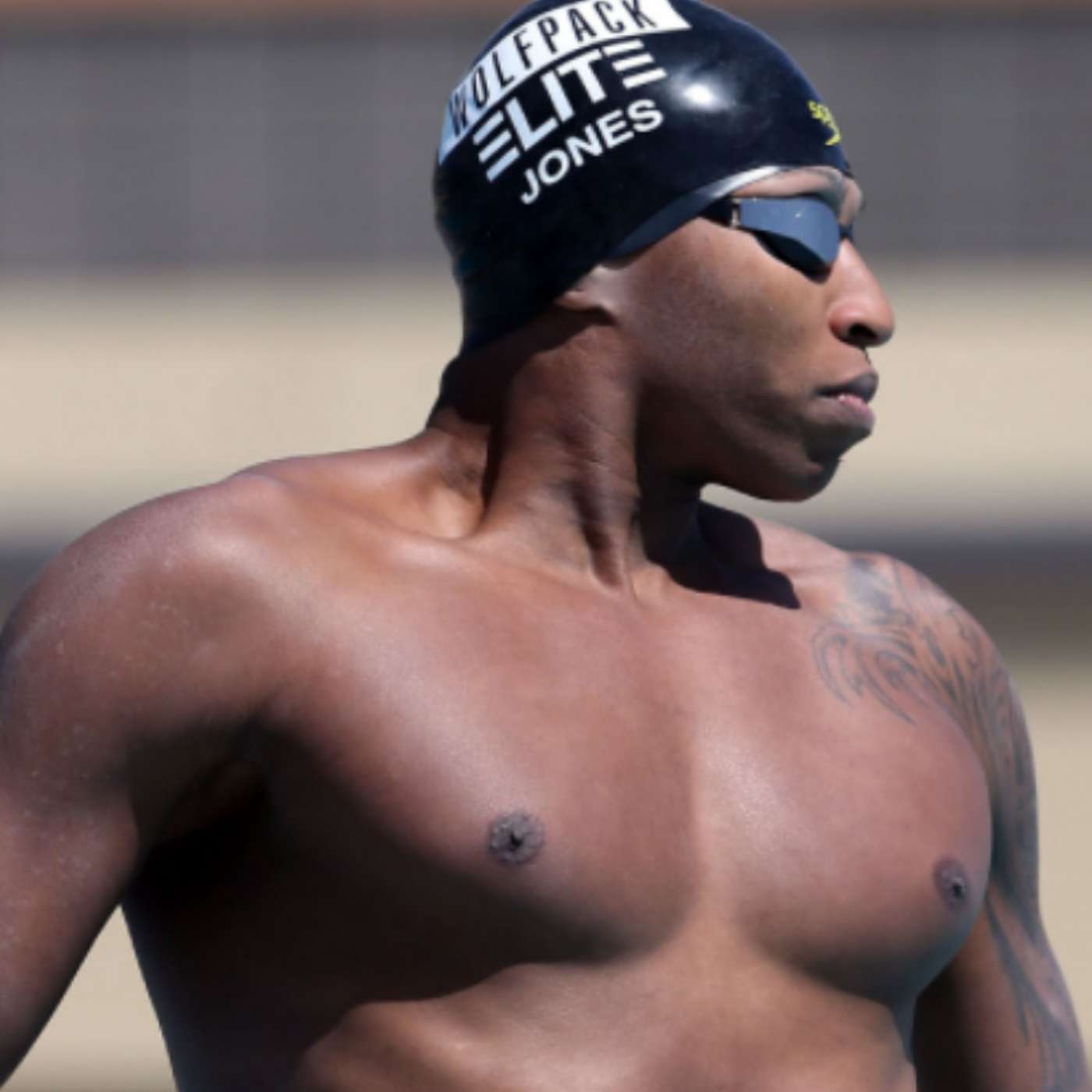
Olympic Swimming Champion