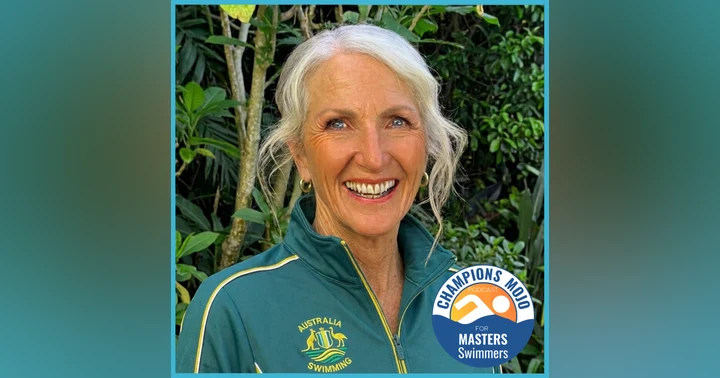
The Habits That Help You Stay Younger Longer (And Perform Better, Too!) with Dr. Bill Andrews

Everyone wants to know the secret to aging well.
Athletes chase it through training. Researchers chase it through science. The wellness industry chases it through supplements, treatments, and the latest longevity trends. Yet despite all the noise, one question remains surprisingly simple:
What actually helps us stay healthy, capable, and energetic as we get older?
For molecular biologist, gerontologist, and ultramarathoner Dr. Bill Andrews, the answer starts with understanding the body's internal aging clock and then making daily choices that slow it down rather than speed it up.
While much of the conversation around longevity focuses on looking younger, Bill argues that true rejuvenation should be measured by function. How do you feel? How do you move? How much energy do you have? Can you still do the things that matter to you?
Those questions matter just as much to masters swimmers and endurance athletes as they do to anyone interested in living a longer, healthier life.
Aging Is More Than a Number
One of the most important ideas Bill shares is that aging isn't simply about the number of birthdays you've had. Two people can be the same chronological age and have dramatically different levels of health, energy, and physical capability.
That's why he encourages people to focus less on the calendar and more on biological aging. In practical terms, that means paying attention to the daily factors that either accelerate wear and tear on the body or help it recover and adapt.
The encouraging news is that many of those factors are within our control!
The Hidden Cost of Chronic Inflammation
If there's one theme that shows up repeatedly in aging research, it's the role of inflammation.
Inflammation is a normal part of life. It's how the body responds to stress, illness, injury, and training. The problem arises when inflammation becomes chronic and never fully resolves.
Over time, chronic inflammation can contribute to many of the changes we associate with aging, including slower recovery, reduced performance, increased disease risk, and declining physical function.
For athletes, this creates an important balancing act. Training should challenge the body, but it shouldn't constantly overwhelm it. The goal isn't to avoid stress altogether. The goal is to apply the right amount of stress followed by adequate recovery.
Why More Isn't Always Better
Many endurance athletes fall into the trap of believing that if some training is good, more training must be better. Bill points to a more nuanced reality.
Regular movement and exercise appear to support healthy aging, but excessive or inconsistent training can create unnecessary inflammation and recovery challenges. Instead of constantly pushing harder, the body often benefits from consistency.
This is especially relevant for masters athletes. The workout you can repeat week after week often delivers more long-term benefit than the heroic session that leaves you exhausted for days.
Progress doesn't come from constantly testing your limits. It comes from creating a training rhythm your body can sustain.
Recovery Is a Performance Tool
Athletes tend to focus on what happens during training. Bill's perspective highlights the importance of what happens between training sessions.
Recovery isn't passive. It's productive.
Sleep, stress management, nutrition, mobility work, and intentional recovery practices all influence how well the body repairs itself.
One strategy that often gets overlooked is tapering. Many athletes view tapering solely as race preparation, but it also demonstrates a larger principle: performance improves when recovery is given room to work. The body doesn't get stronger during the workout, it gets stronger when it recovers from the workout.
Stress Matters More Than Most People Realize
Physical stress isn't the only factor influencing how we age.
Emotional and psychological stress can have profound effects on overall health and recovery as well. That's why practices like meditation, yoga, mindfulness, and intentional relaxation continue to show benefits far beyond simply helping people feel calmer.
Reducing stress isn't about avoiding challenges. It's about improving your ability to respond to them. For athletes, professionals, parents, and anyone balancing a full life, that skill becomes increasingly valuable with age.
Be Careful of Quick Fixes
The longevity industry is growing rapidly, and with that growth comes an endless stream of products, treatments, and promises. Bill encourages a healthy dose of skepticism.
Rather than chasing every new trend, he recommends focusing on evidence, asking questions, and evaluating whether a strategy produces meaningful improvements in real-world function.
The most effective habits are often the least glamorous:
• Consistent exercise
• Quality sleep
• Stress management
• Healthy nutrition
• Strong relationships
• Recovery practices you can sustain
None of these make flashy headlines, but together they create a foundation that supports long-term health and performance.
The Real Goal
Most athletes aren't simply trying to add years to their lives. They're trying to add life to their years.
They want to continue swimming, competing, traveling, learning, and showing up fully for the people they care about. They want to maintain strength, independence, energy, and purpose. That's what makes longevity meaningful.
The goal isn't merely to live longer. It's to stay vibrant, capable, and engaged for as long as possible.
The good news is that many of the habits that support peak performance today are the same habits that support healthy aging tomorrow. Consistent movement, smart recovery, stress management, and daily discipline may not be flashy, but they remain some of the most powerful tools we have for extending both healthspan and performance.
If this blog resonated with you, share it with a training partner and subscribe for more conversations that help you live well and swim well. You can also stay connected by joining our Mojo Messages, short encouraging messages sent straight to your inbox to help you live well and swim well. We're cheering you on!
Email us at HELLO@ChampionsMojo.com. Opinions discussed are not medical advice. Please seek a medical professional for your own health concerns.
You can learn more about the Host and Founder of Champions Mojo at www.KellyPalace.com.

Host, Founder, Journalist, Author
Kelly Palace is proof that you can be a world-record-setting Masters swimmer, bestselling author, and breast cancer survivor—and still laugh at yourself along the way. A former NCAA Division I head coach and journalist for Pfizer's magazine, she now dives deep with Olympians, experts, and everyday champions on Champion’s Mojo to uncover what makes people great (and what keeps them sane): the secrets to living well and swimming well. She’s survived 9/11, topical steroid withdrawal, and divorce, but has found love for the last 22 years with her husband, Mark, who is 12 years her junior. Kelly believes in comebacks, kindness, and coffee before (and after) chlorine. Her hobby of stand-up comedy makes her feel alive—and heckled.
Overcoming Swim Meet Panic Attacks and Air Hunger in Competitive Racing