How Championship Culture Is Built in Ordinary Moments with Greg Clink
We talk about culture constantly in sports. Championship culture. Team culture. Positive culture. But if you asked most people to really define it in a way that tells you what to do differently at tomorrow's practice, many would struggle.
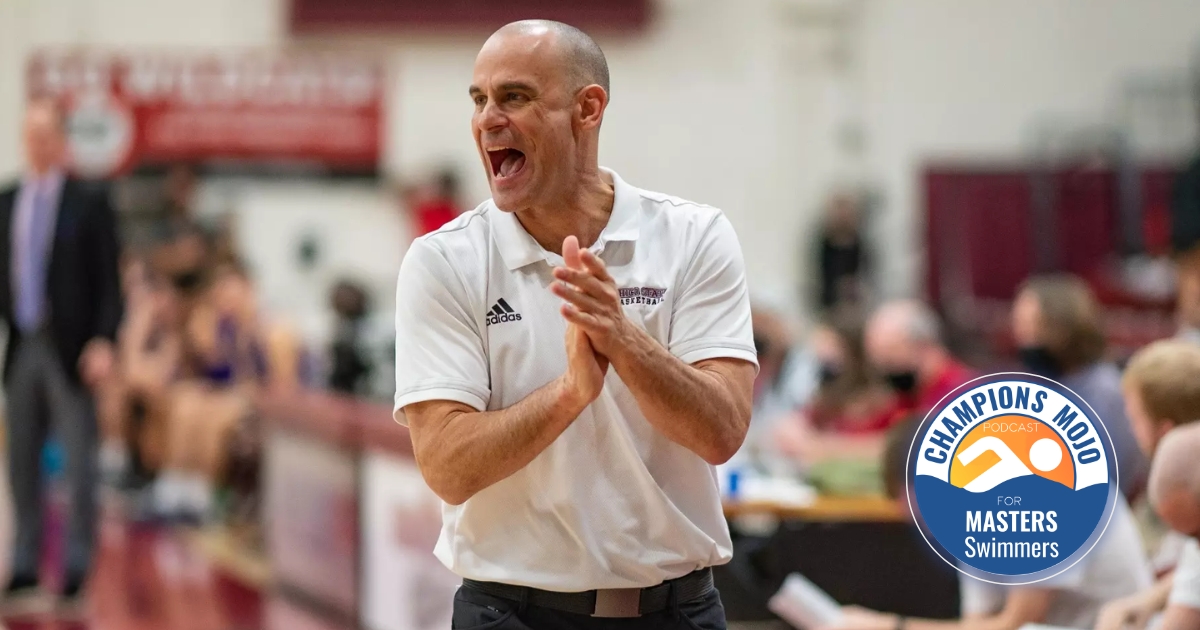
Greg Clink doesn’t hesitate with that question. As a three-time Coach of the Year who spent 15 seasons building one of the most respected Division II basketball programs in the country at Chico State — 13 postseason appearances, nine NCAA tournaments, multiple conference and regional titles — he has spent decades turning the idea of culture into something concrete, repeatable, and teachable. Now he brings that same framework to teams and organizations as a leadership speaker and consultant.
His definition is deceptively simple: culture is how you operate on a daily basis. Not on game day. Not at the championship meet. On a Wednesday morning when you are tired and nobody is watching and it would be very easy to coast through the next hour. That definition changes everything.
The Daily Behaviors That Build or Break a Team
If culture is daily behavior, then culture is being built or eroded every single practice. Every conversation on the pool deck. Every interaction between lane mates. Every moment where someone either holds a standard or lets it slide.
Greg identifies a handful of behaviors that matter most: how teammates communicate with each other, how they show up in terms of effort and attitude, how they treat one another in the easy moments and the hard ones, and whether they hold each other accountable or look the other way.
None of those things require talent, but all of them require intention. For masters swimmers, this is particularly worth sitting with. Most of us are not chasing Olympic trials cuts, we’re choosing to spend hours every week in the water alongside other people who are also choosing to be there. That shared choice is the beginning of a culture. What you do with it is up to you.
Confront the Snowball Before It Becomes an Avalanche
One of the most practical and memorable ideas Greg shares is what he calls confronting the snowball. The image is simple: a small problem left unaddressed starts rolling, picks up speed, and eventually becomes an avalanche that is much harder, sometimes impossible, to stop.
His approach as a coach was to always be looking for the snowball. He’s not waiting for problems to surface, but actively seeking them out. Checking in with assistant coaches. Asking his captains what was happening in the locker room. Noticing when someone's body language was off and following up before the practice ended.
The same principle applies to anyone on a team, not just the coach. If something feels off culturally, whether that’s in your masters club, on your relay, in your workplace, in your family, the instinct to ignore it and hope it resolves itself is understandable. It’s also how small frustrations become permanent fractures.
Greg's advice: address it early, address it directly, and do it from a place of wanting the team to be healthy rather than wanting to be right. That framing makes difficult conversations easier and outcomes far more likely to stick.
The Power of the Put-Up
Alongside confronting problems early, Greg emphasizes something equally important on the positive side: what he calls put-ups. Most of us know what a put-down is. A put-up is the deliberate opposite: publicly acknowledging a teammate for something specific they did well, in front of their peers, in the moment.
This isn’t generic praise. Instead, it’s targeted, specific, and intentional. Telling someone at the end of practice that their effort pushed the entire lane. Sending a text that evening noting what they did well and why it mattered to the team. Calling someone out by name in front of the group for a behavior you want to see repeated.
The reason this works isn’t complicated. People repeat behaviors they are recognized for. When you name a winning behavior publicly, you’re not just rewarding one person, you’re telling the entire team what matters here, what we value, what it looks like to show up the right way.
Masters coaches, take note. This costs nothing and takes thirty seconds! It’s also one of the most powerful cultural tools available.
How Much Can One Person Really Change a Team?
Greg is direct on this: one person can move a team's culture significantly, in either direction. Leaders have an outsized impact, and natural leaders who are unhappy or disengaged can quietly undermine everything a coach is trying to build, without a single confrontational moment.
That is why the snowball principle applies to people as much as it does to problems. If someone with leadership influence is drifting in the wrong direction, that’s a conversation that needs to happen fast. And if someone is elevating the team every single day, that’s someone who deserves to be seen and celebrated.
For those of us who aren’t the team captain or the fastest swimmer in the lane, this still matters. You don’t have to hold a formal leadership title to influence how a team feels. How you speak to your lane mates, whether you encourage someone who is struggling, whether you hold a standard even when it would be easier not to all — all of that shapes the culture you’re swimming in.
What You Can Take to Your Next Practice
Greg has distilled his approach into a ten-point framework for developing championship culture — covering vision, pride, role buy-in, accountability, communication, and more — that he now takes into schools, businesses, and organizations through his speaking work.
But you don’t need to wait for a keynote to start. Here are four things you can take to your next workout:
-
End practice with a put-up. Pick one person. Name one specific thing they did well. Say it out loud. Do it again next time.
-
Notice the snowballs. If something feels off on your team, do not wait. Have the conversation early, from a place of care rather than criticism.
-
Be the culture you want. You cannot control how everyone else shows up. You can control how you do. Your daily standard is your contribution to team culture whether you realize it or not.
-
Buy into your role. Championship teams are not made up of people who all want the same job. They are made up of people who take pride in whatever job they have. That is true in a relay, in a lane, and in life.
Culture is not built in big moments. It’s built in the ordinary ones. Start there.
If this conversation sparked something in you, whether you're a swimmer, a coach, or simply someone who wants to show up better for the people around them, share it with a teammate and subscribe to the show for more conversations to help you swim well and live well.
Leaving a quick review helps more champions and change makers discover the show! You can also stay connected by joining our Mojo Messages, short encouraging messages sent straight to your inbox to help you live well and swim well. We’re cheering you on!
Email us at HELLO@ChampionsMojo.com. Opinions discussed are not medical advice. Please seek a medical professional for your own health concerns.
You can learn more about the Host and Founder of Champions Mojo at www.KellyPalace.com

Host, Founder, Journalist, Author
Kelly Palace is proof that you can be a world-record-setting Masters swimmer, bestselling author, and breast cancer survivor—and still laugh at yourself along the way. A former NCAA Division I head coach and journalist for Pfizer's magazine, she now dives deep with Olympians, experts, and everyday champions on Champion’s Mojo to uncover what makes people great (and what keeps them sane): the secrets to living well and swimming well. She’s survived 9/11, topical steroid withdrawal, and divorce, but has found love for the last 22 years with her husband, Mark, who is 12 years her junior. Kelly believes in comebacks, kindness, and coffee before (and after) chlorine. Her hobby of stand-up comedy makes her feel alive—and heckled.
How to Break the Masters Swimming Gray Zone and Find Your Lost Gears