Built for Pressure: From Patrol to Practice with Che'Rel Haywood
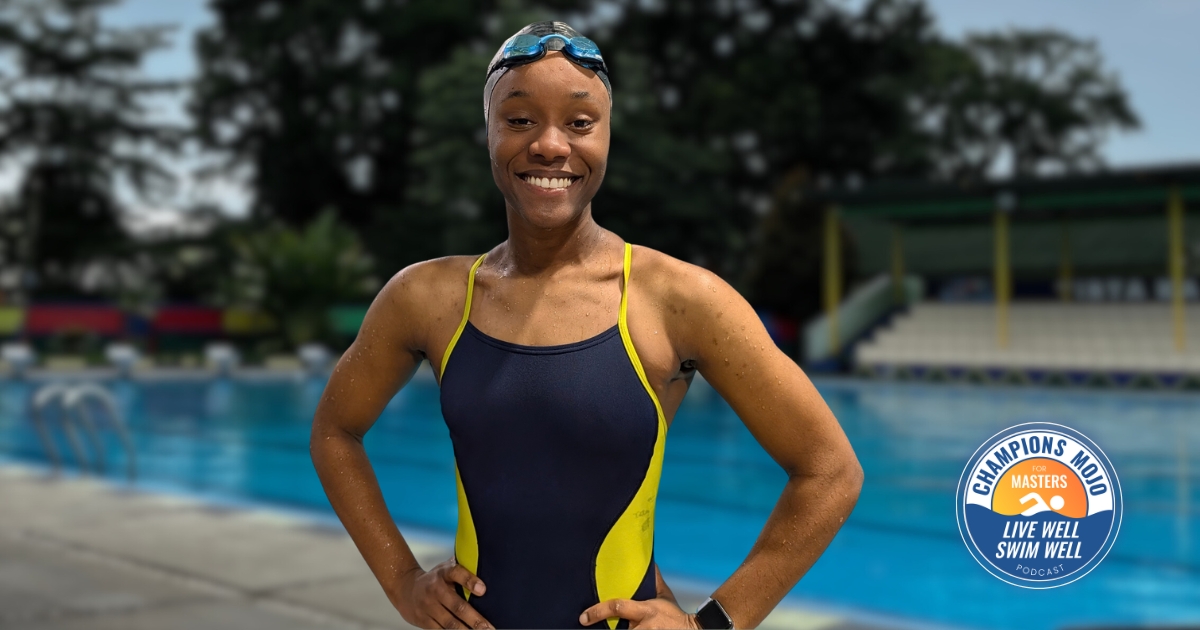
There’s something surreal about leaving a night shift filled with flashing lights and urgent decisions, then walking straight onto a quiet pool deck at sunrise. One world runs on adrenaline. The other runs on repetition and rhythm.
Che’Rel Haywood lives in both. At 26, she works as a police officer in Chesterfield County, often on a 6 p.m. to 6 a.m. night shift. Some mornings, when her shift ends at dawn, she drives straight to Nova Masters practice. She may not catch every yard, but she shows up.
Her story is not about extremes. It’s about identity. About deciding that swimming is part of who you are, and then building your schedule around that truth instead of waiting for perfect conditions.
Holding on to What Shaped You
Che’Rel’s swimming roots go back to Trinidad and Tobago, where she first joined the sport as a child and eventually made her national team at eleven years old. Swimming began as an activity day choice and evolved into years of competition, travel, and structure.
Like many athletes, she stepped away for a period after high school. College at Hunter College in New York brought her back into the water, but in a different way. What had felt individual growing up became collective. Championships were pursued as a team. Points mattered. Teammates rallied one another before races. That shift reshaped how she saw herself in the sport.
She learned that swimming could still be personal and competitive while also being deeply communal. That lesson carries into her Masters experience now. Training under Coach Mark Kutz at Nova means high standards and shared effort. The culture pushes her, but it also supports her.
For Masters swimmers who sometimes feel disconnected from their competitive past, Che’Rel’s path is familiar. You don’t have to swim exactly the way you once did to stay connected to who you were. The form changes. The identity can stay.
Training When You’re Tired
Night shift work adds a layer most swimmers never have to consider. Policing brings long hours, unpredictable stress, and the physical demands of being alert when the rest of the city sleeps. Che’Rel admits she is still learning how to structure her training around it.
Some days she comes straight from work to practice, even if she only catches the final portion of the set. Other days she adjusts. But she has created one rule for herself: if she doesn’t swim, she goes to the gym.
That decision removes negotiation. It simplifies the question of whether to train. She doesn’t wait to feel energized. She trains her mind to be strong and then lets the body follow.
For Masters swimmers managing careers, children, or aging parents, this kind of clarity is often the difference between drifting and progressing. Consistency rarely depends on perfect energy. It depends on reducing friction around the choice.
Playing to Strengths
Che’Rel describes herself as a sprinter at heart. She loves breaststroke. She excels in the 100 fly, even if she doesn’t love the pain that comes with it. Long, grinding yardage is not what motivates her. High-quality efforts under 200 yards feel more aligned with her strengths.
That self-awareness matters more than we sometimes realize.
As Masters swimmers, we often carry old narratives about what “real training” looks like. We may assume more yardage equals better fitness or that we need to recreate collegiate volumes to feel legitimate. Che’Rel’s approach is simpler. She leans into what energizes her and trains with purpose.
Especially for athletes balancing demanding jobs, shorter, focused efforts can deliver meaningful gains without draining the system. Knowing your tendencies allows you to train smarter instead of harder.
Fitness as a Foundation
During the police academy, Che’Rel twisted her ankle. In that environment, injury can derail months of progress. Recycled recruits start again. The academy lasts nine months, and repeating it is not something most people want to do.
Because she had maintained strong swimming fitness, she was able to continue training through the setback and graduate on time. The injury still lingers occasionally, but the base she built in the pool helped carry her through a critical season.
It’s easy to think of Masters swimming primarily in terms of times, meets, or medals. But fitness functions as a kind of insurance policy. The strength, cardiovascular endurance, and resilience you build now often show up when you need them most in other areas of life.
Che’Rel’s story reinforces that staying in shape is not just about sport. It’s about capacity.
Structure in High-Stress Work
Police work requires calm decision-making in moments that escalate quickly. Che’Rel has already encountered situations that demanded physical presence and controlled de-escalation. The job calls for composure under pressure.
Swimming offers a different but complementary stress. Intervals are defined. Effort is measurable. The beginning and end of a set are clear. That structure becomes grounding after a chaotic shift.
For Masters swimmers in demanding professions, the pool often becomes the one place where effort translates directly into progress. It is structured stress with predictable outcomes. That predictability builds confidence that spills into the rest of life.
The Question That Matters
Coach Mark Kutz often asks his swimmers, “Are you going to be a chump or a champ today?” It’s said with humor, but the question lingers.
Che’Rel’s life answers it quietly. She doesn’t frame her training as extraordinary. She frames it as necessary. Swimming is part of who she is, so she makes room for it. Even when she is tired. Even when the schedule is tight.
Her example is not about doing more. It is about doing what aligns with your identity.
If you’re navigating long work hours, uneven sleep, or seasons that feel full, consider this: what would it look like to protect the part of you that thrives in the water? Not perfectly. Not heroically. Just consistently.
Masters swimming does not demand ideal conditions. It asks for commitment.
If you enjoy stories that highlight resilience, leadership, and the ways swimming shapes us beyond the pool, you’ll feel right at home here. Subscribe to the show, share it with a teammate, and if you have a moment, leaving a quick review helps more swimmers find us. You can also stay connected by joining our Mojo Messages, short encouraging messages sent straight to your inbox to help you live well and swim well. Let us know what Masters swimming has given you. We’re cheering you on!
Email us at HELLO@ChampionsMojo.com. Opinions discussed are not medical advice. Please seek a medical professional for your own health concerns.
You can learn more about the Host and Founder of Champions Mojo at www.KellyPalace.com

Host
Kelly Palace is proof that you can be a world-record setting Masters swimmer, bestselling author, and breast cancer survivor—and still laugh at yourself along the way. A former NCAA Division I head coach and Pfizer journalist, she now dives deep with Olympians, experts, and everyday champions on Champion’s Mojo to uncover what makes people great (and what keeps them sane)—what makes one live well and swim well. She’s survived 9/11, topical steroid withdrawal, and three divorces, yet still believes in comebacks, kindness, and coffee before (and after) chlorine. Her hobby of stand-up comedy makes her feel alive and heckled.
Mastering the Space Between Stimulus and Response with Chris Harris