

 Apple Podcasts
 Spotify
 RSS Feed
 3 Minutes Ahead: How Powerhouse Shirley Loftus Charley Does It, EP 223
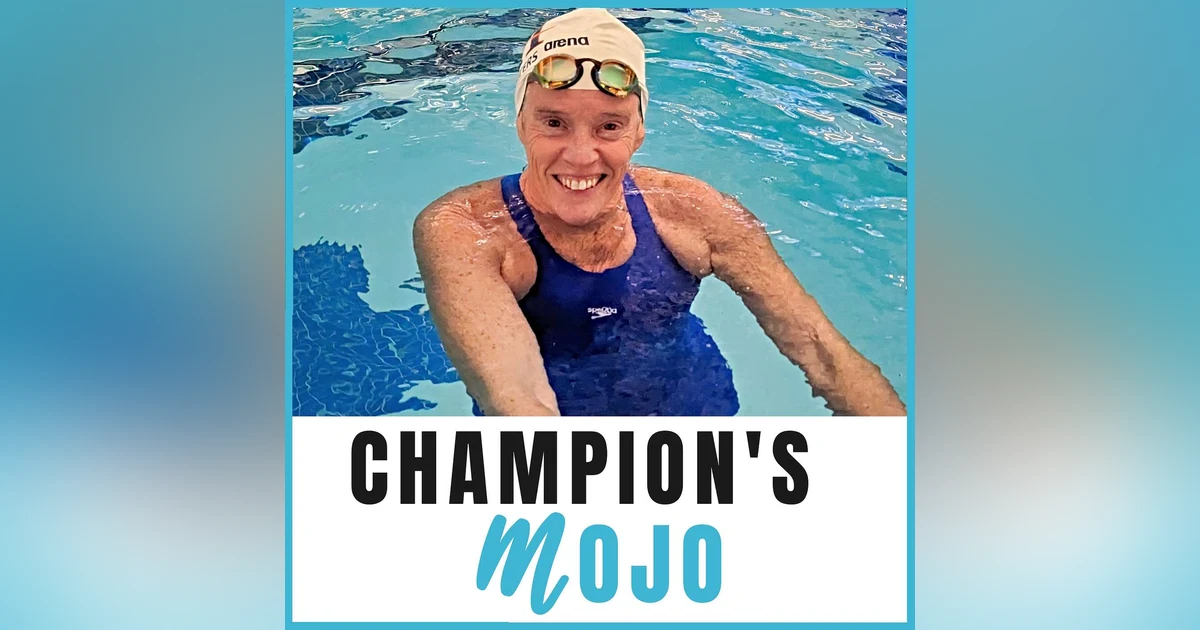
Get ready to take notes as we sit down with Shirley Loftus, a 71-year-old swimming powerhouse who is smashing records and redefining the limits of age. She's not just keeping up with, but outpacing, her competition by a staggering three minutes in her age group - after recovering from a shoulder surgery. Shirley's secret? An intensive, well-rounded training regimen of six days a week, including working with a sprint coach and a mid-distance coach, and pairing up with a fellow distance swimmer for grueling sessions with little rest. Listen to how she's transformed her performance by incorporating these sprint workouts into her routine.
In the second half, we delve into Shirley's motivations and goal-setting habits that keep her striving for more than just records. She reveals her desire to swim all 18 events in a year, and her enduring hope of excelling in another stroke, a testament to her never-ending pursuit of challenges. Discover which she thinks is the hardest event of them all and why. This is an episode that beautifully captures the spirit of persistence, the power of setting incremental goals, and, above all, the sheer joy of swimming. Tune in and let Shirley's incredible story inspire you to reach for your own athletic summits.
Email us at HELLO@ChampionsMojo.com. Opinions discussed are not medical advice, please seek a medical professional for your own health concerns.
You can learn more about the Host and Founder of Champions Mojo at www.KellyPalace.com
So we are here with more on-deck inspiration from the last chance meet in Richmond, virginia, at the Nova Aquatic Center, and I'm with Shirley Loftus. Charlie, my personal hero, shirley, is exactly ten years ahead of me and swims all of my events, so I get to try to break her record. Sometimes I do, sometimes I don't. But, shirley, you have done something this year that blows me away, and I just want to talk about the fact that you are almost three minutes faster than the next person in the rankings for the 1650. Like you are like you're doing something at your 71. Right, okay. So what are you doing at 71 that is making you three minutes faster than other people in your age group?
Speaker 2Well, I don't really know, but I had shoulder surgery about three years ago and I finally feel like I'm recovering and I'm swimming pain-free and it's just such a pleasure and joy to be swimming without any pain at all.
Speaker 1What does your training schedule look like?
Speaker 2I usually swim six days a week. I work out three days a week with a sprint coach, one day a week with a mid-distance coach and then twice a week with a friend who is a distance swimmer, and we sort of kill each other.
Speaker 1Okay, so I want to break that down. So you, a distance swimmer generally, are doing two sprint workouts a week. What does that look like?
Speaker 2That's brand new. With the Charlotte School Masters, we had a sprint coach who I like a lot, greg Bauer, and I just started swimming with them and started working on my sprinting a little, even though I have a two-beat kick still in the 53, which is it. Oh my gosh Isn't too fast, but my times have gotten a little bit faster in my shoulder events.
Speaker 1And so what is the sprint workout? Like Five fifties on five minutes from the block, or all 25s, or what is it?
Speaker 2It's a mixture between 25s and maybe 150s, but it's not very. It's very short stuff for me and we will. We will go off the block some and it's just different and I enjoy the people I'm swimming with.
Speaker 1Are you trying to kick more Like?
Speaker 2are you trying?
Speaker 1to add a four-beat or a six-beat.
Speaker 2I am trying and I found that when I take a breath, sometimes I can get four beats in. Okay, okay, I've been working on that Now.
Speaker 1So then two days a week you're doing a middle distance, or one day, one day, one day a week.
Speaker 2What does that look like. Well, we get it at about 4500, and it's just longer, more like hundreds and two hundreds.
Speaker 1And then what is when you said you're killing it in distance. What is killing at me?
Speaker 2My friend Ted and I get in and we just do. You might be doing three hundreds or two hundreds or five hundreds, but we have very little rest. It's on very tight intervals and he's a little faster than me and he will never let me beat him. So I'm just always trying to hang with him and I get a lot less rest than he does.
Speaker 1So what might be a set in that distance workout?
Speaker 2It might be like five, two hundreds, and we might do like a sort of a five, two hundreds, descending time intervals and then ascending intervals. Or we might go the other way, where we start out faster, have more rest and then back to fast.
Speaker 1So when you're going like you're swimming in a lot of meets but it doesn't seem so much like you're just chasing records, what is it that gets you into these meets and gets you to practice and has you like swimming all this?
Speaker 2I just have a lot of little goals Like my goal for this meet was to finish up swimming all 18 events and I so I had six events today, but none of them were my favorite events. So it's sort of different. But I always have this hope that one day another stroke will emerge, but all of a sudden my breast stroke will be great, or my back stroke. So I just always have that hope.
Speaker 1So we in Florida, in our Florida LMS, we have the Leather Lung Award, whereas if you swim all the events during the year, you get this little award. Is that all 18 events? Is that what you're doing? Every single event?
Speaker 2Well, we don't have right all 18 events, but we don't have any awards. It's just my own personal. Do you do that every year? I do try. I normally don't make it, especially like in long course there's less meets and less opportunity to get all 18 strokes in.
Speaker 1So you would be a good person to ask what do you think, because you swim all the events, what do you think the hardest event is by far the 205.
Speaker 2Wow.