Hidden Heart Risks for Masters Swimmers: Understanding Stroke Warning Signs and PFO
Discover the hidden cardiovascular risks active adults face, including Patent Foramen Ovale (PFO), and how to recognize subtle stroke warning signs during workouts. Learn why physical fitness does not guarantee immunity from vascular events and how masters swimmers can better monitor their long-term heart health.
Key Takeaways
- Severe physical fitness and regular training do not make an athlete entirely immune to unexpected cardiovascular and neurological medical events.
- Subtle warning signs like sudden visual field changes, unexplained tingling during hard sets, and sudden limb weakness should never be ignored.
- Using home blood pressure cuffs and trusting your gut instincts during unusual bodily sensations can be vital steps in recognizing medical emergencies early.
- Post-stroke recovery and cardiac closure procedures can allow dedicated athletes to safely return to high-level masters swimming competition.
Recognizing the Subtle Pool-Side Warning Signs
Cardiovascular and neurological events do not always arrive with the cinematic drama depicted in movies. Active adults are notoriously conditioned to ignore discomfort, rationalizing that aches, dizziness, or strange physical sensations are merely the byproduct of a hard training block. Yet, precursors to a stroke or transient ischemic attack often present with subtle, confusing sensory anomalies. Swimmers should remain hyper-aware of unusual bodily feedback that deviates from standard training fatigue.
Warning signs that warrant immediate medical evaluation include sudden visual disturbances—such as fields of vision crossing, blurring, or flashing blind spots that mimic ocular migraines—accompanied by an overarching internal vibration or sudden cognitive fog. Furthermore, motor control issues, such as a foot clipping the edge of a stair repeatedly or a knee buckling unexpectedly while walking out of the pool area, indicate localized neurological compromise. When these symptoms manifest abruptly, treating them as a potential medical emergency rather than standard athletic fatigue is non-negotiable.
Why Fitness Athletes Ignore Medical Red Flags
Masters swimmers and triathletes possess an incredible capacity for suffering. Pushing through pain caves, managing sore shoulders, and ignoring minor joint degradation are badges of honor in the swimming community. This psychological resilience, while useful for shaving tenths of a second off a personal best, becomes a dangerous liability during a medical crisis. Athletes frequently hesitate to seek help out of fear of overreacting, embarrassment, or disrupting a team environment.
When a medical emergency strikes in a public setting like a natatorium, the instinct to downplay symptoms can delay life-saving interventions. Medical professionals emphasize that hesitation wastes precious minutes during neurological events. The brain operates on a strict timeline; in the event of an ischemic stroke, receiving clot-busting medication within the designated golden window drastically limits permanent brain tissue damage. Trusting your internal intuition—the gut feeling that something is fundamentally wrong rather than merely uncomfortable—remains the single most effective tool for survival.
Practical Self-Checks and Diagnostic Tools
While you cannot diagnose a stroke or a PFO independently, active adults can incorporate basic reality checks into their health monitoring routines. Many households already possess standard digital blood pressure cuffs for tracking cardiovascular wellness. Unexplained, severe spikes in blood pressure combined with acute neurological symptoms provide an undeniable quantitative metric that something is deeply amiss.
Cardiologists utilize specialized diagnostics, such as an echocardiogram with a bubble study, to visualize blood flow patterns inside the heart chambers and identify structural defects like a PFO. For masters swimmers who experience strange, unexplained tingling sensations during heavy anaerobic sets, discussing these symptoms with a cardiologist rather than dismissing them as simple dehydration can uncover underlying structural issues before they escalate into a major medical event.
The Hidden Heart Defect: What Is a PFO?
Up to 25 percent of the population is born with a Patent Foramen Ovale (PFO), a hole in the heart that can occasionally allow blood clots to travel directly to the brain.
For decades, fitness enthusiasts and masters swimmers have operated under the assumption that grueling cardiovascular training serves as an impenetrable shield against serious health crises. However, internal anatomical anomalies do not care about your swim splits or V2 max. One of the most significant hidden risk factors is a Patent Foramen Ovale, commonly known as a PFO. During fetal development, this small flap-like opening in the wall between the heart's upper chambers is entirely normal, allowing blood to bypass the lungs. While it typically fuses shut at birth in most individuals, it remains unsealed in roughly one quarter of the human population.
In everyday life, a small PFO might remain completely asymptomatic and go entirely unnoticed. Yet, for endurance athletes pushing their bodies through intense physical exertion, fluctuating thoracic pressures and inflammatory responses can alter blood flow dynamics. If a small blood clot forms elsewhere in the body—perhaps due to a minor illness or prolonged immobility—it can travel through the venous system, slip directly through the PFO, bypass the filtering action of the lungs, and shoot straight to the brain. This exact mechanism triggers what is known as a cryptogenic stroke, catching even peak-condition athletes entirely off guard.
Returning to the Pool After a Major Health Event
Surviving a stroke and undergoing corrective cardiac surgery—such as placing a percutaneous closure device to seal a PFO—requires a complete mental and physical recalibration. Unlike orthopedic rehabilitation, where athletes navigate predictable healing timelines for rotator cuff strains or tendonitis, recovering from a neurological event demands patience with an invisible healing process.
The transition from intensive care units to the competitive swimming pool requires a graded, methodical approach. Athletes must rebuild confidence in their physical vessels, transitioning from light walking and basic resistance training back to explosive starts and high-intensity interval training. Interestingly, once structural heart defects are corrected and proper oxygenation is restored, many athletes report feeling an unexpected resurgence in energy and performance capacity, proving that proactive health management ultimately fuels athletic longevity.
Conclusion
Navigating masters swimming requires a balance of relentless drive and acute physiological self-awareness. While we often focus on joint health, dryland strength, and stroke mechanics, safeguarding our cardiovascular foundation is paramount. Never let embarrassment override your intuition when your body signals that something is fundamentally wrong.
To hear the complete, inspiring story of a competitive swimmer overcoming a sudden medical crisis and returning to national top times, be sure to Listen to the full episode. Tune in to Champions Mojo for more expert interviews and actionable insights designed to help you live well and swim well.
Frequently Asked Questions
Can high physical fitness prevent a stroke?
While maintaining peak physical fitness through swimming and strength training significantly lowers overall cardiovascular risk factors, it does not provide absolute immunity against structural heart anomalies, genetic predispositions, or unexpected vascular events.
What are the subtle warning signs of a stroke during a swim meet or workout?
Warning signs include sudden visual disturbances like crossed fields of vision or severe auras, sudden unexplained limb weakness or balance issues such as a knee buckling, and an overwhelming internal sensation of strangeness or vibration that differs entirely from normal workout fatigue.
What is a Patent Foramen Ovale (PFO) and how does it relate to strokes?
A PFO is a small hole between the upper chambers of the heart that fails to close naturally after birth in about 25 percent of people. While often harmless, it can occasionally allow a blood clot originating in the body to pass directly through the heart and travel to the brain, causing a cryptogenic stroke.
How is a PFO diagnosed in active adults?
A PFO is typically diagnosed using an echocardiogram paired with a bubble study, where saline solution is injected into the bloodstream to visualize how blood and micro-bubbles flow through the heart chambers.
Can athletes return to competitive swimming after having a PFO closed?
Yes. Following a healing window and minimally invasive catheter closure procedure, many athletes successfully return to high-level training and racing, often experiencing improved oxygenation and performance capacity.
Host, Founder, Journalist, Author
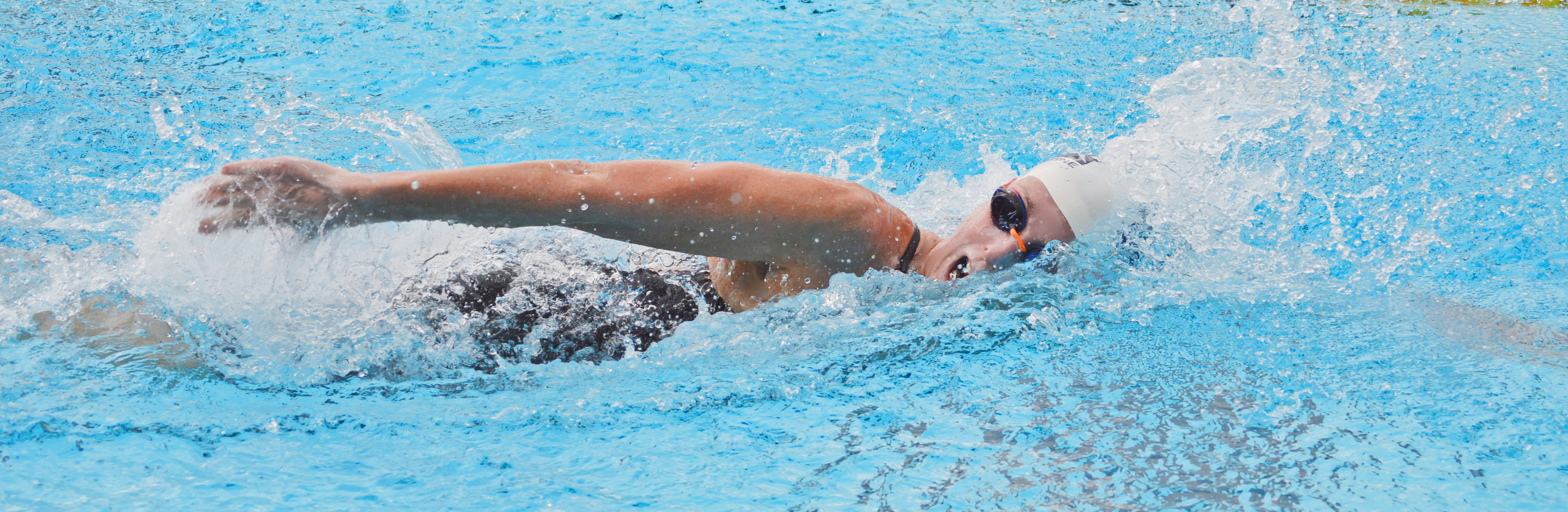
Kelly Palace is proof that you can be a world-record-setting Masters swimmer, bestselling author, and breast cancer survivor—and still laugh at yourself along the way. A former NCAA Division I head coach and journalist for Pfizer's magazine, she now dives deep with Olympians, experts, and everyday champions on Champion’s Mojo to uncover what makes people great (and what keeps them sane): the secrets to living well and swimming well. She’s survived 9/11, topical steroid withdrawal, and divorce, but has found love for the last 22 years with her husband, Mark, who is 12 years her junior. Kelly believes in comebacks, kindness, and coffee before (and after) chlorine. Her hobby of stand-up comedy makes her feel alive—and heckled.
How to Break the Masters Swimming Gray Zone and Find Your Lost Gears