Why Masters Swimmers Should Stop Comparing Current Times to Past Personal Records
Masters swimmers often struggle with frustration when their current lap times do not match their younger personal records. By letting go of old benchmarks, giving your body grace through aging, and shifting your focus from volume-heavy yardage to pure technique and racing joy, you can reignite your passion for swimming.
Key Takeaways
- Comparing your current master swimming times to your younger self drains the joy out of the sport.
- Just as your body changes with age, your training methodologies must adapt to prioritize speed and efficiency over exhausting yardage.
- Giving your body grace allows you to appreciate what it can do right now rather than mourning past capabilities.
- Redefining success in the water means finding excitement in the community, the feel of the water, and daily micro-wins.
The Danger of the Past Performance Trap in Masters Swimming
Every dedicated master swimmer knows the mental tug-of-war. You step onto the pool deck, warm up, and throw down a 50-yard freestyle. When you touch the wall and look at the clock, a familiar wave of disappointment crashes over you. That time is three seconds slower than your college best. Or five seconds slower than your master's personal record from a decade ago. Suddenly, the workout feels heavy, and the joy of swimming evaporates.
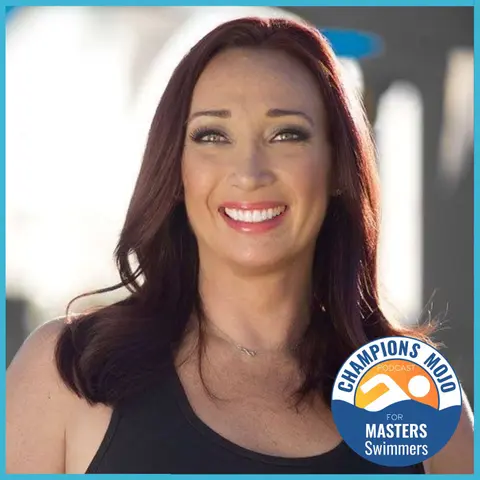
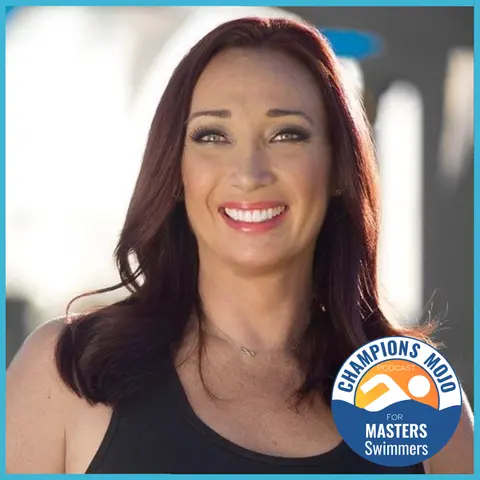
This psychological trap is one of the most common hurdles for adult-onset and returning master swimmers. We treat our bodies like museum exhibits, expecting them to operate under the exact same physiological conditions we enjoyed in our teens or twenties. Olympic legends like Amy Van Dyken face this exact challenge on a monumental scale, noting that trying to measure your present athletic reality against your past glory is a direct recipe for frustration and burnout.
Why Your Body Requires a New Metric for Success
As we age, our muscle mass, recovery capacity, joint mobility, and core stability naturally shift. Expecting your 40-, 50-, or 60-year-old body to produce the same raw explosive power as a youthful body is biologically unrealistic. Van Dyken points out a simple, undeniable truth: you cannot expect to put on the same jeans you wore when you were seven years old, and you cannot expect your athletic mechanics to remain completely static over decades.
When masters swimmers cling stubbornly to old times, they often fall into the trap of overtraining. They think that grinding out more yardage will magically bridge the gap, leading to chronic shoulder pain, physical exhaustion, and mental fatigue. Instead of forcing an outdated paradigm onto a changing body, the secret is to evolve your definition of athletic achievement.
Shifting From Junk Yardage to Quality Training
One of the major breakthroughs in modern swimming—and a philosophy that saved Van Dyken's competitive career at Colorado State University—is moving away from endless, exhausting yardage. In her early college swimming days, high-volume training left her burnt out and disillusioned. It wasn't until she transitioned to a program focused on speed work, hydrodynamics, and race-pace efficiency that she unlocked her true Olympic potential.
For master swimmers, this lesson is doubly important. Pounding out thousands of yards of "junk yardage" while tired does not make you faster; it merely reinforces poor mechanics. By trading endless laps for intentional, high-quality, technique-driven workouts, you protect your joints, save time, and actually see better performance gains in short-course or long-course events.
Embracing Grace and Cultivating Poolside Joy
Master swimming is uniquely positioned as a lifelong sport filled with some of the most vibrant, supportive communities in athletics. When you stop obsessing over the scoreboard and start focusing on the simple mechanics of the catch, the beauty of the roll, and the camaraderie in your lane, swimming transforms from a stressful test into a sanctuary.
Give yourself permission to celebrate micro-wins. Did you nail your flip turn today? Did you feel a powerful, high-elbow catch on your freestyle? Did you finish a set with a smile on your face? Those are the metrics that matter. As Van Dyken highlights, swimming is simply too fun of a sport to let unrealistic expectations ruin your time behind the blocks.
Conclusion
Reinventing your relationship with swimming as your body changes takes immense mental grit, but the reward is a lifelong love for the water. Whether you are dealing with chronological aging, recovering from an injury, or simply trying to quiet your inner critic, letting go of old times is the ultimate liberation. For an incredible deep dive into extreme resilience, athletic adaptation, and choosing joy in the pool, Listen to the full episode of Champions Mojo to hear Amy Van Dyken share her inspiring story and motivation with host Kelly Palace.
Frequently Asked Questions
Why do masters swimmers struggle with comparing themselves to their past times?
Swimmers are inherently goal-oriented and data-driven, often using past personal records as their primary baseline for self-worth in the water, making it psychologically difficult to accept natural physiological changes.
How can I stay motivated in masters swimming if I am getting slower?
Shift your focus from absolute clock times to relative improvements, such as perfecting your technique, enhancing your underwaters, enjoying the social community, and tracking daily micro-wins in your training.
Is high-volume training effective for adult masters swimmers?
Generally, no. Grinding out endless yardage while fatigued often leads to injury and poor mechanics. Masters swimmers benefit much more from lower-volume, high-quality workouts emphasizing technique, speed, and recovery.
How do I give my body grace when dealing with swimming injuries or aging?
Acknowledge that your body has carried you through decades of incredible experiences. Accept that physical evolution is normal, adjust your training expectations, and focus on longevity and movement quality rather than raw speed.
How to Break the Masters Swimming Gray Zone and Find Your Lost Gears