

 Apple Podcasts
 Spotify
 RSS Feed
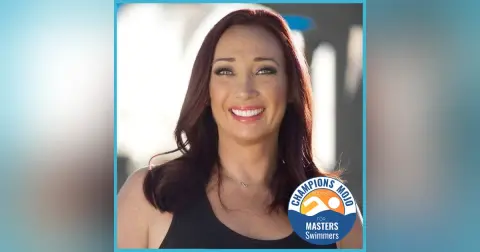
 How to Adapt When Your Body Rebels: Olympic Legend Amy Van Dyken on Extreme Resilience, EP 325
Key Takeaways
- Olympic legend Amy Van Dyken shares how she redefined her identity and athletic drive after a 2014 ATV accident left her paralyzed from the waist down.
- Swimmers and athletes must stop comparing their present performances to their past selves, learning instead to give their changing bodies grace at every stage of life.
- Amy explains a powerful psychological trick for pre-race nerves: reframing anxiety as excitement since both emotions share the same physiological components.
- Modern swimming success relies less on grinding out high-volume junk yardage and more on targeted speed work, hydrodynamics, and smart technique.
- By shifting her competitive drive to adaptive CrossFit, Amy became the second-fittest seated female athlete on the planet in her mid-40s.
What do you do when the body that carried you to Olympic Legend Status changes in the blink of an eye? How do you stop comparing yourself to the athlete you used to be and build unshakeable mental resilience in the face of life-altering obstacles?
In this episode, six-time Olympic gold medalist Amy Van Dyken sits down with Kelly Palace to share how she completely redefined her identity, athletic drive, and relationship with her body after a traumatic 2014 ATV accident left her paralyzed from the waist down. Amy reveals how she transitioned from Olympic sprinter to adaptive CrossFit champion, why comparing your present times to your past self is a recipe for frustration, and the practical mental reframing technique she uses to turn paralyzing race-day nerves into pure excitement. Whether you are navigating an injury, battling an aging body, or seeking the grit to conquer daily setbacks, Amy provides the ultimate blueprint for choosing joy, grace, and relentless forward momentum.
Inside this episode, you’ll discover:
- Adapting When Your Body Rebels: How Amy shifted from Olympic sprint dominance to floating and finding peace in the pool with paralyzed legs and minimal core.
- Ending the "Old Times" Comparison Trap: Why measuring your current performance against your younger self drains the joy from swimming—and how to give your body grace at every stage.
- Reframing Pre-Race Nerves: The physiological trick to turn racing anxiety into explosive excitement behind the starting blocks.
- Why Swimming Keeps Getting Faster: Amy’s expert perspective as an NBC Olympic analyst on training quality over junk yardage, hydrodynamics, and modern sprinting speed.
- The Training Shift That Saved Her Career: How leaving high-volume yardage for speed work and fun at Colorado State helped her claim four Olympic gold medals in 1996.
- The Power of Daily Micro-Wins: How conquering small, frustrating tasks builds true athletic resilience and gratitude on hard days.
- Channeling Competitive Fire: How Amy took her sprint drive to adaptive CrossFit and became the second-fittest seated woman on Earth in her mid-40s.
Email us at HELLO@ChampionsMojo.com. Opinions discussed are not medical advice, please seek a medical professional for your own health concerns.
You can learn more about the Host and Founder of Champions Mojo at www.KellyPalace.com
Frequently Asked Questions
Who is Amy Van Dyken?
Amy Van Dyken is a six-time U.S. Olympic gold medalist, the most decorated athlete of the 1996 Olympic Games, and an inspiring advocate for adaptive sports and extreme resilience.
How did Amy Van Dyken adapt to swimming after her paralysis?
Because her core and leg function changed, Amy no longer swims competitively or sinks easily to the bottom of the pool, but she still enjoys floating and swimming freestyle, backstroke, and even breaststroke.
What advice does Amy Van Dyken give for handling pre-race nerves?
Amy suggests reframing nerves as excitement because the physiological responses are identical, and recommends jumping up and down or doing arm movements to regulate heart rate before competing.
What common traits do champions share according to Amy Van Dyken?
Champions are willing to put in the necessary work, set their fears aside for a greater goal, maintain a positive half-full mindset, and learn valuable lessons from their mistakes rather than getting frustrated.
00:00 - The Door Held Open Lesson
00:45 - Meet Amy Van Dyken
02:40 - Swimming In A New Body
05:35 - LA 2028 And Records To Break
08:00 - Why Swimming Keeps Getting Faster
10:25 - The Training Change That Worked
12:04 - Daily Resilience And Small Wins
17:16 - Faith Routine And Staying Positive
18:54 - Becoming Kinder Through Hardship
20:46 - Stop Chasing Old Times
22:30 - Nerves Or Excitement Before Racing
24:43 - Traits Champions Share
26:15 - One Race Challenge And Goodbye
The Door Held Open Lesson
SPEAKER_01Oh, I remember I opened the door and there was this guy that was like walking kind of quickly towards me. So I was like, well, I'll just hold the door open for him. Not a big deal, right? And he just walked through, like, didn't even put his head up, didn't look at me, didn't say thank you or give me the middle finger. And in true Amy fashion, I said, You're welcome, your Royal Highness. Next time I'll roll out the red carpet for you. So fast forward to my accident. And my husband, during the nine-hour surgery, was in a corner rocking back and forth. If he would have had to go to the restroom and someone opened the door for him, he would not have had the ability to say thank you or to look up or to do anything.
Meet Amy Van Dyken
SPEAKER_00Hello, friends. Welcome to the Champions Mojo podcast, where we bring you interviews and topics to help you live well and swim well, conversations especially meaningful for master swimmers and anyone striving to perform better in the water or in life. We're here to champion you. And now your host, Kelly Pallas.
SPEAKER_02Hello, friends. What a special treat we have for you today because we are sitting down with a guest whose name is etched in the very foundation of American swimming. Amy Van Dyken is a six-time U.S. Olympic gold medalist and was the most decorated athlete of the 1996 Olympic Games. In fact, Sports Illustrated just named her one of the top five greatest athletes in the entire history of Colorado. But her true champion's mindset was tested far beyond the confines of the pool. In 2014, an ATV accident resulted in a severe spinal cord injury, leaving her paralyzed from the waist down. Overnight, she had completely redefined her relationship with her body, her identity, and what it means to persevere. For every master swimmer who has ever battled an injury, adopted to a changing body, or needed the grit to simply keep moving forward, Amy's journey is the ultimate and extreme resilience. We are incredibly honored to have this Emmy winning analyst, legendary athlete, and true survivor with us today. Amy, welcome to Champions Mojo.
SPEAKER_01Oh, thank you so much for having me. I'm so excited to chat with you. This is gonna be awesome.
SPEAKER_02There was so much in your resume. I mean, I could have put in there just so much, but I wanted to get to the conversation. You're just a an incredible person for us to learn from as master swimmers
Swimming In A New Body
SPEAKER_02because as we age, our bodies just change like crazy. And all of a sudden, one day you can run and one day you can't. And then one day you can do butterfly, and one day you can't. And so, how did you approach bridging this kind of massive change from this Olympic athlete to your your new body?
SPEAKER_01Yeah, I mean, that was really hard, as a matter of fact. And when people ask me if I swim now, it's really hard for me to say that I don't. And, you know, I float in the pool, but I would I don't competitively swim anymore. I don't do laps very often. It's just my body has changed so much. I have two abs, so I don't have a lot of core anymore. And so getting that rotation is really hard. And then when I get in the right body position, I can actually see my feet dangling behind me. And it's kind of hard because I you remember how good I used to be and how I could do anything in the water. And I think a lot of swimmers feel the same way that I do. Like one of my happy places was going to the bottom of the pool and like looking up because it was like this quiet. And then you can see the chaos going on above you. And now because I'm paralyzed from above the belly button down, I don't sink. I guess that's a good way to put it. So getting down to the bottom of the pool is like really hard for me. So it's completely changed how I view swimming for myself. But with that, I've been able to take my knowledge and all of that and still be in the swimming community and still talking about swimming and talking about these new up-and-coming swimmers. And so, you know, it has changed a lot, but I think it's maybe changed for the better. I love swimming more now than I did when I was racing.
SPEAKER_02So, do you like just double arm backstroke or do you swim a little bit of freestyle? I mean, if I look underneath, my legs are dragging too. Do you do any freestyle or when you're in there swimming?
SPEAKER_01Yeah, I do. I do freestyle. I also do backstroke. I have found out, and people who know me are going to laugh so hard when I say this. I'm actually really good at breaststroke now. Never was before. Could never swim in I am because my feet always went in because of butterfly and freestyle, not out. So I couldn't kick, but now that I don't kick anyway, it's perfect.
SPEAKER_02Yeah. Well, I do have to say there was a little fantasy when I heard about your accident that I thought, oh, I'd love to see Amy in the Paralympics. Like, I just like I just thought you could dominate that if you wanted to.
SPEAKER_01Yeah, and plus when I got injured, I was 41. So I was well done. No one needed to see this body at 41 in a speedo. Like, let's just be honest about it.
SPEAKER_02Oh, you're hilarious. That's so funny.
LA 2028 And Records To Break
SPEAKER_02I want to touch on the Olympic Games being in Los Angeles in 2028. And you, I think you are, if I read this right, you're the most decorated swimmer on American soil. So you have won more golds on American soil than any other swimmer. Well, we'll say Michael Phelps didn't have any Olympics on American soil. Correct. So, you know, and there are a few others that did not. So tell us what you're looking forward to with that, what your role might be in that. What are your thoughts?
SPEAKER_01Well, I'm hoping that I'll be back with MBC and still commentating on the prelims, which I love doing because we get to talk about the Katie Ladeckies and we get to talk about all of those great swimmers, but we get to talk about the swimmers who are from a country that you didn't even know was there in the Olympics. And these swimmers who are there and they're Olympians. They're not going to meddle, they're not going to come back to finals or semis, but they're Olympians as well. So I love doing that. What I'm really looking forward to is in '96, I became the first American woman to win four golds in one game, which has only been tied up until this point. It's never been broken. So I am looking forward to being on the deck at finals, watching an American woman get five Olympic gold medals. And I want to be the first person to hug that young lady. I'm also looking forward to hopefully another American woman winning the 50 free, because I'm the only one that's done it. And so it is now time. We have got these girls swimming amazing times. I mean, we almost broke 23 seconds last week with Kate Douglas going at 23-1. So I would love to also hug that young lady who gets her gold medal and can become the next American gold medalist in the 50.
SPEAKER_02Yeah, that Kate Douglas, I don't, I think no matter what kind of swimmer you are, to watch 23-1 drop the world record. Dan, do you think she glided in? Do you think she has more in there?
SPEAKER_01I kind of think she did. Like, I when you watch it, you're like, oh yeah, she could have another stroke and like jammed her hand on that wall and definitely gone maybe 22-9 or like 23-0. Like, I'm glad you said that because I thought that my eyes were deceiving me for a little bit. But I'm telling you what, she has got so much more in the tank for that 50. I cannot wait to watch it at the Olympics. It's gonna be so much fun.
SPEAKER_02Yes, yes, I agree. It was it was just goosebumps to watch that 23-1.
Why Swimming Keeps Getting Faster
SPEAKER_02And let's talk a little bit about just the changing in swimming. The chick. So when you set the NCAA American record at NCAA championships 2177, that is on the border of making the final now. It's like if you're a high 21, you may or may not make the top eight, depending on who swam it. What do you think's making everything so fast?
SPEAKER_01Well, I think that they're changing a lot of the training. So we used to have, and you remember this from swimming and coaching and all of that. We used to beat miles, mileage into our bodies. Just as much swimming as you can do in a two and a half hour period, that's what you're gonna do. And now they're working more on technique, they're working more on their underwaters, more on um their hydrodynamics, but also they're racing a lot more than we did. And the only way that you can get used to going fast and racing is to race. And we didn't really do a lot of that. So I think that's really helping them when they get behind the blocks, really knowing what's going on. Their body doesn't freak out when they go at 23-1 because their body's like, oh, been here, done that last week. So I think really that's what's really helping these swimmers. Plus, the nutrition now is so much better. The swimsuits are so much better. You know, we're just learning so much more about technology and swimming. And I think that it's fantastic. It's really fun to watch. I never thought that we would ever have anyone be like 23 low. Never, never as a woman. And now we're talking about breaking 23 and going 22. So I never thought that would happen. I never thought that the hundred butterfly times would catch up to what the hundred free times were in my day. But yet here we are. I just think that it's I think a multitude of things, but really not swimming tired all the time. I think that really helps them.
SPEAKER_02Yeah. And I really preach it here on on this podcast to master swimmers that the old grinding out the yardage certainly doesn't work for young people who want to swim fast. And it works to me even less for older swimmers that want to swim, that want to swim fast. And you actually, where you took this huge improvement in your swimming career as a young Olympian, tell us a little bit about that.
The Training Change That Worked
SPEAKER_01Yeah. So I left the University of Arizona. I had found out at 19 that I would probably never be able to have kids. I had mono over Christmas training, so I couldn't even go back. It was just a lot my sophomore year. And I just thought I just don't love this anymore. And Arizona didn't really have the major that I wanted. So I was studying communication, which is funny now at Arizona, but I wanted to teach high school biology to deaf students because sign language was my second language. So I left Arizona, went to Colorado State. The coach ran into me at orientation, John Mattos, and he was like, hey, listen, I'm gonna, I'm gonna make you a deal. You swim for me for one semester. And if you love it, you keep swimming. But if you don't, you can go ahead and you can hang up your suit and I'll pay for the rest of your schooling for that for this year. And I'm like, dude, that is amazing. Absolutely. I would love to do that. So jumped in the pool. John says now, and he tells my husband that he had to really think about how to train me. And he was like, I don't think that Amy doing hundreds until failure is going to help her 50 free speed. So we did a lot more speed work at Colorado State, and it paid off in the pool. Absolutely, it did. But I also think there wasn't that pressure of being a Paced 12 school, being the University of Arizona, and we've got to be in the top five every single year at NCAAs. It took the pressure off. And I always say that I thrive better with pressure, but in that instance, I just thrived being able to have fun with these other girls. It was just a riot. Best time of my life at Colorado State.
SPEAKER_02Yeah, that that is that's
Daily Resilience And Small Wins
SPEAKER_02so great. What advice do you give for true resilience? What does that look like for you now? And what can we kind of learn from that?
SPEAKER_01Well, I think that resilience is still having a goal. I'm very goal-oriented, but it it looks different in how I get there, right? So when I was in the pool, I would work on like the pitch of my hand, or I would work on getting my elbows up more or using my core more. Now, resilience is getting my wheelchair in and out of my car to run grocery, like errands at the grocery store, right? So the way that I look at it is every day that I can make a little bit of progress, it doesn't have to be this big, huge, I got my wheelchair in the car in under a minute, right? It's just being able to have freedom and learning something about myself every single day. And I think that's what's cool about us swimmers, right? We stare at this black line for hours, and you really have that inner monologue sometimes. I used to work out math problems and things that I needed to talk to my coach about, all the things. And so I think that we have that within ourselves. And I still do that every single day. Even if it's like last night, I fell out of my wheelchair onto the floor and it took a minute to get back up. But I did it and I learned a new little trick to do it for myself. So it's just learning those little teeny things every single day, not getting frustrated, because that's the hardest part about anything that's physical. And just remembering that your body is going to give up before your mind will. So train your mind as well to be able to get through that and to just really know and give yourself the confidence that you can do anything you want to do.
SPEAKER_02Yes, that is beautiful. On days like that, when you do fall out of your wheelchair or you're frustrated, how do you cultivate joy and gratitude?
SPEAKER_01Oh my gosh, the joy and gratitude that I had last night when I got my big booty back into this wheelchair was so amazing. It was awesome. But it's like little things like that, you know, where it's like, oh my gosh, I did a wheelie for two minutes today. And like, whoa, that was just so exciting. I look at it that way, as opposed to like, oh, I broke an American record. Oh, I broke a world record. It's now just the little things. And I've learned that even being able to reach at a top shelf at a grocery store is really satisfying. And it's cool to have other people watch you do that and celebrate with you. So I just try to find the joy in every single little thing, even if it's something difficult for me. I try to find like, well, why am I doing this? Why did I start to do this? And what do I want to get out of it? And so just try to smile and get through it. And you just try to be as positive as you can, you know, because negativity, as we all know, as swimmers, it can really breed. I mean, you hear that one person in lane one starts complaining about the set, and by the time the whole set's over and everyone's already done with it, lane eight is our is just started complaining about it. So it really does breed. So just keep it positive.
SPEAKER_02Yeah, that is so true. That is just so true. Your competitive drive that you had as a swimmer. How do you channel that now? I know all of joy and gratitude is all well and good, and taking things small is great, but you're still Amy Van Dyken.
SPEAKER_01So yeah, so I'm still doing athletic things all the time. So even in the wheelchair, I mountain bike, I road bike, I gosh, I do everything, snow ski, water ski, I've rock climbed in the wheelchair, all the things. But I really got into CrossFit. And I think that was the power from me being the sprinter that I was. And I actually in the wheelchair, in my mid-40s, I became the second fittest seated female athlete on the planet. So I still fight that more. So I started doing CrossFit because I knew that I couldn't do physical therapy anymore just because of insurance. I needed to do something. I loved CrossFit before I got injured. So I started doing CrossFit. I just kept getting better and better. And I started competing because I was like, well, why am I doing this if I'm not going to see my progress? And I made it to the games for adaptive athletes, the CrossFit games. And in my mid-40s, I became the second fittest seated female athlete. And it was hilarious because we're on the like we're at doing the podium thing. And the girl that won could walk. Now, I know that sounds weird, but she was following the rules. She had other issues, whatever. So I looked at the girl who got third and I was like, hey, Sydney, you know what's really sad about this? I think she thought that I was gonna rail on this girl that got first, right? So she gets all excited and was like, What? I said, I'm old enough to be your mom and I just kicked your ass. I love that. So yeah, but so I still love like doing competitive stuff. It's just it's I think once it's in your blood, you never get it out.
SPEAKER_02Yeah, I totally agree. I think that's um it's kind of a personality style.
Faith Routine And Staying Positive
SPEAKER_02So, do you have like a mindset daily routine that you wake up and you say, This is my life and this is how I approach it? I do.
SPEAKER_01I when I wake up, some days are hard to look at the wheelchair and realize that I'm gonna be in that thing all day. Some days I'm excited to get up, but what I always do, and it really does help my mindset getting through the day, is I'll grab my coffee and then I go over and I am a woman of faith. So I start reading my Bible. And even if I'm having a bad moment, I always feel better after that. So that's how I start my day to just get recentered, realize that I am still here for a reason. I did die in that accident a couple of times. I flatlined. And so I just I don't want to be known as a sour plus, and you never know when your last moment is. So I want to go about my day with a smile so that I can at least be remembered as a happier person, as opposed to someone who is bitter and sad about whatever circumstance is happening.
SPEAKER_02Because we all have circumstances we can be bitter and sad about. I mean, absolutely. I read, I don't know if this is true or not, because you never know what is hallucinated on the internet, but I did I did some research on you, and it it had a quote that said, You are a better person than you were before the accident. Did you say that? And if so, what does that mean? Yeah, I actually did say that.
SPEAKER_01I know that's wild, but let me
Becoming Kinder Through Hardship
SPEAKER_01explain. This is this story just sticks in my head. Like, I just I can't get it out of my head. I when I was able-bodied, I remember I was going to Ulta, right? I gotta give makeup. So we gotta let's see. Oh, I remember I opened the door and there was this guy that was like walking kind of quickly towards me. So I was like, Well, I'll just hold the door open for him, not a big deal, right? And he just walked through, like, didn't even put his head up, didn't look at me, didn't say thank you, or give me the middle finger. And in true Amy fashion, I said, You're welcome, your Royal Highness. Next time I'll roll out the red carpet for you. So, fast forward to my accident, and my husband, during the nine-hour surgery, was in a corner rocking back and forth. If he would have had to go to the restroom and someone opened the door for him, he would not have had the ability to say thank you or to look up or to do anything. So I think about it now, about that gentleman, and I I would love to run into him again, but I know that I won't, and just realize that everyone is going through something. And so now I feel like I give people a little bit more grace than I ever did before. So I feel that that does make me better. I'm not as grumpy with people anymore.
SPEAKER_02Amy, I think that is so profound. I think when we're these young, strong athletes and we have a lot going for us, and when you hit that first really hard thing that you're just suffering through, all of a sudden it's the person that's checking you out in the grocery store, and you're like, I wonder what they're suffering from. And I think it it is, it's hard to suffer, but I think it does make everyone a better person because you just get out of your own world.
SPEAKER_01Yeah, definitely.
SPEAKER_02We all go through those tough lessons, so you know, giddy up. Yes, giddy up.
Stop Chasing Old Times
SPEAKER_02So, what uh advice might you give swimmers who are uh wanting to continue to swim but comparing themselves to their old times?
SPEAKER_01Oh my goodness, you should never do that. Just like you can't put on the same jeans that you were when you were seven years old, when you're in your 30s, 40s, 50s, you can't expect to be the same athlete that you were. Your body changes. For goodness sakes, you could end up in physical therapy if you sleep wrong anymore. So, you know, give yourself that grace that I was just talking about and understand that as your body changes, your mind becomes more mature, but so does your body. And you've got to give it grace and understand that it is doing amazing things for you and that you still have the ability to get into the pool and to do a hard set. Whereas a lot of people don't have that ability. And so just realize that as we change, just understand that change is not always bad. Change can be good, but you will never be what you once were. You wouldn't be if you were anything, not just a swimmer or not just an athlete. We change in so many ways. And I know that it's super hard. I think even Michael Phelps, right now, if he jumped in the pool, there would be no way that he would go the same times that he went in in 2008. It just doesn't happen. So, you know, you've got to understand that. Give yourself grace and just go and have fun with it. Swimming is like the most fun sport. We've got the coolest people in our sport and just enjoy that.
SPEAKER_02Yes, absolutely.
Nerves Or Excitement Before Racing
SPEAKER_02So that's a great answer for people that did swim and did perform. You swam at these high levels with all this pressure. And I was at a pretty small master's meet in Baltimore about a month ago. And there was a one of the timers that was timing my lane before I got ready to swim. And I said, Are you a swimmer? And she said, Yeah. And I said, Are you going to be in the meet? And she said, No, no, I can't do meets. And I said, Why? And she said, I'm just too nervous. And I said, Well, are you new to the sport? And she said, Yeah, I'm kind of new, but I'm just so nervous. And so I'd love for you to address how somebody handles nerves, whether they're going into their first master's meet, and maybe it's the same as going into the Olympic final.
SPEAKER_01Yeah. Oh, I I guarantee it is. But I always thought if you're not nervous, then you don't care. And so you shouldn't be there. But also take a look at it and say, are you nervous or are you excited? Because those two emotions have the same physiological components, if you will, as each other. So maybe you're not really nervous. Maybe you're excited. But also, if you are, one thing that I do want to, even before I was injured, I do it differently now. When I get up and speak in front in front of thousands of people when I'm giving a motivational speech, you know, you have like that heart palpitations and you get kind of jittery. Jump up and down a few times. I used to do a couple jumping jacks. Now I just do it with my arms, but it kind of gets that blood flowing and it it takes away that those those palpitations and gets your heart beating at a nor normal rhythm. Give it a try. It might work, but also just realize that you you care about what you're about ready to do. And I think that's really cool.
SPEAKER_02Yes, I I think that's great when just saying, yeah, you know, I'm a little excited. This is this is something new. Um, and and if you don't, if you don't have that adrenaline, you're not gonna perform as well for sure. I mean that's so true. Yeah.
Traits Champions Share
SPEAKER_02So you've been around, obviously, you're a champion, you've been around tons of champions. What what would be two or three commonalities that you see in people that are just highly successful? And it doesn't have to be in just swimming, it can be, but what traits do you think champions share?
SPEAKER_01They're willing to put in the work that it takes to get them to where they want to be. They put their fears aside to be for the greater goal. And I also think that the mindset is a little bit different. They don't look at things like they don't look at the glass half empty, right? They look at it as like, oh, my glass of lemonade is half full. So, like if you look at it that way, you can't fail if you just, you know, always have that goal in mind, no matter what it is. And every day you work at that goal and you just try to get better. Don't get super, super frustrated. Learn from your mistakes.
SPEAKER_02I love it. Is there anything that I have not asked you that you would like to share?
SPEAKER_01I would like to share that. I'm also a fantastic dog mom. You can ask my dog. But other than that, I want everyone to know how passionate I am about swimming. I think that it is the best sport. And if you are that lady that was timing for the master's meet, just try one race. You may surprise yourself.
One Race Challenge And Goodbye
SPEAKER_02Amy, thank you so much. We'll be watching for you to be there hugging people that are surpassing your records and commentating and analyzing the Olympic swimming. Always enjoy that and um really appreciate you being on the show. Uh, Kelly, thank you so much for having me.
SPEAKER_01I really appreciate it.
SPEAKER_00Thank you for listening to the Champions Mojo podcast. Would you consider leaving us a five star review on Apple? That's like getting a best time for us. Kelly and our team would be so grateful. See you next week for another Boost of Mojo.