

 Apple Podcasts
 Spotify
 RSS Feed
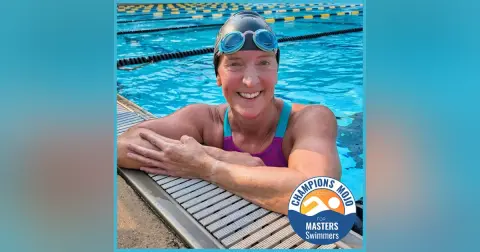
 When A Fit Swimmer Has A Stroke with All-American Swimmer and PT, Margaret Conze, EP 327
Key Takeaways
- Even elite athletes and active adults in peak physical condition can suffer unexpected medical emergencies like a stroke, proving that no one is entirely immune.
- Margaret Conze emphasizes the importance of trusting your gut in a medical crisis, noting that acting quickly to call 911 allowed her to receive life-saving clot-busting medication within the critical golden hour.
- A hidden cardiac condition known as a Patent Foramen Ovale (PFO)—a hole between the heart's atria affecting up to 25% of people—was discovered as the underlying cause of Margaret's stroke.
- Beyond neurological recovery, incorporating proactive physical therapy, targeted strength training, and proper joint maintenance can help masters athletes stay healthy and injury-free.
- Hand paddles should be used cautiously with varying sizes, as the strain on shoulders and elbows often does not manifest until 24 to 48 hours after a swim workout.
We talk with All-American masters swimmer and physical therapist, 55-year-old Margaret Conze, about the day she suffered a sudden stroke at a swim meet despite being in peak shape, and the split-second choice to call 911 that got her life-saving treatment in time. We also dig into the hidden causes behind unexpected health events in active adults, how she returned to racing even stronger, and what masters swimmers can do to train hard while staying health-aware.
- The subtle first warning signs at the pool—and why embarrassment cannot win in a medical crisis
- Trusting your gut when something feels off and insisting on immediate emergency care
- Visual changes, strange body sensations, and one-sided weakness as urgent red flags
- How a standard home blood pressure cuff can serve as a quick reality check
- The unexpected cardiac finding behind her stroke that affects up to 25% of people
- The "golden window": what it takes to stop neurological damage in real time
- The psychological and physical path from the ICU back to national top times
- Strength training essentials every masters swimmer needs for long-term joint health
- Using physical therapy as proactive maintenance rather than injury reaction
- Hand paddles and shoulder risk: why you can’t judge the strain until 24 to 48 hours later
Would you consider leaving us a five star review on Apple? That's like getting a best time for us. Kelly and our team would be so grateful.
Email us at HELLO@ChampionsMojo.com. Opinions discussed are not medical advice, please seek a medical professional for your own health concerns.
You can learn more about the Host and Founder of Champions Mojo at www.KellyPalace.com
Frequently Asked Questions
What is a PFO and how does it relate to strokes in athletes?
A PFO (patent foramen ovale) is a hole in the heart between the atria that fails to close after birth in about 25% of people. It can allow a blood clot to bypass the lungs, travel straight to the brain, and cause an ischemic stroke.
What are the warning signs of a stroke that active adults should watch for?
Warning signs include sudden visual disturbances (like crossed or tipped visual fields), strange body sensations, one-sided weakness such as a foot dragging or a knee buckling, and severely elevated blood pressure.
How quickly must stroke treatment be administered?
Clot-busting medications must ideally be administered within a crucial four-hour window, known as the golden hour, to effectively stop neurological damage and preserve quality of life.
Why is strength training important for masters swimmers?
Strength training helps masters athletes maintain muscle mass, preserve bone density, and improve overall joint health so their bodies can better tolerate the repetitive motions of swimming and other cardio.
00:00 - A Stroke Feeling Out Of Nowhere
00:26 - Champions Mojo Welcome And Guest Intro
02:31 - The Swim Meet Moment Everything Changed
07:47 - Trust Your Gut And Call 911
09:12 - Migraine Versus Stroke Warning Signs
11:15 - Blood Pressure As A Reality Check
12:31 - The Hidden Cause A Heart PFO
15:06 - Clotbuster Treatment And ICU Risk
16:35 - PFO Closure And A Careful Return
18:31 - Racing Again Without The Fear
21:28 - Strength Training PT And Injury Prevention
25:20 - Paddles Rest And Listening Afterward
27:30 - Five Star Review Request
A Stroke Feeling Out Of Nowhere
SPEAKER_03I looked at my husband and I was like, something's happening. I don't know what it is. I said, I think I'm having a stroke. You need to call 911. The security lady was sitting right out there. He's like, You need to call 911. When we got out the door and she had gone away, she came back and I was like, Did you call 911? She said, I called security. I looked at her, I said, 911. Now.
Champions Mojo Welcome And Guest Intro
SPEAKER_00Hello, friends. Welcome to the Champions Mojo podcast, where we bring you interviews and topics to help you live well and swim well, conversations especially meaningful for masters swimmers and anyone striving to perform better in the water or in life. We're here to champion you. And now your host, Kelly Palace.
SPEAKER_01We are so honored to welcome a true inspiration in and out of the water to the show today, Margaret Conzi. Margaret is a licensed physical therapist, a swimming parent, and an exceptionally decorated master swimmer holding multiple USMS records, all American honors, and standard setting top times in the nation. But just 16 months ago, despite being in peak physical condition, Margaret experienced a sudden stroke. Because of her clinical awareness, she recognized the warning signs and immediately rushed to the hospital and received the critical clot busting medication within that crucial golden hour, saving her life and preserving her quality of life. Today she is back in the pool, throwing down some of the fastest times in the nation. Whether you're an elite competitor or a fitness swimmer, Margaret's powerful story, clinical expertise, and the message on health awareness and physical resilience are something every single athlete needs to hear. Margaret, welcome to Champions Mojo.
SPEAKER_03Thanks, Kelly. It's nice to be here.
SPEAKER_01Yeah. So we just met a couple of weeks ago at a swim meet, and I was told by your friend, our friend, Susan Williams, we love Susan, that I really needed to interview you. And she told me that you had had this stroke 16 months ago. And then, of course, you throw down a 104 long course 100 meter free there. Um, which is, if you don't know that time, just think about that. 104 for 100 meters, incredibly fast. And you're 55, right? Uh huh. Yep. Okay.
The Swim Meet Moment Everything Changed
SPEAKER_01Let's go back to that day. You're in top physical shape. Uh, to me, you're kind of the last person that you would expect to suffer a stroke. And uh, I guess this can happen to the healthiest among us. Were were you the healthiest? Take us back to that day and exactly what happened.
SPEAKER_03Oh, God, so crazy. Yeah. Okay. So I um I was I was in good shape. Like physically, I was, I've, you know, I'm I'm probably not training as much as you, but I'm training like three, four days a week, um, lifting weights, swimming probably 35 to 100 yards or meters, depending on the day. Um, and I don't I don't race a ton, but I race, you know, probably two twice a year. And um I um so I was at my son's swim meet. This was actually a little more than 16 months ago. It was March like 8th or 11th or something like that. And I was at my son's swim meet. So let me let me back it up. I had been to my I had been to ACC's uh for my daughter's swim meet, and I had gotten sick, and whatever I got, it turned into a pneumonia, which was super weird. And I had gotten myself an antibiotic, and I was towards the end of the antibiotic on this day when that happened. So I was like not perfect, perfect, but I was fine enough to go to my son's swim meet. And um he, I, you know, I was whatever, but I had had this like sickness. Anyway, I was watching his five random freestyle and I was at the University of Maryland, and I'm in these like super steep bleachers, and thankfully my husband was with me. And um I I he had finished, he'd gotten out of the pool, and I was looking down over and telling me he did a good job. And then I turned around to get back to my seat, and I had this like crazy feeling of my visual fields like crossing, like literally everything that was in my right eye kind of like tipped towards the left, and everything that was in my left eye tipped towards the right, and I had a moment where like it looked like everything sort of just crossed and then it came back up. And it was the it was it was the weirdest feeling, and I like grabbed my seat and I just was like, what was that? And then I kind of like felt like this all over strangeness, and I not like I was gonna faint, but like something like whoa. And I just lied down on the bleacher for like 10 seconds, and I thought, what was that? And I sat back up and I looked at my husband and I was like, we gotta get out of here. So the bleachers are like, I don't know, 40 steps of steep. So he went behind me, I held the rail and I walked up the stairs, and on the way up the stairs, my foot, my right foot like dinged the front of the next step twice. And I was like, uh-oh. And you know, like I'm a healthcare provider. So I stirred my wheels, started turning. I got to the top of the stairs and my right knee like buckled slightly. I didn't fall, but it was like a little bit of a womp. I kind of felt okay. I said I looked at my husband and I was like, like, something's happening. I don't know what it is. I said, I think I'm having a stroke. You need to call 911. They got the security lady, was sitting right out there. He's like, you need to call 911. When we got out the door and like she had gone away, she came back, and I was like, Did you call 911? She said, I called security. I looked at her, I said, 911. Now, wow. So I I like I just had this like feeling like something was wrong in a way that had never been wrong, you know? And um, and it I was like, like in that moment, I was sort of like I was lucid. Like I could, I was walking, I was okay. I I didn't feel I don't know. You're sort of at a like that, that's like the moment that you're like in a place where you're like, should I just go home? Should I go to the hospital, you know? And so if nobody gets anything from this, it's like trust your gut, like trust yourself in that moment that something, if something feels really off or really wrong, it's probably really off or really wrong, you know? And so um the the um it's a little embarrassing too. That's the other thing. It's like who you are, you know, like I'm not like somebody who wants to draw attention to myself. I pride myself on my, you know, physical well-being. And um, and so when you're sitting in the lobby of a swim meet with all the other swim parents, and you know, you're about to get put on a stretcher, and you know, there's 10 cops and all the security guard and the two EMS people around you, you know, it's you're drawing a lot of attention to yourself. So anyway, do it.
SPEAKER_01So um, yes. So
Trust Your Gut And Call 911
SPEAKER_01I'm so glad you went there of this when you feel that something is really wrong, because you know, a lot of our listeners are tough athletes, you know, they're they're um my husband and I actually kind of have this funny thing where we it's it's a little pact we have. We're not allowed to mention body aches or problems or things that we're having for three days. Like just like you just can't mention them because it usually will go away. That's kind of in I grew up with the family with in the family of three days. If it's still there, then go to the doctor. But those things resolve. Yeah, you have to be apt at it. So um, like the other morning, Mark woke up and he said, I I uh it's been three days, I have a really bad pain in my eye right here. And he pointed to his eye, and long and short, he had had a piece of sand lodge in his eye and he wouldn't tell me about it. And we did some eye wash and it came out that day. Like he should have told me three days ago. But we tend to do that. Um something I had that that I and I want to put these out here because I feel like probably because you are a healthcare professional, a licensed physical therapist, that that security guard or that person listened to you. Call 911. I know what I'm doing, I'm a physical therapist, I'm having a stroke, get me to the hospital. Um I had, you know what a visual migraine is?
Migraine Versus Stroke Warning Signs
SPEAKER_01I have never had one before or since, but it was similar to that. It was like all of a sudden I'm just hanging around the house and then I'm looking through crisscross stained glass, bright colors. It's completely blocked my vision. I took a nap, you know, and then I woke up and it was gone. But how do we know like the difference of what you saw and what this visual migraine was, and when you actually say, I need to go get the clot busting golden hour miracle. Should I have gone to the hospital with the crisscross, you know, thing?
SPEAKER_03I don't know. That's a it's I mean, that's hard. That's a tough thing. I I hear what you're saying. I know like that kind of that like like that light in your eye, that aura kind of thing where your visual field is messed up. This was like, and that and that does can like can be sudden. And actually, when I was in the hospital, there the neurologist who examined me, he was like, it's possible you just had a migraine. I was like, I've had migraines before, it's possible, but it didn't, it didn't feel that way. Like whatever I had was was abruptly different than than that. And it was accompanied by like kind of an entire body feeling of like whoa, you know, something like was like like kind of like like vibrating inside of me, or like my body was like something didn't didn't feel right. Like I actually can't even remember it or even describe it that well, but I know like I was like, what's happening?
SPEAKER_01You know, well, the one the one side of your body being weak, you know, when your foot was hitting the stairs and your knee was buckling, you don't you definitely don't get that with a migraine. You know, you're so fully functional. So I you know, I just throw that in there. Maybe that took us off the topic a little bit, but I I feel like hearing your story, I'm definitely gonna be more on this. Um now and I tell you one other
Blood Pressure As A Reality Check
SPEAKER_01thing.
SPEAKER_03You know, the other thing that that when the EMS people came and they took my blood pressure, my blood pressure was like like something so awful, like 180 over 130 or something like that. It was so high. So that's like another kind of like little bit of a measurement. Like a lot of us have blood pressure cuffs in our in our home, right? So if you, you know, have something that actually really doesn't feel right and you are near a blood pressure cuff, take it. Like that's a like a uh way to kind of confirm that either something is pretty serious or it's a little less serious, you know, to distinguish. Okay, yeah.
SPEAKER_01That's a great, great um recommendation. So how how did you um from there, like, why do you think you got this stroke being fit? I think you mentioned a little bit about this to me at the meet, but yeah, are we adult athletes what what are some of the things that we might need to be on the lookout for in general? Obviously, we know like as a healthcare provider, are we supposed to get our carotid arteries tested? Are we supposed to do an aspirin a day? I mean, what well, how do we prevent this other than just general stroke prevention? And then tell us about the thing you told me at the meet.
SPEAKER_03Okay.
The Hidden Cause A Heart PFO
SPEAKER_03So very long story short, I got I go to the hospital, they do every test under me under the sun. I have like all my carotids are fine, my every all my blood vessels, they like literally do an ultrasound and look in the in your eyelid so they can see like uh uh your like circle of wellness, like all your blood vessels in your brain. And um it and so I had no other like risk factors, everything was fine. They look at the blood flow, they do it. It's called a bubble study, right? So they do an echocardiogram, they took an ultrasound of your heart, and then they put saline in, pump saline into you, and they can see the where the bubbles are traveling in your heart. And so the um turns out I have what's called a PFO, which is a patent foramen ovali, which is a hole between the atrium of your heart. 25% of people are born with this hole, with this PFO. Uh, sometimes it closes after birth and sometimes it doesn't. If it's of a certain size, it's actually called an atrial septal defect. And mine turned out to be 25 millimeters, so like the size of a quarter. And ever do I had it? I know, but it was big. And and in hindsight, if I think back, I would I have been saying, like for the last maybe five years, you know, when I push hard in the pool, I tingle a little. I like get this like feeling of like tingling. And I I don't I don't remember having that as a young person, but I don't think I had that as a young person. And so for the last five years, I've been feeling like this tingly sensation. And like it goes away. You hit the wall, and in 20 seconds it's gone. And I don't ever like feel bad or short of breath or anything like that associated with it. But you know, in hindsight, I think I was not oxygenating well. So the the fact that I had this hole in my heart and the fact that I probably had an inflammatory process happening in my body, the clot gets from your body into your heart, goes through the hole, goes straight to your brain, right? So I had a small ischemic, which means a clot that went to my brain. It caused a temporary um, you know, blockage of blood flow in my cerebellum in specific. And um, so go back to like that actual moment, right?
Clotbuster Treatment And ICU Risk
SPEAKER_03So that is the moment you basically have a four-hour window if you have a blood clot in your brain. And when you get to the hospital, by the time I got to the hospital, I'm vomiting, right? Like it was, it was totally bad. ER physician, she you know, held her finger up, she said, touch my finger, I missed. And so at that moment, I was like, oh God, something is something's going on. Like it's it's I'm definitely having a stroke. This is definitely a problem. So then they give you the medicine. Then they do the cat skin, they give you the medication that's called that is a that's called the clotbuster, right? In my case, it was called TNK. And within 45 minutes, you have to get that medication within four hours-ish. And within 45 minutes, uh, I could start to feel everything kind of coming back to normal. Yeah. Yeah. It was kind of crazy. Then I spent three or four three days in the ICU.
SPEAKER_01But so you you did spend three days in the ICU.
SPEAKER_03Yes, because once you get that TK TNK, once you get that clotbuster medication, you um are a high risk for a bleed. So the opposite of the clot, you're a high risk for a like a a big internal bleed. So taking the medication is a risk.
SPEAKER_01Wow.
SPEAKER_03I know.
SPEAKER_01So so once you healed, you did not have any symptoms and were able to just go right back.
SPEAKER_03I mean, yeah, you've kind of had a massive medical event. So you can't like go back hard. You I and I had to have the PFO closed, right?
PFO Closure And A Careful Return
SPEAKER_03So I have this like six-week window, maybe eight weeks between the stroke and getting this heart surgery. They close it, they just go in through your ephemeral vein and they go up to your heart and they thread up this catheter and then they put this little drain plug in the um in the defect. So I kind of have a window of, and I had a I had a uh cardiac monitor also on. So I had at least this window where you're just like kind of walking and you know, trying to make sure that everything's okay. Do I trust myself? Do I feel okay? Like take your phone with you just in case. You know, you have these moments of like of like a little bit of nervousness, like where you're not certain that everything is totally fine. And then you just start to trust yourself a little bit more. You start to, you know, lift a little bit of weights, you start to kind of get a little more cardio going, push yourself on some hills. And then I got back in the pool probably like three weeks later. And um, and actually that summer, we have we have grown-up swimming around here. Do you guys know what that is?
SPEAKER_01Yes, yeah.
SPEAKER_03I've yeah.
SPEAKER_01So I've had Brian on the podcast, the grown up swimming.
SPEAKER_03Yeah, yeah, yeah. So I I just did like, you know, two grown-up swimming meets. And I just like in July, I just like I went like a little fast and I dove off the wall and I just thought, okay, this feels okay. You know, you just sort of dabble your toes in, you just sort of gradually kind of gain that confidence and and you know, self-check, right? See how you feel one and two days later. Make sure you're not overdoing it and just try to be as smart as you can be. And that's sometimes hard to do, but yes.
SPEAKER_01Wow. Both as somebody who had a major medical event and a licensed physical therapist, we masters athletes, we do have injuries, we do have medical setbacks.
Racing Again Without The Fear
SPEAKER_01And it's scary when you're coming back to something. Do you have any advice other than what you you just said test yourself? Do you do something from the the mental aspect of knowing you have what did you call it? A drain plug in your chest?
SPEAKER_03I call it a drain plug, right now.
SPEAKER_01You know, you're standing up there in Baltimore, we you know, long course, you you crush the hundred meter free. Is there any point in that race where you're thinking drain plug? Or do you just not anymore?
SPEAKER_03Not anymore. Okay. In fact, I'll tell you right now, I feel better than I I think I'm like superwoman right now. I feel better than I have in a long time. That feeling of those, that tingling sensation is really going away. And like I feel like my capacity to push myself in the pool is better than it's been in uh in a long time, which is so weird. You know, I I didn't notice like this little tiny decline that had sort of happened, but I really I feel I feel good. It's kind of interesting.
SPEAKER_01It's probably you're probably getting more oxygen, you know. It sounds like you're you're getting more oxygen. Wow. Oh, Margaret, I mean, just it's just incredible.
SPEAKER_03Yeah, incredible. It's crazy. It's been a crazy turn of events. But I do think from this, this is different than like having an orthopedic problem. Like we all have orthopedic problems. This was like, I think maybe a little more mental and just a little more like listen to your body. Did I tolerate?
SPEAKER_02Like, try not to overdo, like really just um, because nothing was hurting, you know, nothing, right, right, right.
SPEAKER_03This is just really take it slow, don't be dumb. Like this is serious, and it's easier almost to do that, to like have an orthopedic problem and respect that. That's harder, right? Because we're used to grinding and we're grinding through pain, right? And we're all, you know, oh, it it it doesn't hurt that bad, you know. So that is uh, I think a much harder, that's a a harder kind of um gauge, right? And like this is this was kind of a constant progress, right? I mean, I had a few little setbacks here and there if I overdid it, but like uh uh uh orthopedically, you know, you're up, you're down, you're up, you're down, you're shoulder shirting, it's not, it is, it's not bad, it's terrible. Oh, I shouldn't have done that, and then you know, so right.
SPEAKER_01And it's not gonna kill you, you know. That's that's the threat.
SPEAKER_03Totally.
SPEAKER_01It's not gonna take you out. So um, so as a physical therapist, what would you say, just in general, for us swimmers and masters athletes, what do you think we should be doing as far as other things than swimming that help us be healthy in the long run?
Strength Training PT And Injury Prevention
SPEAKER_03Oh, I would say, go see your cardiologist and just get a visit and make sure everything's okay. I can't give actual like medical advice. I'm a PT, but I I am taking a baby aspirin every day and I'm never gonna stop, right? And I'm starting to make my husband take it. And I talk to my friend who's an emergency room physician, and she's like, Oh, yeah, I'm gonna take my my baby aspirin.
SPEAKER_02Yeah.
SPEAKER_03So uh I I think, you know, that that doesn't hurt and I mean, unless you have like some kind of another disorder, like you have a disorder where your blood is thin or something like that. So don't take my advice. Go see your cardiologist.
SPEAKER_01Yeah, we we always say this isn't medical advice. It's just our own personal experiences about things. Do you think that we need physical therapists in general as masters athletes?
SPEAKER_03I think everybody needs to be strength training in some way, shape, or form, right? Whether that's resistance bands, whether it's body weight, or whether it's actual weights, and probably ideally it's some combination of the three of those things. And then I think that is always a little bit in flux, depending on what part of you is hurt. Okay. So I my personal opinion on this is that like it all of what I'm doing anyway, and all of what I see like a lot of my people who are my age doing is kind of a combination of like PT slash rehab slash like a little preventative types of things, things that you know that keep you out of trouble orthopedically. And then truly strength training, right? Like you might and I think that like we all benefit from some resistance bands for rotator cuff and postural scapular muscle, you know. And I I like to do a little bit of that as like kind of a dynamic warm-up before I get in the pool. I think that helps sort of stave off some of these injuries that kind of tend to get to our shoulders and and whatnot. And and but then I also think we need to really be strength training, which means just to kind of maintain our muscle mass, maintain our bone density, and um keep our overall strength up to allow us to participate in our repetitive motions, right? I think I think all athletes, honestly, it's runners, cyclists, everybody needs to strength train so that your joints tolerate the cardio that you're we're all a little psychotic about, right? So um, that is my personal thing. And as far as a PT standpoint, I mean, I think if you can find somebody like myself who can really give you something that is specific, that is specific to your sport, um, a routine that you can follow. And and like I have some master swimmers that come and see me sort of periodically, like maybe monthly, and they're like, oh, I'm super good today. And then we just do like some manual therapy, or like, oh, I think I have this happening. And then we can like nip that in a bud. So if you can have somebody that you can go and see on a kind of a monthly basis and kind of get to issues before they really flare, yay. You know, that's where it's at. But you know, like we said, we you don't even get to mention it in your house for three days.
SPEAKER_01Right. I know. I think that athletes are afraid of resting. And sometimes we just get flattened and laid on our backs, either the flu or a real injury or life. What are your thoughts on why we don't want to rest and what that rest actually could possibly do for us?
SPEAKER_03Yeah, that's a such a good point. And so many times people don't come back slow enough and they don't come back gradually and they don't do the right thing, and then they come back and their pain is still a problem because they just go right back to the old things, but yen, then they're kind of a little less strong because they haven't done doing anything.
SPEAKER_01I want to ask you about
Paddles Rest And Listening Afterward
SPEAKER_01paddles. Do you think people should be using paddles?
SPEAKER_03I think um paddles can hurt people, they can hurt people's shoulders, they can hurt your elbows. And I think that they should be used kind of um some people can use them, like I said with a guy who uses these the biggest paddles that I call them airplane wig. They're the biggest thing. He could swim myself all day long and be fine. Yeah, whatever. Some people are sensitive, right? And so I swim with those teeny paddles. I swear to God, they're not even bigger than my hands. And then there's also those fingertip paddles. So, like I think it's nice to have like a variety of paddle sizes, and then I think you just need to try to listen to yourself. And the hard thing about that is that they don't always hurt during, right? It's one day later and it's two days later. And so, like, really listening to what is happening to your body, you know, a day after and two days after.
SPEAKER_01Yeah, yeah, that's really good advice. Is there anything that I have not asked you that you want to share with uh our listeners?
SPEAKER_03Trust your gut, really. I mean, I think when we bring it all back to, you know, what uh what actually kind of happened to me, it's it's trust your gut. And the only other thing that I thought of when you were talking about your migraine is that people who have a patent for raminovalley or an atrial subtil defect are often migraine sufferers. So there is a relationship between um between the PFO and the migraine thin. So since I've had my terrain plug put in, I uh my migraine are diminished, which is nice.
SPEAKER_01Wow, so that's so the hole in the heart does connect to migraines and your migraines have gone away since you got it fixed.
SPEAKER_03Yeah, yeah.
SPEAKER_01Wow. Wow, that is a powerful finish. Well, Margaret, thank you so much for spending this time. I know that this is going to be super valuable for anybody that listens or shares it. And um, I look forward to seeing you continue to crush it now that you're even stronger, now that you have your drain plug, hilarious.
SPEAKER_02I look forward to seeing you crush it, Kelly. It's so good. I'm so happy for you. Thank you. Thanks for being with us.
SPEAKER_00Oh my God, thank you so much. This has been
Five Star Review Request
SPEAKER_00fun. Thank you for listening to the Champions Mojo podcast. Would you consider leaving us a five star review on Apple? That's like getting a best time for us. Kelly and our team would be so grateful. See you next week for another Boost of Mojo.