

 Apple Podcasts
 Spotify
 RSS Feed
 A Second Chance at Life: Tom & Deb Stokes Riveting Story of Love, Fitness and Organ Donation, EP 225
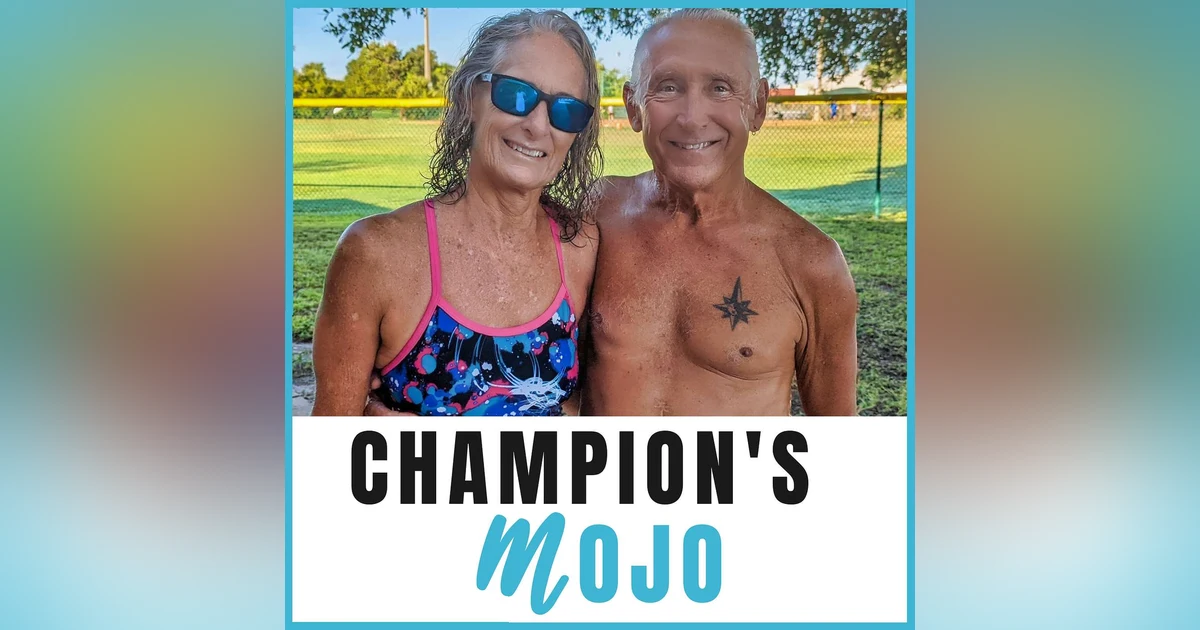
Picture this: a couple who left their jobs to pursue a life of fitness and travel, are running marathons in every state, and faced life-threatening health challenges. Welcome to the extraordinary life of Tom and Deb Stokes. Join us for a heartwarming and inspiring episode as we delve into their journey of love, athleticism, and resilience. The Stokes share the importance of setting goals, the role their athletic backgrounds played in overcoming health challenges, and how they balanced life, fitness, and a marriage.
Their story took an unexpected turn when Tom required a liver transplant. But this couple approaches everything as a team, turning adversity into opportunities for growth. You will be riveted as they recount how they maintained balance, continued pursuing fitness goals and transformed health challenges into inspiring victories. They firmly believe in the power of organ donation, not only for its life-saving impact but also for the second chance it offers.
Discover key insights from Tom and Deb's extraordinary journey. Their shared passion for fitness, intertwined with their relationship, is a testament to the power of support, perseverance, and love. This episode is more than just an inspiring tale of a couple's journey, it's a powerful reminder of the impact organ donation can have, and an insight into maintaining balance in relationships while pursuing individual goals. Get ready to be inspired, learn, and perhaps even reassess your own life goals.
Email us at HELLO@ChampionsMojo.com. Opinions discussed are not medical advice, please seek a medical professional for your own health concerns.
You can learn more about the Host and Founder of Champions Mojo at www.KellyPalace.com
00:01 - Couples Mojo
10:14 - Couple Overcomes Health Challenges Through Fitness
18:07 - Goal Setting, Overcoming Obstacles, Organ Donation
30:05 - Takeaways From an Inspiring Couple
Welcome to the award-winning Champions Mojo hosted by two world record holding athletes. Be inspired as you listen to conversations with champions. Now your hosts Kelly Palace and Maria Parker.
Speaker 2Hello friends, Welcome to the Champions Mojo podcast. As usual, I am co-hosting with Maria Parker. Hey, Maria.
Speaker 3Hey Kelly, it's great to be here. I'm so excited about our interview today.
Speaker 2And what a special treat today we have not one guest but two guests, because we're launching a themed episode which we're going to intersperse in our episodes now and then. That is the couples mojo. We're introducing and going to be talking with our friends, tom and Deb Stokes, who are both elite masters, athletes, champions in multiple sports. Maria and I, of course, met them through our master swimming program, so we know they're both swimmers, but it is not their best stroke. But certainly anyone who dons the cap and goggles, as I say, really understands the sport. So first let's say welcome to the show, tom and Deb.
Speaker 4Welcome, thank you. Thanks very much for the invitation.
Speaker 2Yes, yes. So you guys have been inspiring Maria and I, and we thought we got to talk to these people because they are traveling all over the US doing races. Every time we look up from swim practice, you guys are traveling somewhere. I know, tom, you are a transplants recipient. You've been to the World Transplant Games. Deb, you're constantly hiking these amazing hikes and running. You guys have a lot of things that you're doing and you're doing them together. So, as somebody who does have a spouse that works out with me and Maria is the same we want to explore how did this spin? And let's start with how you guys met.
Speaker 4We worked together in a mid-sized hospital down in Brighton Beach, florida, and we worked in the same department and the room where I worked was just right next to the walkthrough between the locker rooms and the operating rooms. So on an almost daily basis I got the seer coming into work and we just started up the conversation.
Speaker 3Were you both athletes, then Were you both working out.
Speaker 4We were both runners of the sort. Deb had been running for a while. I'd been running on and off for quite a few years, but more off than on, and once we started to get together and going out and off a lot of our early dates for running somewhere, we'd meet and go for a run and enjoy our evening that way.
Speaker 3Whose idea was that? To meet and go for a run?
Speaker 5I don't know, probably the most of us. I was a very casual runner. I ran a couple of miles here and there I had maybe run a fun run 5K, but never really tried to race a 5K up to that point. So my first 5K was with him, nice.
Speaker 2Let's back up a little bit. What are you both doing in the hospital at that point? Are you both nurses? Or give us a little background on your careers.
Speaker 5So I was an OR nurse I then and this was back in 1999, so I'd been a nurse for a little like 11 years at that point, and what you were 20 years on by then.
Speaker 4So it's a little bit longer than 20, but I worked in the recovery room. But the recovery room also had responsibility for pre-opping, or prepping patients for the surgery, getting them from wherever they happened to be, and I guess I had 7, 4, 9, yeah, about 25 years in at that time.
Speaker 5So I would sometimes pick up my patient from him and then often I would deliver my patient to him in the recovery room too, because he did both jobs and I was in the OR.
Speaker 2So what a nice way to meet. And so we established before we started recording that you guys had been married 20 years. Obviously, most relationships start off kind of exciting and new. What was the first real obstacle that you guys faced as a couple?
Speaker 4I'd say one of the very first things that we bumped into was we had wanted to take some time off, like a leave of absence, to go and do some travel, a travel assignment someplace, spend a summer outside of Florida, and the manager that we had at the time just refused to let us go. So we had the option of either taking and putting our travel plans on hold or we could resign and go traveling, and we chose plan B we quit together and we rode off into the sunset together.
Speaker 3Where was your first assignment.
Speaker 4Yeah, Salt Lake City.
Speaker 3Okay.
Speaker 5So my family was all out west in Utah and he had never seen Utah, so we went out there for four months.
Speaker 4I had figured that if we were going to work as a team and we'd seem to be pretty enthusiastic, like you say, in the early days, that's the way it is. But I needed to get to meet her family. My kids lived in Lake Worth, just right next to Boynton Beach, so David already had a chance to meet them, but I didn't know any of her kids and I thought that would be a good place to go be close to her children. And also, let me explore a little bit of someplace I'd never been before.
Speaker 3So athletics is a huge part of your relationship now. Was it always that way, or did you just move more and more in that direction?
Speaker 5Actually, that year, before we started traveling, I went into work one day and had this silly grin on his face and we were running what? Four miles at a time. I walked in there and I could tell he had something, so I said what?
Speaker 5And he said I signed up for the Jacksonville Marathon because this was like the end of the year it was in December and he said I had a goal to run a full marathon in my 50th year. And that was his 50th year. And he said a goal, you got to do it. I said you're crazy, that's 26.2 miles.
Speaker 4So she had right now not the last time I've heard her say that.
Speaker 3You're crazy, yeah, yeah. So how did it work out, what happened?
Speaker 4I went to Jacksonville. I ran the marathon in a rainy, cool day in December and I finished it in three hours and 59 minutes 57 minutes like that still his PR still like PR all the way here yeah that's amazing.
Speaker 3First marathon under four hours is amazing, especially with so little training. That's fabulous.
Speaker 2And so, deb, were you asked to do it with him? Were you inspired to do it with him? Was it always just?
Speaker 5I was what he wanted to do. Okay, I was not anywhere near Creeper to that.
Speaker 2I don't think I had even done 5k, that point I wasn't ready so let's fast forward a little bit, because you guys are starting off running three or four miles, and now we know that, tom, you are attempting to run a marathon in every state. So I know a couple of weeks ago you did two marathons back to back when you traveled this some northwestern states. Deb, what is the longest run that you've done up to this point?
Speaker 5so we went to Utah for the first travel assignment and he signed up for another marathon and Really I had no desire to run that far. But when I went to the finish line I was trying to guess when he'd be along, and so I had the opportunity to watch Many runners come across that finish line. Some of them came across with a smile, some of them were carrying their baby, some of them were crying, some were vomiting. I think it just really Got to my heart. I'm like, yes, I have to experience that. So after that I started training for a marathon and we went back to South Florida for the winter and that's where I started training and running long. So for a while I was doing hats and he was doing foals, and then, when it came to April of 2001, I did my first full marathon in Nashville Country Music Marathon and we did a succession of five in a year.
Speaker 2Have you guys ever added up how many you've done between you up to this point?
Speaker 5Oh yeah, I did a. Now I'm trying to do, including my foals. I'm doing half marathons in every state.
Speaker 4The last marathon we did in that era was in October 2003, and that was deranged Colorado, and then we didn't do any marathons at all. It's just too much life happening. I started doing marathons again in November of 18.
Speaker 3Why did you restart?
Speaker 4Sometimes you just blurt things out and, like my daughter would say, your mouth whites a check that your body can't cash. We were doing a cycling event and we're at a rest stop. A lady that we met there was a five coach and we're chatting and talking about my transplant and all that and I said the following I want to do a century ride, a marathon, all the transplant games in Salt Lake City and a half-iron triathlon. And she was pretty well impressed and I wiped was that was another one of those. What are you crazy?
Speaker 3And it just came out. It just came out. You're a little, you're a little high from the first part of the ride and you thought I can do anything. I want to do these four things.
Speaker 4I got my transplant in July of 2017 and that was a survival year.
Couple Overcomes Health Challenges Through Fitness
Speaker 3Can we back up and talk about that a little bit? Diagnosis disease.
Speaker 4Oh sure, back in the late 1980s, early 1990s maybe, I got infected with hepatitis C, most likely through a workplace and Accident of some sort.
Speaker 4So I went to my family doctor and he referred me to an infectious disease doctor who put me on the available treatment at the time.
Speaker 4A lot of things happened but ultimately I ended up being off treatment and I didn't have any symptoms, never did have any symptoms early on, but the course of events for hepatitis C is you get the hepatitis virus and then you recover from it and then you go out your life and 10, 20, 30, 40 years down the line you start having problems in your liver and in this case, which was pretty typical, you get a sclerotic liver, a damaged, scarred liver from the hepatitis off the metal, sequelae into cancer and so on.
Speaker 4We moved back to Florida in 2004, so that depth, to go to grad school and I went to see a Gastroenterologist here in town because I was an old guy and I needed my old guys first colonoscopy type of thing, and I filled out the medical history and when he came in to talk to me he didn't want to talk about anything but the hep C. So we tested. I was still positive. He put me on treatment. We got a complete cure, but the damage was done and that was in 2004 and things just went along pretty normal Once a year, every year, he had me get an ultrasound or a CAT scan or something of the abdomen, and in 2015, april 15, the ultrasound showed some what they call eclogenic masses and and I went back to see him right till my other transplant into discussion.
Speaker 2Wow, you guys as a couple, you're cruising along, you're having this amazing Life and you get diagnosed needing a transplant and we know that From there obviously was very successful. How did that affect your relationship and how did you guys get through it as a couple?
Speaker 4I don't recall a full lot of Cussing and discussing over the whole thing. It was something that we just got to play. This you got to do, we got to do.
Speaker 5There wasn't even a lot of trepidation. We've been in the business for many years then we knew it's a procedure that's done hundreds of times a year. So we weren't very afraid. We just knew it had to be done.
Speaker 4There's a saying in the computer industry that you put garbage in, you get garbage out as far as programming and stuff. And the same thing holds true for surgery and surgical recovery. As you put a bad body or an unhealthy body or a poorly conditioned body into surgery through anesthesia, through the recovery process, then your recovery itself is going to be much more difficult. And so at that point we had been running, we had not done anything long. We're doing five K's and maybe some 10 K's of on the local scene, and I just started training more. I had retired so I had time on my hands to Train more than I had. But after quite a increase in my mileage running I started thinking what else can I do here to really make me a better candidate for a successful outcome? And I added on If you're oh, what else is there? I don't know, let's try triathlon.
Speaker 2So where a lot of people would just Maybe be depressed and start eating cupcakes You've decided to Go after and let's get in really great shape. Where do you think you got that mindset and did you adapt it as well, deb? Did you just start training with them? And this was a couple things.
Speaker 5Yeah, I know I can't keep up with him, but when you're with someone who's working out all the time, there's an accountability factor because you're together. If he's doing it, I want to do it, so I did. I stepped up my training too.
Speaker 4There was never a time that I thought that I was going to die because of this, but the thing that I worried about the most was that I was not going to be able to recover to our really active lifestyle. I didn't want to even take a chance on losing that lifestyle. It was just too important because these are things that we had grown into together and it just made absolute sense to me to get in the best shape for both my own health and healthy outcome, and also to keep up the high quality of our relationship. I think we would have been okay if it had been different. We would have found a way, but I'm really glad we didn't have to.
Speaker 3I think many people love the idea of working out with our spouse. I know Kelly does and I do. But what would be your advice to maybe somebody who's getting together their relationship is new to have this kind of accountability and fitness and stay active.
Speaker 4There's probably a few things. One thing I think that's really important is don't try and coach your partner. I don't tell her that she's swinging her arms wrong or that her foot strike is wrong. Even if I thought it, I wouldn't tell it to her, because why would I do that? She's out enjoying herself and she's doing a good job anyway. And to start picking at little things, do this better, do that better. I just see that as a vital part of the recipe for disaster.
Speaker 2That is a great piece of advice.
Speaker 5I think it's important to have balance in the working out relationship. We work out together, we go to the pool together. Sometimes we share a lane, sometimes we don't. We run together, but not always. We both need our solitary time and our solitary run, and maybe I'll go run with a group of ladies sometimes, sometimes he'll go on a day that I'm working, I run with some people or go to the pool. I think what works for us is that there's a balance between we get to work out together sometimes and sometimes we work out individually and I think that's important, because balance is important in all aspects of life.
Speaker 4It's my chance to do what I want to do with my goals and it's her chance to do it she would like to do with her goals without impeding the other, even our cycles. A lot of times we'll start off together and we'll go to a certain point where she'll turn off and go and do her thing and I'll just keep going and do my thing. We might start together but we rarely finish together unless we're out doing an event.
Speaker 3Do you decide to do events together, or is one of you going to do an event, the other going to support, or are you both doing the same events? How does that work in your relationship?
Speaker 4I think, the biggest majority of our events. One of us will say hey, what are you thinking about this? It could be a race in the state fair of Nebraska, for example, coming up. So one of us will throw something like that up and the other one will either ignore it altogether or buy into it.
Speaker 3Like that ignored altogether.
Speaker 4Throw it out there and you don't get a response.
Goal Setting, Overcoming Obstacles, Organ Donation
Speaker 2I think that's the way Mark and I do it a lot, and so that makes sense. So one of the things we want to touch on is you guys are such an inspiration because we didn't introduce you as your ages. But, tom, you said you ran your first marathon at 50. So now you're 74, and that's 24 years at this high level. And, deb, you're younger, I'm 67. 67, which I know. I did a 5K with you a few weekends ago and you kicked my butt and I'm in a younger age group. So what are your goals right now? Because I think it is so inspiring separate from the good question Maria just asked, which is how do you set goals, but I know, tom, you have a big goal and we'd like to hear what that is. And Deb, what are your goals for, your, say, next athletic endeavor?
Speaker 5It's a lofty goal, but I'm doing half-marathons and he's doing full-marathons in all 50 states, wow. So I think I'm at 18 halves.
Speaker 4I think I've got 16 now. The goal that I set, deb said, is all 50 states, but I want to do it by the time I'm 80 and that requires six a year every year between now and then.
Speaker 2That's so awesome yeah.
Speaker 4It's going to be great. And another goal that I have, another kind of long-term goal, is I would like to still be running and maybe even competing when I hit 100. That's the plan.
Speaker 3That's terrific, that's amazing, and I know we read that you set a record in the unit after your transplant for a number of laps walks or whatever right. So you went into it fit, and apparently you kept that.
Speaker 4Yes, absolutely, Absolutely Sure Deb.
Speaker 2Guys, we love to talk about overcoming obstacles and we would love to hear your biggest obstacle, tom, and then Deb yours. But, tom, if it wasn't your transplant, what was the biggest obstacle that you've overcome in your life?
Speaker 4Well, that's a hard one to talk the transplant I've put myself in some pretty crummy situations back in my youth. But even that, nothing comes close to the amount of mental effort and physical effort as the transplant did.
Speaker 3What did you learn from athletics that you were able to apply to your transplant journey?
Speaker 4Well, I think the athletics allowed me a much more successful surgery, a much less problematic procedure. I think already having reasonably good muscle tone and a pretty finely tuned cardiovascular system, I think made the recovery process a lot easier.
Speaker 2Deb, we want to get to your biggest obstacle, but this has to beg the question of couples who are competitive against each other. That is a big challenge when it comes to being couples. How have you guys dealt with that competitive? We do love to beat our spouses, Whether you're big, tall, male, female. I know it's that way with. Maria and Jim and I know it's that way with Mark and I.
Speaker 4I'll take the lead on this and say that is not the way we operate. We don't compete, not against one another. We'll compete against our friends and other folks in our community.
Speaker 5But not being sad. You're only saying that because you always win. I can tell you that I beat him at the Virginia Beach half marathon.
Speaker 3You know when you won. I'll never forget this.
Speaker 2Okay, you just answered the question.
Speaker 3You did beautifully.
Speaker 2Which is it's always very competitive. I don't think there's anything wrong with that. It kind of gives you a little leg up as long as you're happy for your spouse when they do well.
Speaker 2Deb, how about you? What has been your biggest obstacle since we knew about Tom's transplant and we asked him about it? I will tell you that you've already been mentioned on our show, when Maria and I talked about you and Tom being tough and that you actually were doing an obstacle course event and at some point in that you broke your leg. I don't know if that was your biggest obstacle, but you've had some.
Speaker 5Breaking my leg was an obstacle. It was horrible and it took me out of running for three months. I still haven't regained the paces that I was at before. But I think the biggest obstacle I've had to overcome is grad school. We moved back here in 2004 until, for two and a half years, I had an apartment in Miami and I commuted to Miami to grad school. I had to quit my job. It's total immersion in a ceci school. I was driving a lot. I was studying a lot. Tom supported me. He was my champion. He cooked for me and sent meals with me, did my laundry and he left me alone to study on the weekends and he did everything for me. I didn't have time to work out. I didn't have time to spend very much time with my husband and my family, so that was probably the hardest thing I've ever done.
Speaker 2When did you finish it and what are you doing with that? I?
Speaker 5became a certified registered nurse and, as a student, advanced practice nurse through that. So it was totally worth it and I've had an amazing career since then. For the last 15 years I was practicing as a ceci. I semi-retired and now I just give them my availability and they take whatever I'll give them as far as days to come in and work. The financial rewards have made it possible for us to do the traveling that we do and that we have done and to live in the home that we have. So definitely worth it.
Speaker 2But it was hard. Is there anything that we have not asked you that you would like to share with us?
Speaker 4I guess the thing that I would like to do more than anything else is to put a plug in for organ donation or any of the audience listening to this to consider registering as an organ donor. There's over 100,000 people in this country waiting for some sort of a life-saving, life-altering organ transplant. There's sort of the stats 1700 or something. Now 17 people every day somewhere in this country die because they can't get one. That's either a bad heart, bad lungs and the value just goes so deep and so far in a community.
Speaker 4There's people like me that have got a lot of years to go if they can get that life-saving organ. If you take that big step and sign up as an organ donor, it's never going to be a problem that they're not going to treat you in the emergency room because you're an organ donor. Everything in life is going to go on as before. And yet the value you can get up to seven organs out for transplant, seven people's lives that can be dramatically improved, gosh tissue, ligaments, bones and so on that are not life-saving necessarily, but are life-changing. I can get 70 odd, 75 different quarks and pieces to spread around and just impact so many lives in such huge ways. I just can't advocate enough to beg anybody that's listening to this to sign up. You can go to donate life when you're in your driver's license. You can get registered by doing that Check the box.
Speaker 5Please talk to your family and let them know how important it is to you that they say yes, if it ever comes up.
Speaker 2This is really a great last answer to the question. I know one of our award-winning favorite shows was Gillian Best, who you connected us to, and she gave us the same thing. We learned from Gillian that you can even donate while you're alive. You really have to be committed, but you can donate life-saving organs that don't take your life, which was something that we learned through her show, which I think is even cooler.
Speaker 2Yeah, it's nice to know that, though, if you had a loved one, that you were willing to take that big surgery. I think that's a great last answer and certainly appreciate what that did for your life, tom, and therefore our lives and Deb's lives and everybody that's listening to this podcast, because you guys are a real inspiration and we appreciate you being on here. But we have the fun questions. Take your mark. What's your favorite sandwich, deb? Roasted veggie.
Speaker 4Tom Grilled cheese and tomato.
Speaker 2All right. What do each of you own that you should throw out? I have a lot of clothes that I don't wear.
Speaker 4Race shirts.
Speaker 2Scariest animal, Deb Grizzly.
Speaker 4People.
Speaker 2People Deb. Are there any celebrities you would want to meet?
Speaker 5Is Peter Sagana a celebrity?
Speaker 4Absolutely.
Speaker 5He's a cyclist.
Speaker 4I don't have a favorite celebrity that I just would really like to meet.
Speaker 2All right, you guys are both newer to the swimming competitions. Deb, what would be the hardest event for you in the pool? The I ams I guess. Tom.
Speaker 4I think the I ams are hard. I cannot imagine doing a 400. I am.
Speaker 2All right, last one for each of you before Maria's. Takes the next few Favorite movie.
Speaker 5It's called In and Out. I don't know if it's my favorite or not, but I love it, tom.
Speaker 3I don't think.
Speaker 4I have a favorite.
Speaker 3Okay, deb Favorite smell Gene, Lavender, lavender, nice Tom.
Speaker 4Citrus Both I love those.
Speaker 3Okay, deb, do you guys make your bed every morning?
Speaker 5Tom makes our bed every morning. The dog usually unlocks it, All right.
Speaker 3Deb Kickboard or no kickboard, no kickboard.
Speaker 4Tom, yeah, no kickboard.
Speaker 3Okay, deb, if you had to listen to one song for the rest of your life, what would it be? Let it be Nice, tom.
Speaker 4Stranger on the shore.
Speaker 3Okay, deb Window or aisle, I'll Tom.
Speaker 4I like the aisle.
Speaker 3Okay, deb, describe your life in five words.
Speaker 5Sunshine on my shoulders.
Speaker 3Oh, that's nice, that's beautiful, tom what's?
Speaker 4a beautiful oh travel, adventure, oceans and Deb.
Speaker 5You say oceans, you have to say mountains.
Speaker 4All right mountains.
Speaker 5That was five.
Speaker 3You got it. That's beautiful, yeah, okay, last one, what word comes to mind when you dive in the water? Deb, freedom. Hmm, tom.
Speaker 4Gore, let's go.
Speaker 2All right, guys. We really appreciate you spending the time with us. This was great, and you guys are an inspiration. You are Thank you.
Speaker 4Thank you for having us on. It was fun.
Speaker 2Thank you so much All right, we'll see you on the pool deck.
Speaker 4Yep, you bet yes.
Speaker 3All right, see you soon.
Speaker 4Bye.
Speaker 3Bye, bye, bye, bye.
Speaker 1Stay tuned for the takeaways.
Speaker 2Swimmers. Protect your skin and hair from chlorine damage with tri-swim. This swimmer specialized personal care line of shampoo, conditioner, body wash and lotion gently removes pool chemicals or salt water while hydrating and strengthening your hair and skin. Say goodbye to dryness and itchiness. Visit sbrsportsinccom. That's sbrsportsinccom and use code LOJO23 for 23% off. Hurry, offer ins and 30 days. Get tri-swim today.
Speaker 1And now the takeaways.
Speaker 2OK, so the takeaways for Tom and Deb Stokes, this intrepid couple that goes all over the US and participates in everything from tri-aplons marathons, half-marathons, swim meets. I know Tom's done swim meets and Deb's got an aspiration to do it. So Lot there, maria, what was your first takeaway?
Speaker 3There was a lot there. I would say that my first takeaway would be the optimism that they both had, particularly around Tom's transplant. There was no. I guess they're nurses, they see a lot of stuff, but I think normal humans going into it like knowing your liver was failing and being on a liver transplant list, that would be terrifying. But they were just very like nope. Tom said he'd never worried that he was gonna come right through it and he was gonna be fine and he intends to live to be a hundred and run a marathon in every state. So the optimism and she was the same way she was very optimistic, not just about his liver transplant but about getting things done and being successful. I think that's probably a key to success as you age is to maintain a really positive attitude, because you're bound to come to more obstacles as you get older, and especially health obstacles. So I love their optimism.
Speaker 2Yes, yes, absolutely, and we're not listening to this as a takeaway, but they were so optimistic about it that it's like, oh, let's train harder, let's train better shape. And that is we say this all the time on Champions Mojo that the more fit you are going into any physical challenge, the better you come out on the other side. What about?
Speaker 3you.
Speaker 2My first takeaway was on successful coupling in your fitness journey. So if you want your spouse to work out with you or your partner to work out with you or be a co-conspirator in your journey, then you need to not coach one another. I love that to not coach one another, and that is probably if I think about the biggest fights Mark and I have been in. Mark's actually very open to me coaching him on swimming because he knows that, because you're a swim coach, because I'm a swim, but other things you just don't wanna.
Speaker 2Would you agree with that?
Speaker 3Totally. And it's funny that you mentioned that, because Jim coaches me on swimming and I'm very happy to take his advice and also it's such a technique oriented thing. But when he tells me like this morning we were out riding, it's like where you need to push these hills more. I just felt like shooting him in the back.
Speaker 2So that was Tom's advice, and then Deb's was balance your partnership in their lives. It could look all about running, doing all these races together, but I love Deb's input. Was you gotta balance that with some other parts of your relationship?
Speaker 3They described even they might start a workout together and then split up, and I think that's really true. Jim and I do that. We discuss what we're gonna do, and sometimes he'll say I don't feel like going for a run, I'm just gonna lay low, I'm gonna lift weights or something. But lots of times we do workout together, so it's really nice. The discussion of what we're gonna do is kind of an accountability, and it's certainly something that we value together as a couple. How about you and Mark? Do you do that?
Speaker 2Yes, definitely. Oh, a lot. Mark doesn't ever wanna do distance workouts with me.
Speaker 3So you're on your own, yeah, yeah.
Speaker 2Which is nice that we could do different events.
Speaker 3Yeah.
Speaker 2What was?
Speaker 3your second takeaway was I was so inspired by the support that they showed one another. Obviously, your spouse going through a liver transplant surgery, being supportive is gonna make everything really well. But they told the story of Deb's going to grad school and I was really moved by how Tom was willing to just completely support her in terms of doing her laundry, making her meals, and wanted her to succeed, even though she was gonna be away from him and ostensibly he wasn't gonna get as much out of the relationship during that time. So I think that was very inspirational for me, just for myself. Like if Jim wants to do something, how can I be really supportive of him and not just tolerate whatever it is that he's doing? So I was very inspired by that. The way they support one another. They have a great thing going.
Speaker 2Yes, and I think that is something we can all aspire to. We may not be to the extreme of Tom with doing laundry and meals and everything, but even just sometimes, just the positive words of you can do it, you can do it. I believe in you. If your schedule doesn't allow you to do all the physical and all the service-oriented things, I think it's just being an encouraging voice, a supporting voice, is a real leg up.
Speaker 3Yeah, Mark does that. He's often bragging on you.
Speaker 1And you brag on him too.
Speaker 3Yeah, so that's true. That's a way of supporting. We might wish more dishes were done, or whatever but, just like you say you have to support in the way that is good for you. So that's good.
Speaker 2Yes, and my last takeaway is that transplants change lives. Transplants really do make someone's life able to go forward. Tom mentioned it. It can be a small thing, but it can be a big thing, and that's just always a great reminder to us to be organ donors and help other people in ways that we never thought were possible.
Speaker 3Yeah, both of us are organ donors, but I think they also reminded us to tell our families, talk about it with the kids or whatever. Everybody should know.
Speaker 2Yes, absolutely Well, maria, another great one in the books, and I love being on this journey with you and I love you. Love you too, kelly.
Speaker 3Bye-bye.
Speaker 1Bye. Thank you for listening to the Champions Mojo Podcast. Did you enjoy the show? We'd be grateful if you would leave us a five star review on iTunes to help others find us, and we'd also love to hear from you. We're on all social media platforms or you can reach us at championsmojocom.